Last Chapter: Our Local Mack-Donald’s Empire

Grand Opening, McDonald's, 1825 S.MacArthur, 1961. John Mack, Sr., at far right.

Grand Opening, McDonald’s, 1825 S.MacArthur, 1961. John Mack, Sr. at far right.

According to his sister-in-law Dorothy, Lithuanian immigrant John Makarauskas changed his name to John Mack 16 years before he opened the first McDonald’s restaurant in Springfield. Back then, John, Sr. had no way of knowing he would be the man responsible for bringing Mack-fries, Mack-cheeseburgers and Big “Macks” to Springfield, along with some of the city’s prime teen hangouts.

His first two McDonald’s across from the Allis Chalmers main gate (1957) and on South MacArthur Blvd. north of Ash St. (1961) were drive-up and open-air– without eat-in capacity–and with golden arches built right into either end of the red-and-white tile buildings. Because customers back then were expected to eat in their cars, the McDonald’s parking lots were much more extensive than the restaurants.

According to Glenn Manning, in the 1960s and ‘70s, hot rods would scoop a fast-food loop bracketed on either end by one of these first two McDonald’s. The loop ran north from the MacArthur drive-up, then east on South Grand Ave. to a Top’s Big Boy car-hop restaurant on or near Fifth St., then down Fifth St. (one way) until Fifth ran together with Sixth to the Sixth St. McDonald’s, before turning and heading back north on Sixth St. to South Grand.

In the early years, all the burgers, fries and buns were fresh and sourced locally. According to John, Sr.’s daughter Mary Ann (Mack) Butts, her father had a ground-beef patty-making machine made specially in St. Louis so he could keep his long-time Keys Ave. grocery store employee Frances Trello busy churning out fresh patties for his new McDonald’s franchises. Corporate dictated the lean and fat content of each patty, along with the recipe followed by a local contract bakery that delivered fresh-baked buns daily.

Son Jim Mack recalls that the potatoes came in 100-pound bags on a rail car. They were peeled with the help of a peeling machine, then sliced by hand into fries–and after being washed and rinsed a total of three times– blanched at low heat till they were finally ready to be deep-fried.
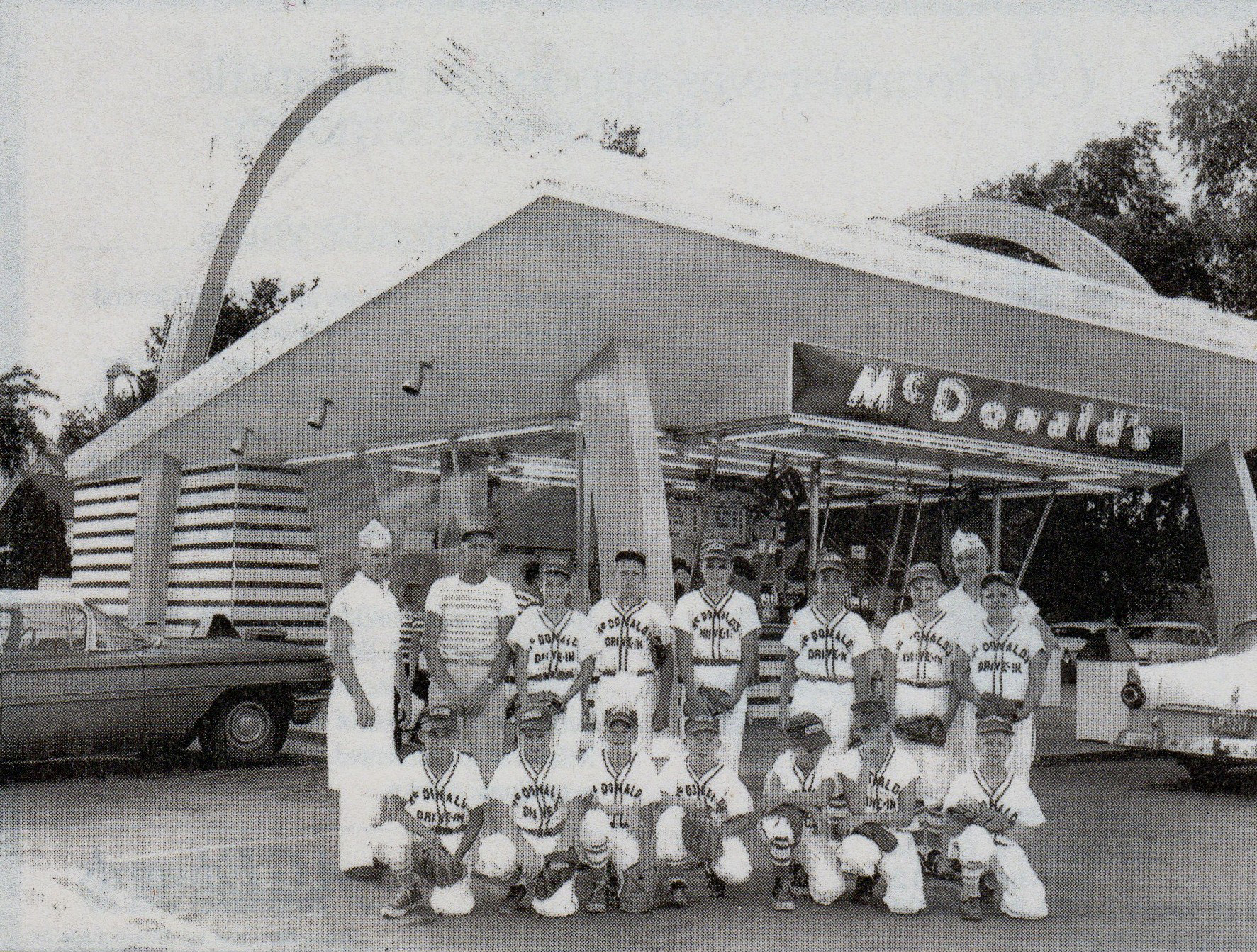
The McDonald's Drive-in Little League Team poses in front of the chain's first franchise in Springfield on South Sixth Street in 1961.  Source: Illinois State Journal, April 27, 1999.

The McDonald’s Drive-in Little League Team poses in front of the chain’s first franchise in Springfield on South Sixth Street in 1961. Source: Illinois State Journal, April 27, 1999.

The soft ice cream for shakes was sourced locally, but the shake flavor mixes came from headquarters. John, Sr. reportedly used to joke that they were created in a lab by Gary Butts, daughter Mary Ann’s husband, who had been a chemist (and was sometimes seen tutoring teen employees with their chemistry books).

Many of John Mack, Sr.’s kids and grandkids worked in the family business, including son John, Jr. and daughter JoAnn (Mack) Shaughnessy’s husband and their daughter Debbie (Shaughnessy) Blazis. The magic starting age for most of the Mack kids seemed to be 15 – -one year older than John, Sr. was when he followed his father Stanley into the coal mines in 1926. Son Jim Mack remembers starting at age 13 at minimum wage, which was around 75 cents an hour.

Two minimum-wage teen employees who went on to become famous in Springfield were Dick Levi (Levi, Ray & Shoup), whom Jim Mack remembers training at the cash counter at the Sixth St. store, and Wes Barr, currently a candidate for Sangamon County Sheriff.

John, Sr. was a bigger-than-life personality who “would light up the place” when he visited one of his franchises to sit down and enjoy a burger, according to Don Gietl, who worked at a “Mack McDonald’s” just like brothers Jim, Charlie, and Terry.

McDonald's 2849 S 6th after eat-in space was added

McDonald’s 2849 S 6th after eat-in space was added

John, Sr. had opened three McDonald’s by the time he died at age 61 in 1974. His widow Mary and sons Tom and Jim and daughter Mary Ann and her husband Gary Butts went on to open five more locations in Springfield, usually as what the family considered a superior option to having corporate open competing new locations by bringing in a non-Mack franchisee. Not all of the new locations that corporate wanted were profitable, and Jim Mack remembers that growing the business took a heavy toll on the family over the years. But at least if a new location cannibalized existing business, the business “gained” from a Mack would still belong to a Mack.

John, Sr., had borrowed $100,000 from Illinois National Bank to get started on S. Sixth St.–a fortune at the time. However, Jim reports that the capital stakes rose dramatically with each new restaurant, especially as they became larger sit-down facilities, so that all the borrowed capital was not paid back to lender INB until the family sold all eight of their Springfield franchises and totally exited the business on Jan. 1, 1989.

John, Sr. had a right-hand man, Pat Murphy, who secured the first McDonald’s franchise in Jacksonville, which Pat intended to be operated by his son, who died tragically, leading to the sale of that restaurant, as well. The complete list of “Mack McDonald’s” included stores on: Sixth St., MacArthur Blvd., West Jefferson, Old State Capitol Plaza (Fifth & Adams), Capital City Shopping Center, White Oaks Mall, Chatham Road, Ninth & North Grand.

1975 artist’s rendering of John Mack, Sr. photo placed inside his McDonald’s restaurants in memoriam

1975 artist’s rendering of John Mack, Sr. photo placed inside his McDonald’s restaurants in memoriam

The local Ronald McDonald House at Ninth and Carpenter was created as a result of a Mack family tragedy—the death from brain cancer of Dorothy and Frank Makarauskas’s 18-year-old son Robert. Robert was Mary and John Mack, Sr.’s nephew. After Mary visited a Ronald McDonald house in New York City, where young Robert was being treated, she dedicated herself to donating and raising the funds necessary to make it a reality in Springfield. The Mack McDonalds also sponsored many fundraisers and gave generously to Goodwill, among other local charities.

This post is dedicated to the memories of Mary (Gidus) and John Mack, Sr.;  John and Mary’s children JoAnn (Mack) Shaughnessy and John Mack, Jr.; and John, Sr.’s brother Frank Makarauskas and Frank and Dorothy’s son Robert. 
More Springfield Mack “McHistory”

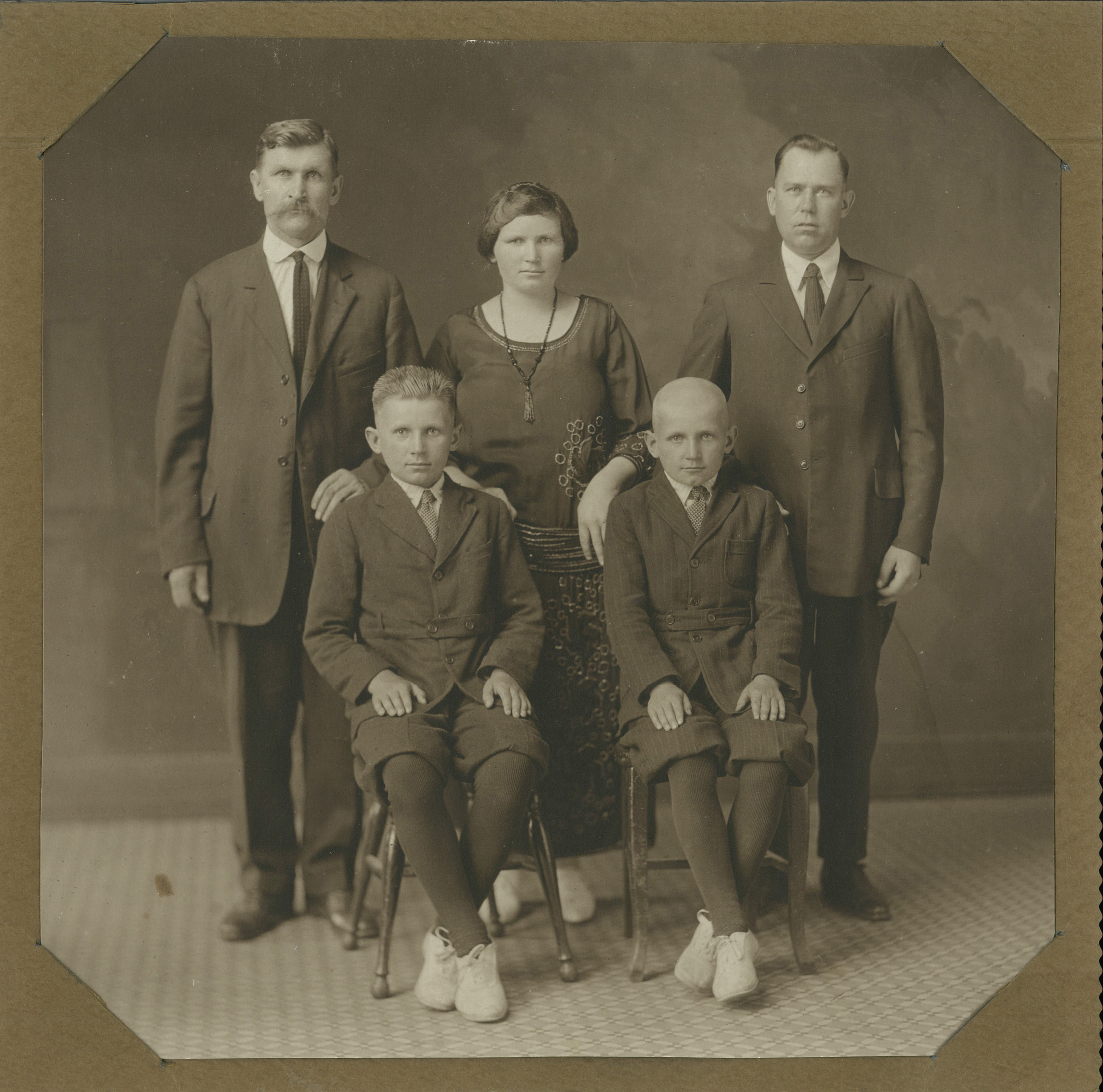
Stanley & Agota (Agnes) Baltramiejunaite Makarauskas and her uncle. Front row l to r: Sons Michael and John Makarauskas, 1922, the day Agnes & her two children immigrated and were reunited with Stanley, who arrived in the U.S. in 1914.

Thousands of local youth–boys, only, at first–earned their first paycheck at one of Springfield’s first 8 McDonald’s restaurants opened by the Makarauskas (Mack) family starting in 1957. Previously, I posted all the Mack “McHistory” that I could find in public records. This week, we benefit from the memories and photos of Jim Mack, Mary Ann (Mack) Butts, and Dorothy Makarauskas.

It’s hard to overestimate the impact of Springfield’s first fast food on local eating habits and teen employment and culture. Through the 1970s, despite paying only minimum wage, the McDonald’s on S. MacArthur Blvd. (opened in 1961) was not only THE place to work. It became such a popular teen and “hippie” hangout that the packed parking lot required its own bouncer. Hot rods cruised around the restaurant and up and down MacArthur a la “American Graffiti” every Friday and Saturday night.

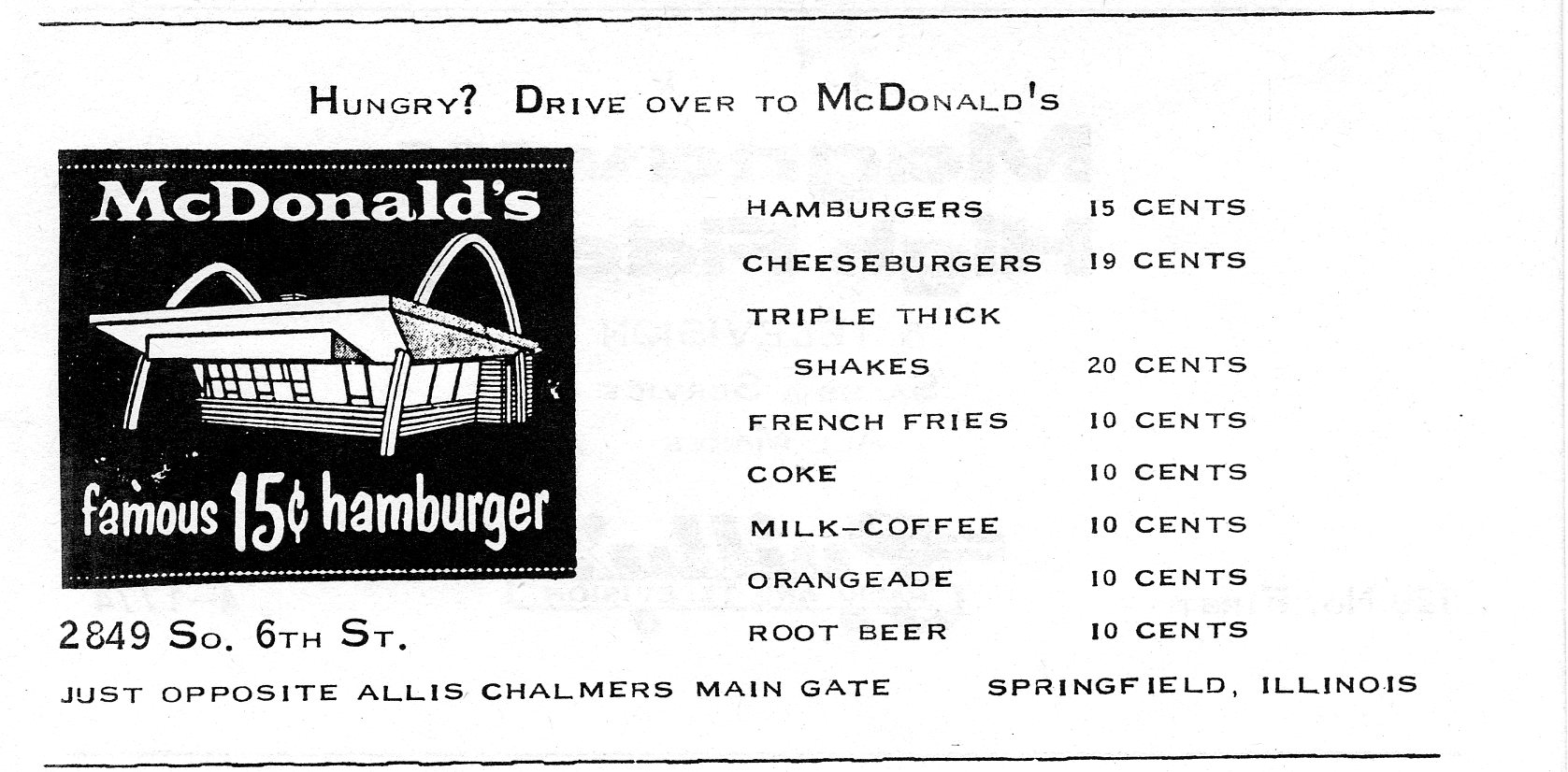
S. Sixth St. ad, circa 1957

S. Sixth St. ad, circa 1957

Who brought the future as we know it to Springfield? John Mack (Makarauskas), Sr., a Lithuanian immigrant who arrived in Springfield in 1922 at age 10 with his mother Agnes and brother Michael– speaking no English. John earned only a sixth-grade education before, like so many other immigrant boys, he had to follow his father Stanley and older brother Michael Makarauskas into our local coal mines at age 14. (Stanley had immigrated first, to the Pennsylvania coal fields, in 1914.)

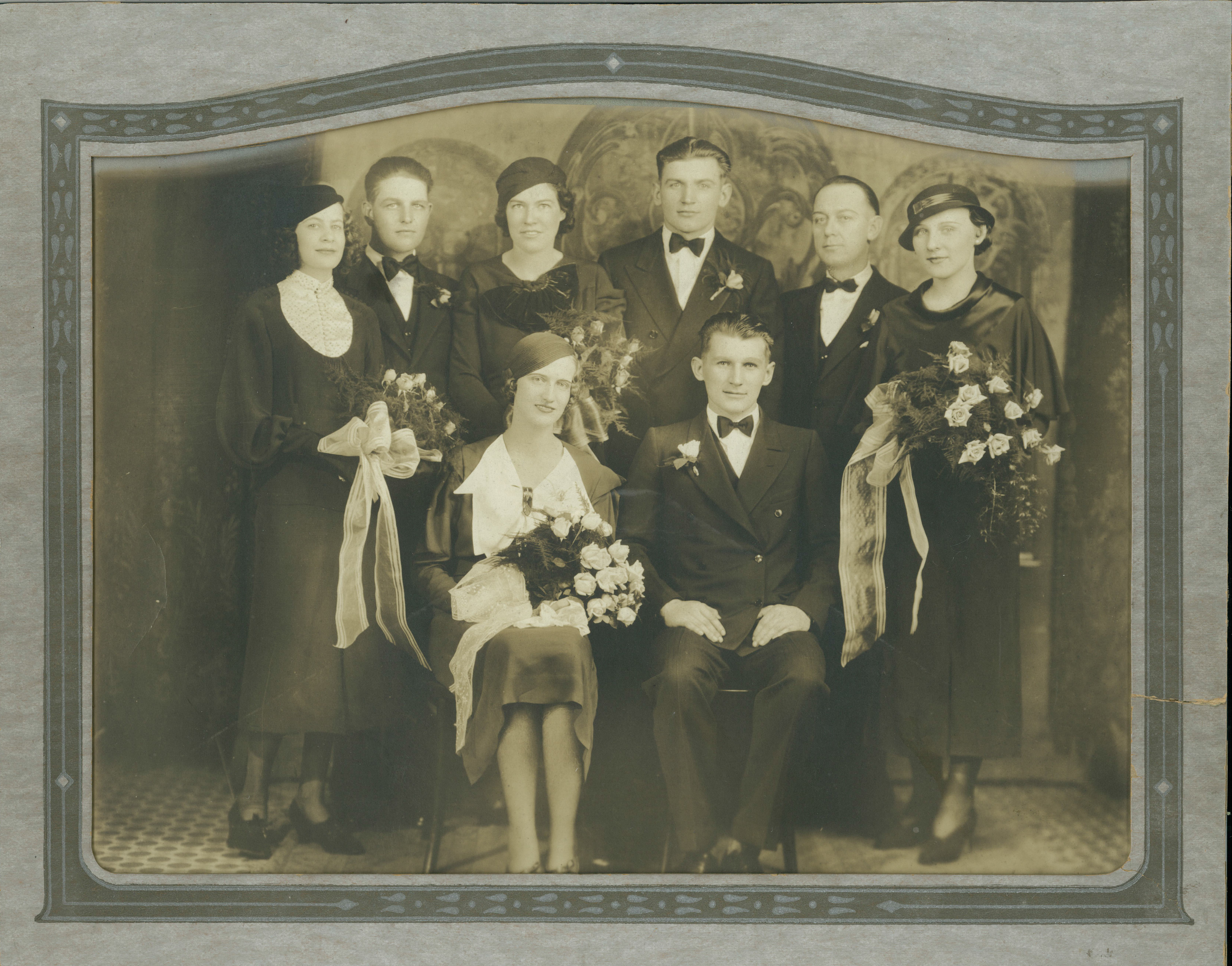
Michael Makarauskas wedding, circa 1930.  Brother John standing directly behind the seated groom.

Michael Makarauskas wedding, circa 1930. Brother John standing directly behind the seated groom.

Many miners now gone considered John Mack a hero because of the way he supported the Progressive Miners of America by “carrying” his striking brethren on credit at a grocery store or informal, home-based “commissary” during the deepest trough of the Great Depression, when he and thousands of other miners were thrown out of work by the Central Illinois “Mine Wars” (as reported on page 92 of the book Divided Kingdom). However, the first John Mack grocery store remembered by Dorothy Makarauskas, wife of John’s much younger brother Frank, operated from 1941-43 on 1st St. just south of Laurel. John closed the 1st St. store and opened a larger store at 1501 Keys Ave. in 1943.

Dorothy remembers that the Keys Ave. store, which sold meat, bread, milk and dry goods, was Springfield’s first “self-serve” corner grocery where customers picked up their own items and brought them to checkout clerk Frances Trello. (At other corner groceries of the time, the staff would move about the store filling customers’ orders.)

John’s younger brother Frank Makarauskas, 18,  carries a block of ice from the S. 1st St. store to a customer’s car.  1943

John’s younger brother Frank Makarauskas, 18, carries a block of ice from the S. 1st St. store to a customer’s car. 1943

John’s son Jim Mack remembers the financial squeeze his father faced as he continued to broadly extend store credit well into the 1950s, worsened by the arrival of the first supermarket chains that began eating the independent grocers’ lunch. Then one day McDonald’s founder Ray Kroc entered the picture.

Jim was living on S. 6th with parents John, Sr. and Mary (Gidus) Mack, brothers Tom and John, Jr. and sisters JoAnn and Mary Ann when he says Kroc drove by the main gate of the huge Allis Chalmers construction machinery factory across the street. That’s when Kroc approached John Mack, Sr., simply because he considered the real estate across from Allis Chalmers the perfect site for Springfield’s first McDonald’s restaurant (the nation’s 69th). It was serendipity that John, Sr. was a butcher able to provide ground beef, but struggling to survive in the dying corner-grocery business. It was also the opportunity that John, Sr. had been waiting for all his life.

He accepted Kroc’s proposal to replace the site of the family’s home with a McDonald’s drive-up restaurant. But, first, he had to borrow $100,000—akin to borrowing almost a million dollars today—in order to clear the site, move his family’s home around the corner, build the restaurant and parking lot, and pay his franchise fee.

Recalls daughter Mary Ann (Mack) Butts: “Mary, our mother, was in the meetings with him when he went to the banks. They literally laughed at him and said, ‘You have a 6th-grade education and you want to open a restaurant?’ Mother said it was embarrassing and she really felt bad for him. The banks also said, ‘Who would want to buy a 15-cent hamburger?’ They thought it was ridiculous because that was kind of expensive back then.”

Who, indeed?

1975 artist’s rendering of John Mack, Sr. photo to be placed inside his McDonald’s restaurants in memoriam

John, Sr. didn’t give up. Illinois National Bank finally agreed to make the loan, and out of loyalty, Mary Ann recalls, the Macks continued to do their McDonald’s financing through INB even after John, Sr. died in 1974 at age 61.

“Dad didn’t have a long life, and he only had so much education, but he had guts and he was really smart—very good at math. He only had a sixth-grade education, but he died a millionaire, and we are very proud of him,” Mary Ann said.

Coming Next Week: Chapter III of Springfield’s Mack “McHistory” will reveal how the first McDonald’s burgers and fries were produced, tell the story behind our local Ronald McDonald House, and share the names of a few famous Springfieldians who once sold Big Macs.

Stankaitis Garden of Earthly Delights

Grandma Barbara Bertha (Wallick) Stankaitis - 18 years of age 001
Lithuanian immigrants at the turn of the 20th Century were mostly “people of the land.” No single phrase better captures the totality of their lives and identity as subsistence farmers before they were driven into new lands and new occupations, mostly industrial. It describes a thousand-year-old spiritual and practical tradition whereby the land from which they drew their existence not only belonged to them, but they to it.

How did this deep-rooted identity survive immigrants’ drastic uprooting? One answer can be found in the abundant gardens that many Lithuanians cultivated all over Springfield well through the 1950s: a proliferation of “urban agriculture” that dwarfs our modern concept of “growing local” and community gardening.

One local Lithuanian garden was particularly memorable for its diversity and scale: that of Barbara Bertha (Wallick) Stankaitis, born in Lithuania in 1886. Loving granddaughters Barb (Stankitis) Pelan and Marita (Stankitis) Brake still recall with bliss their Grandma Stankaitis’s “Garden of Earthly Delights,” which covered 2.5 city lots on South 17th Street from about 1931 to 1980. (Did any readers ever see this garden?)

Barb and Marita report that their father, John Stankitis, bought the house and adjacent lots for his mother when he was about 20 years old and his mother was about 40. Grandmother Stankaitis proceeded to garden for hours every spring and summer day for the next 50 years, often in a long cotton dress with deep pockets covered by an apron, her hair coiled in a bun at the nape of her neck.

Grandma Stankaitis with her flowers

Grandma Stankaitis with her flowers

The “Garden of Earthly Delights” had everything in abundance: vegetables such as red and white radishes, spring onions, leaf lettuce, carrots, cabbage, beets, potatoes, tomatoes, corn, green beans and cucumbers. Cherry, apple, pear, peach and apricot trees. Livestock such as chickens and rabbits. Granddaughter Barb Pelan remembers Grandmother Stankaitis killing and preparing chickens for Sunday dinner, and making egg noodles from the eggs Barb collected as a child, taking great care not to rile the resident rooster.

At the back of the garden were blackberry and raspberry bushes and rows of ripe, red strawberries. A grape arbor produced plump purple grapes for grape jelly. All of the fruits and vegetables that could be preserved or canned were, making for a very busy harvest season.

I can’t imagine what it must have been like to grow up so close to the earth in the glow of such a gardener extraordinaire. Barb and Marita describe it as a life-shaping experience that nurtured in them a special kind of imagination and creativity. Marita grew up to become a published writer and composer of folk music who performed at Carnegie Hall and the 1997 Clinton inaugural. Barb writes on her blog, “Prairie Ponderings:” When I was a young child, I would wake up in the morning and look out the second floor window to the golden glow over my Lithuanian grandmother’s garden. It was like a Monet painting and seemed surreal in its beauty. I was mesmerized…”

Marita (Stankitis) Brake amid apple blossoms, like her grandmother's

Marita (Stankitis) Brake amid apple blossoms, like her grandmother’s

Perhaps the most special part of the garden were the flowers: bridal wreath, hollyhocks, four-o-clocks, zinnias, daisies, orange tiger lilies, purple irises, and roses, which were especially beloved by Grandmother Stankaitis and which reined in pink, red and white in their “own private spot.” Barb recalls making dolls of all different colors from the hollyhocks, and Marita remembers “playing bride” in the white blossoms of snowball hydrangeas.

After Grandmother Stankaitis died around 1980, her son John–Barb and Marita’s father–transferred his mother’s beloved roses to his own yard on Bennington Drive and tended them in loving tribute for the rest of his life.

Who Put the “Mack” in McDonald’s, Springfield?

John Mack, Sr. on far right at ribbon-cutting for his second McDonald's on S. MacArthur Blvd., 1961

John Mack, Sr. on far right at ribbon-cutting for his second McDonald’s on S. MacArthur Blvd., 1961

Anybody who’s eaten a McDonald’s hamburger in Springfield has feasted on a bit of local Lithuanian-American history involving a family aptly named “Mack” (Lith: Makarauskas). McDonald’s first local franchisee, John Mack, Sr., was born in Lithuania in 1912 of parents Stanley and Agnes Makarauskas. He was a coal miner before operating Mack’s Food Store at 1501 Keys Ave.

In 1957, John, Sr. and his wife Mary (Gidus) Mack had the foresight to make the leap from their corner grocery to the brave, new world of fast food. After a personal call from McDonald’s founder Ray Kroc and then being turned down by many banks, a $100,000 loan for the Macks from Illinois National Bank finally came through, and John and Mary opened their first restaurant on S. Sixth St. at the perfect location: just outside the gates of construction machinery factory Allis Chalmers, where two shifts a day of hungry workers could appreciate a 15-cent burger with 10-cent fries. (The AC workers only got paid $1 an hour back then.)

S. Sixth St. ad, circa 1957

S. Sixth St. ad, circa 1957

At the peak of their McDonald’s empire, the Macks were exclusive franchisees of 8 McDonald’s all over Springfield, including the Old Capitol Plaza and White Oaks Mall, according to the State Journal-Register. (There was an additional McDonald’s in Jacksonville.) It is said that John Mack, Sr. was one of the first politically active Lithuanian-American in Springfield. His son Tom recalls that John, Sr. was a member—perhaps a leader– of the Progressive Miners of America (see The Mining Life and The Mine Wars pages on this site). Over and above that, John, Sr. was famous for providing groceries on credit to under-employed and striking miners–most likely from a home-based “commissary” during the Mine Wars and later from his corner grocery.

Oblinger.book

On page 92 of Benedictine University Professor Carl D. Oblinger’s history, “Divided Kingdom: Work, Community and the Mining Wars in the Central Illinois Coal Fields During the Great Depression,” Progressive miner Tom Rosko says, “He ‘carried’ them all in Springfield, John Mack!” (In the lingo of the time, store credit was referred to as being “carried” or being “on the book.”)

Back in the 1920s, coal miners opening corner stores seemed to be a trend. Former miner Paul Kasawich opened a grocery/tavern next to his home on East Reynolds. My own Hungarian immigrant grandfather, Joseph Kohlrus, was a coal miner before he opened Kohlrus Foods on Converse at the RR tracks, not far from Mack’s Food Store on Keys, in 1932. It must have looked like a good way to give the family a solid alternative to dangerous, sporadic—and disappearing—work in our local mines. The violent “Mine Wars” that accompanied mechanization and massive layoffs, locally, by Peabody Coal (1932-36) that are detailed in Oblinger’s book sadly proved these miners-turned-grocers correct.

After John, Sr. died in 1974 at age 61, Mary Mack (1911-1990), daughter of George and Anna Posiponka Gidus, continued to operate all the “Mack McDonald’s” in Springfield and Jacksonville with her sons Tom and Jim, daughter Mary Ann and son-in-law Gary Butts until the family sold its franchises in 1989, again, according to the State Journal-Register. (Mary Mack and family were also was the founders of Springfield’s Ronald McDonald House.)

In 1988, the couple’s son Tom Mack went on to become the founding and long-time president of the Lithuanian-American Club in Springfield. Son and Lexington, Ky-area businessman John Mack Jr., 70, died in 2008. He and his ex-wife Beverly had three daughters: Leslie Preuss of Florida, Carole Mack-Joefreda of Lexington, Ky., and Marilyn Mack of Virginia; and a son, John Mack, III, of Nicholasville; Ky, who carries on a proud family name.

For more information, see “Here’s the Beef / How Springfield Got its First Fast Food,” by Dave Bakke in the April 27, 1999 State Journal-Register.

Many thanks to Elaine Alane, Bill Cellini, Jr. and Hannah, one of John, Sr.’s great-granddaughters, for assisting with this post.

Second Look: Three-Day Lithuanian Wedding

Any wedding party that could last three days is worth at least two good blog posts. (Don’t we wish we had an event like that in us today?) Elaine Alane, daughter-in-law of the lovely bride Eva Kasawich Alane, helps me answer your questions about the 1927 wedding featured last week:

l to r:  back row:  Anna and mother Anna Kasawich, front row: Paul and Eva Kasawich

l to r: back row: Anna and mother Anna Kasawich, front row: Paul and Eva Kasawich

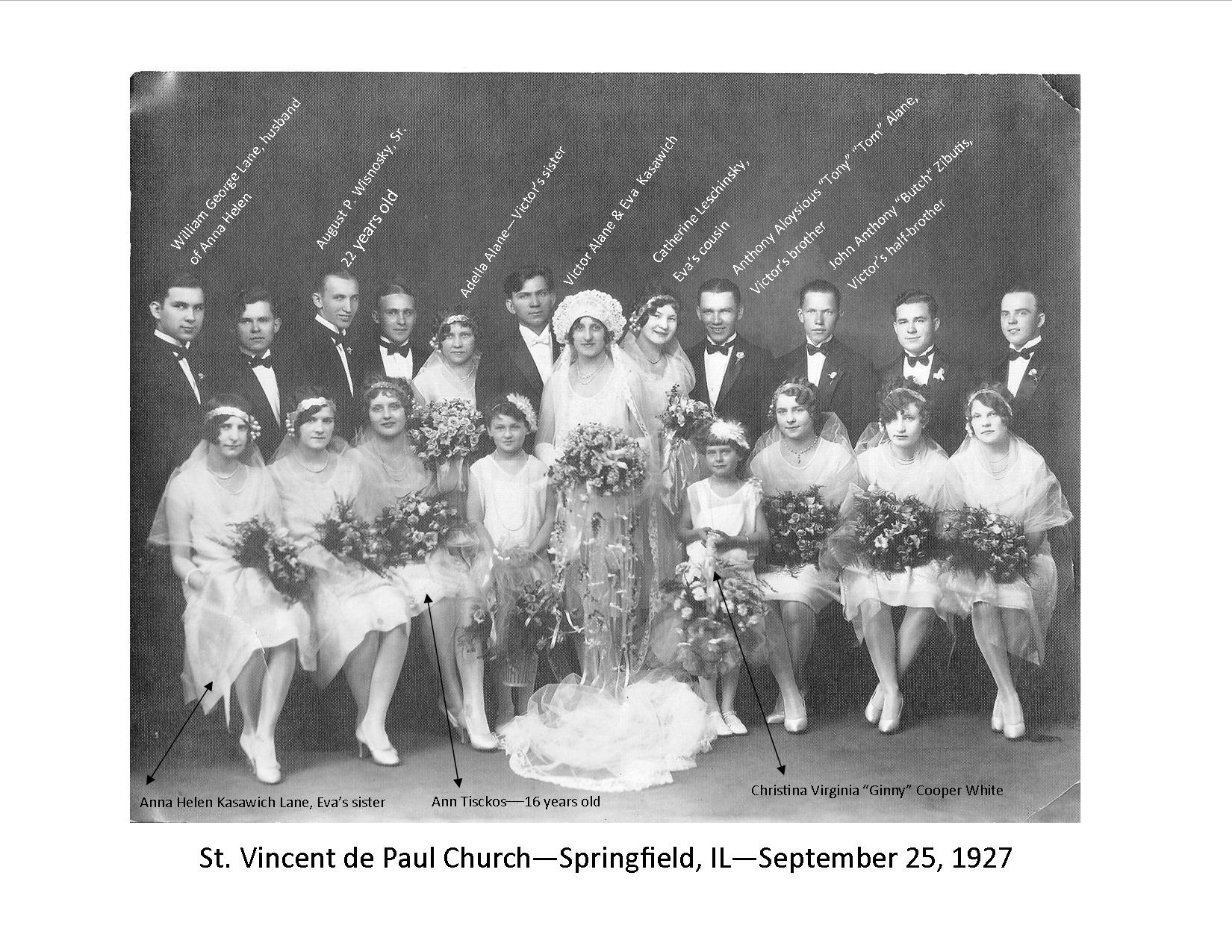
Eva Kasawich Alane became a bride when she was 19 years old on Sunday, September 25, 1927. The party went on for three days. I imagine her family could afford it because it was the “Roaring ’20s” and they had a grocery store next door to their home, at 1900 E. Reynolds St., that was opened by Eva’s Lithuanian immigrant father, Paul. (A former coal miner, he died in 1926 of lung disease, so missed his daughter’s big wedding.)

Alane, Eva Kasawich 9-25-1927 - Springfield, IL

Eva got married in her lovely Charleston wedding gown sewn by a local woman named Tillie. The bridesmaids’ dresses were pink, though that doesn’t show up in black-and-white photos.

A huge banquet table set up in the basement was loaded with chicken, kielbasa, bread and traditional Lithuanian wedding fare, including (probably kugelis) and many homemade sweets. When the wedding cake was delivered, the baker had made a mistake and sent a very small cake. Eva cried and cried. A while later, a new, beautiful and VERY large cake arrived as a replacement.

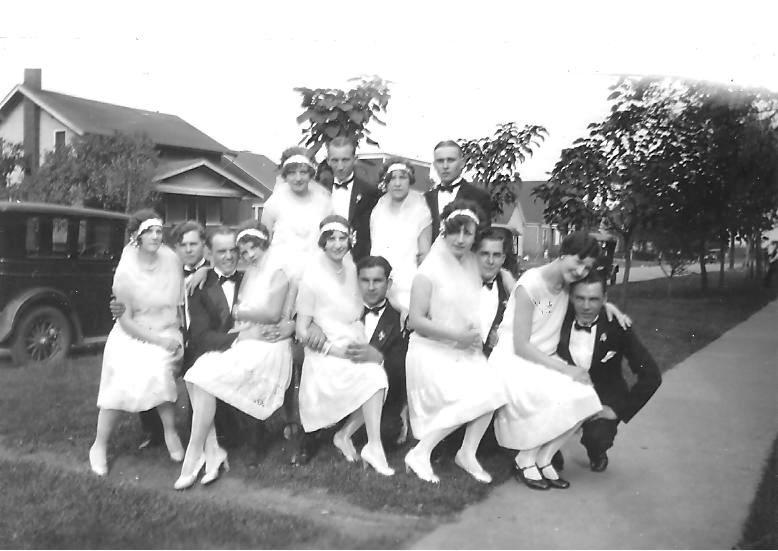
The Wedding Party; notice Kasawich home in left background and model T on right.

The Wedding Party; notice Kasawich home in left background and model T on right.

Upstairs in the living room, there were three musicians: a concertina player, a fiddler (and Eva couldn’t recall what the third instrument was). The carpet was rolled back and there was dancing. A lot of polka music was played. The bridegroom, Victor Alane, loved to polka and danced any chance he got, even after he was old and his knees were arthritic.

Homemade beer was served (we can assume, barrels of it, over three days). It was made in the attic of Eva’s home by her mother Anna. Though Prohibition was in full swing, some whiskey called Old Mule also was served.

The Wedding Party

The Wedding Party

The company that supplied bread to the Kasawich grocery store donated all of the bread for the reception. All the rest of the food, except for the wedding cake, was prepared at the bride’s home by her mother and older sister (both named Anna) and teams of neighborhood women. It took them two days in the backyard just to butcher and clean the chickens.

When the bridegroom arrived at the reception with his bride after the wedding ceremony, some of the guests blocked the door and wouldn’t let them in until Victor paid them. (I don’t have any more details about this custom.) However, by the time Victor left the reception after three days of feasting and cracking plates with guests’ silver dollars to win the dollars, the huge bag of silver dollars he carried off to the bank was so heavy he could barely lift it.

Corner grocery store / tavern of Anna Leschinsky Kasawich.

Corner grocery store / tavern of Anna Leschinsky Kasawich.

I think the photo at right is from the early 1990’s. The bigger home two doors down on the left of the tavern/store is, I believe, where the wedding reception took place. The home attached and just to the leff of the store was the Kasawich family’s original home and was used in later years by other relatives until they could afford a home of their own. The little house way in the back on the right of the store also belonged to the Kasawiches, and Eva’s sister, Anna, lived there for many years. After Eva went off into her new married life, her mother Anna and older sister Anna continued to run the store for many years.

.

Three-Day Lithuanian Wedding: Eva Kasawich & Victor Alane

Alane.wedding.06.28.14

This week we can thank Elaine & Dick and Clarice & Vic Alane (Lith. Alaunis) for details of a traditional Lithuanian wedding party in Springfield that lasted for three days.

The date was Sept. 25-27, 1927. The location was the E. Reynolds St. home of just-deceased Lithuanian-born coal miner Paul Kasawich (1872-1926) and his Lithuanian-born widow Anna Leschinsky (1877-1967), mother of bride Eva Kasawich (Vic and Dick’s) mother. Vic and Dick’s father, the groom, was Victor Alane, Sr., son of Lithuanian-born coal miner Joseph Alane, 1876-1907 (who had died in the Pennsylvania coal fields at age 31) and Petronele Spendzninas (1876-1938).

The bride:  Eva Kasawich Alane, Sept. 25, 1927

The bride: Eva Kasawich Alane, Sept. 25, 1927

Eva and Vic Sr.’s three sons were not yet born, so our description of the three-day wedding comes from Lithuanian-American coal miner Larry Mantowich (1911-1994). Larry remembered the bride and groom sitting at a table piled with cash gifts, with concertinas playing, dancing and eating–all for three solid days. He reported that single “boarder” miners without their own families or any idea of a proper wedding gift made ostentatious shows of their generosity by proudly tossing $10 and $20 bills on the gift table. ($10 was a good two days’ pay for loading 10 tons of coal.)

Eva Kasawich, Charleston-style wedding gown, 1927

Eva Kasawich, Charleston-style wedding gown, 1927

Mantowich also reported that all the women of the bride’s neighborhood made food for the three days of continuous feasting and dancing, and that after the first night of the party, the miners would go to work, come home, get cleaned up and return to the party for day two, and repeat the process for day three.

He recalled that dozens of plates were bought and stacked for an interesting tradition. If the bride or groom managed to crack a plate with a silver dollar, the dollar was theirs to keep. Apparently, they could keep on trying different plates until they succeeded.

Left photo: Wedding musicians Adam Pazemetsky with clarinet, Mr. Karalitis with fiddle, and Mr. Petrovitch seated, with concertina.  Right photo: Pazemetsky with concertina.

Left photo: Wedding musicians Adam Pazemetsky with clarinet, Mr. Karalitis with fiddle, and Mr. Petrovitch seated, with concertina. Right photo: Pazemetsky with concertina.

The Mantowich oral history, in three volumes constituting almost 400 pages, was taken by Sangamon State University back in the 1970s. (See his Lithuanian wedding and wake memories on pages 124-129 at this link: http://www.uis.edu/archives/memoirs/MANTOWICHvII.pdf . In other parts of the oral history, you can read about the making of home sausage and blood soup, moon-shining, and other topics.)

After his 1927 wedding, Vic Alane, Sr. delivered ice and worked as an electrician for Allis Chalmers. He also was very handy and helped many neighbors with little fix-up jobs around their homes. Vic, Jr., went to Saint Peter & Paul grade school and Cathedral Boys High School (later Griffin High School). He worked in the Pillsbury Mills traffic department for four years, then served in the Illinois National Guard for six years, the last two in Europe.

Clarice & Vic Alane, Jr. wedding, 1950

Clarice & Vic Alane, Jr. wedding, 1950

In 1954, he was hired by the transportation department of Allis Chalmers. The company transferred him to West Allis, Wis., then Milwaukee, and let him go in 1970. Before moving to Wisconsin, Vic, Jr. led the local Springfield band, Vic Alane & the Keynotes, playing trumpet and vibra-harp. He and his quartet played at many of Springfield’s premier venues, including the Island Bay Yacht Club and the Illini Country Club.

Another business that Vic, Jr. conceived in his parents’ basement, Jet Permit Ltd., which helps long-haul truckers obtain state highway permits, provided a living after his departure from Allis-Chalmers. Vic also owns campground Nature’s Villa in Helenville, Wis.

Brother Dick worked with Vic at Jet Permit for 40 years, first taking permits and later as comptroller. Dick was a talented athlete in football, baseball and basketball at Griffin High School and served in the Navy.
.
Keynotes.poster

Mary Ann Rackauskas, Pediatric Dentist

Mary Ann Rackauskas

Mary Ann Rackauskas

Few can say they are 100 percent Lithuanian-American after four generations in this country. But Mary Ann Rackauskas can! A Springfield dentist for 28 years, Mary Ann is the daughter of George and Helen (Sitki) Rackauskas.

George’s parents, Mary Ann’s paternal grandparents, were Michael and Cassie Rackauskas, who both immigrated from Lithuania to the north side of Springfield: 1820 N. 8th St., to be precise. Mike was a coal miner—you can see his interesting immigration story and why he was called “U.S. Mike” under the Springfield  Lithuanian Families tab on this site.

Since mine closures and strikes made coal-mining work so sporadic, miners often moved and needed to board. Mary Ann’s paternal grandmother Cassie boarded as many as four miners at a time, cooking and cleaning for them and even washing their backs with water from a galvanized steel tub when they returned home blackened with coal dust. (See The Mining Life and The Mine Wars on this site.)

Mary Ann’s Lithuanian maternal grandparents, Anthony J. and Mary Ann (Yezdauski) Sitki, lived on S. 16th St., where Mary Ann’s mother, Helen, grew up. Anthony was actually born in 1896 in the coal-mining town Scranton, Penn. to Lithuanian immigrants Annie (Valentine) and her coal-miner husband Adolph Stozygowski-Sitki, Mary Ann’s maternal great-grandparents. (So, on her maternal side, Mary Ann is actually 100 percent Lithuanian-American for FOUR generations.)

Born in 1896, maternal grandmother Mary Ann Yezdauski (probably Jezdauskas), for whom Mary Ann is named, set sail for America in 1912 when she was just 16. Her older brother sponsored her and paid her passage to Ellis Island.

As for the Mary Ann, subject of this profile, she was born and raised in Springfield, graduating from Sacred Heart Grade School and Sacred Heart Academy. After two years at Springfield College in Illinois, she attended the U of I at Champaign-Urbana and then the SIU School of Dental Medicine.

After graduating from SIU dental school, Mary Ann practiced general dentistry in Springfield 1981-1991, until she was accepted into a pediatric dentistry hospital-based residency program at the U if I—Chicago. Two years after graduating with a Master’s of Science degree in Pediatric Dentistry, Mary Ann opened her own solo pediatric dental practice at 1112 Rickard Road, Suite A, in Springfield. She became board-certified in pediatric dentistry in 2010, and also specializes in disabled patients. http://www.pediatricdentistspringfield.com/

Mary Ann has two grown daughters: Lindsay Ann Ross, who has lived and worked in China for the past six years and now works for the American Chamber of Commerce in Shanghai and Amanda Josephine Ross who just graduated with a medical degree from Creighton University and is now a first-year plastic surgery resident at the SIU School of Medicine, Springfield.

Mary Ann’s brother, Gregory, is a retired general dentist who resides in Bloomington, Ill., with his wife, Bette Davis-Rackauskas. They have raised 8 children and now have 7 grandchildren.

Meet Debbie (Davis) Ritter

(l to r:) Noah, Debbie & Dalton

(l to r:) Noah, Debbie & Dalton

Springfield nurse Debbie Ritter is half-Welsh on her father’s side and half-Lithuanian on her mother’s. In fact, she is a descendant of maternal grandparents who were both Lithuanian, whose own parents (Debbie’s great-grandparents) were all born in Lithuania.

A proud “Northender,” Debbie attended St. Aloysius Grade School and Ursuline Academy. She earned her associate’s of science in nursing from Lincoln Land Community College and worked as a oncology certified nurse for a medical group in Springfield for 15 years. Today she is a nurse at Springfield Clinic, and has two sons: Dalton and Noah.

Debbie’s maternal grandmother was Anne Petreikis Urban. Her parents were were Barbara Krauskis (Krasauskis) and Anthony Petreikis, both born in Lithuania. (Barbara was born in Taurage.)

Debbie’s maternal grandfather was William Urban (Jr.). His parents were Barbara Paris and William Urban (Sr.). Mary was eight years old when she immigrated from Lithuania with her parents around the turn of the Twentieth Century. Bill Sr. came when he was older, to avoid the military draft and World War I. He was born in Kaunas. Both of Debbie’s maternal great-grandfathers worked in our local coal mines.

Debbie's grandparents Bill & Anne Petreikis Urban with great-grandchild

Debbie’s grandparents Bill & Anne Petreikis Urban with great-grandchild

Debbie remembers many happy family times around the table at her grandmother Anne (Petreikis) and grandfather Bill Urban’s house on E. Moffat Street. She also remembers her three maternal great aunts and uncle.

The Petreikis "girls" (l to r): Dorothy, Mary, Anne (Petreikis Urban)  , Josephine and Helen.

The Petreikis “girls” (l to r): Dorothy, Mary, Anne (Petreikis Urban), Josephine and Helen.

Great-grandparents Mary (Paris) and William Urban, Sr. lived on North 15th St. in Springfield.

Meet Music Teacher Paulette George

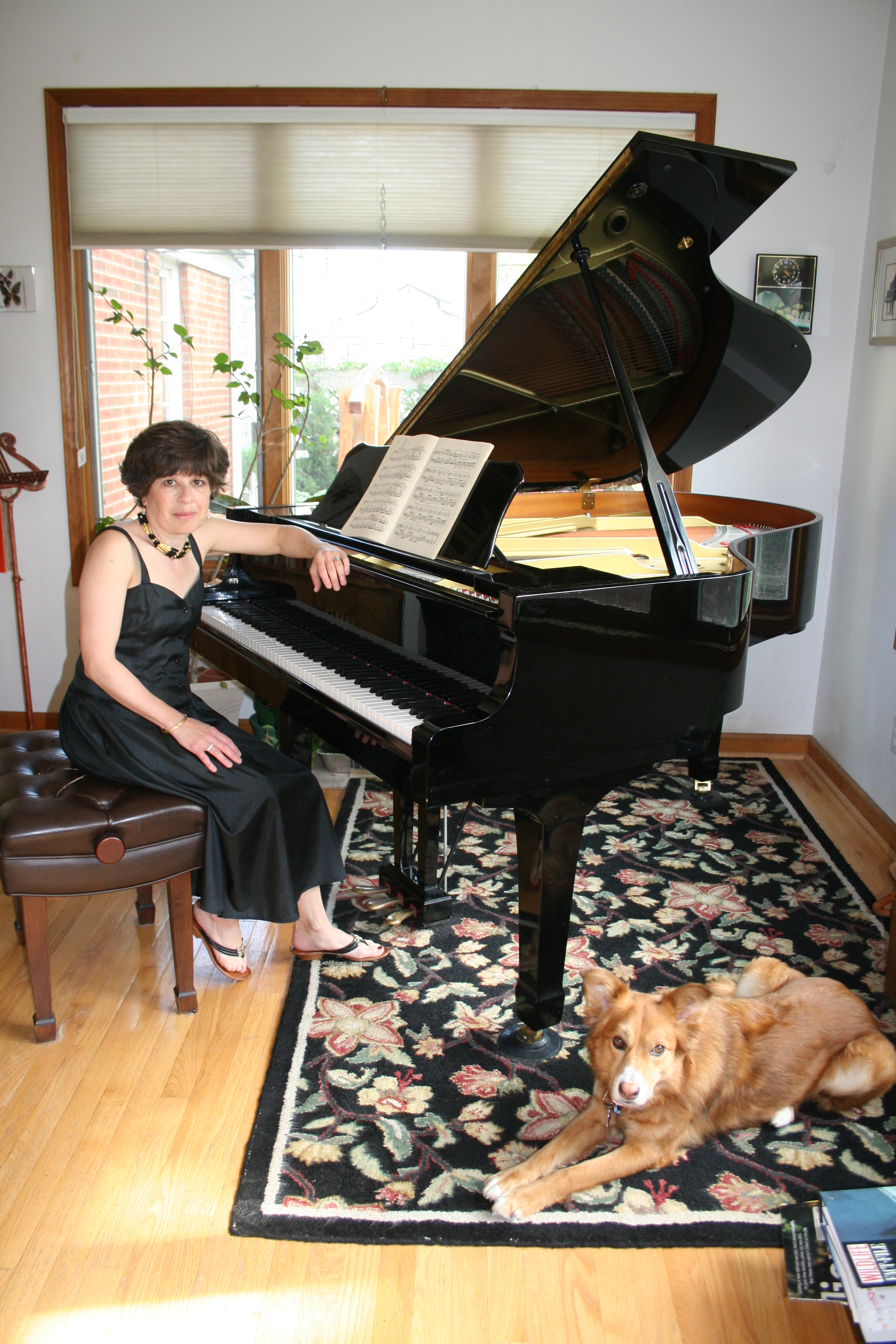
Paulette George with her Yamaha grand piano and Ellie the retriever

Paulette George with her Yamaha grand piano and Ellie the retriever

Written by Diane Baksys

At an early age, Lithuanian-American Paulette George found her true talent in life and turned it into a lifelong vocation and profession. A highly accomplished instrumentalist and instructor of the piano and flute, she has been imparting the gift of music to the Springfield area for more than three decades.

Paulette graduated from Ursuline Academy and then earned an associate’s degree in music from Springfield College (now Benedictine University) and a bachelor’s degree in music education from Illinois Wesleyan University. Her first professional job was as the music director for Blessed Sacrament Church in Springfield, where she remained for twenty years. Simultaneously, she began giving private piano and flute lessons, first at Springfield College and later from her home. To this day, Paulette continues to teach. She also is an organist in many Springfield area churches and a flutist at various local events, including First Night Springfield, Christmas at the Dana Thomas house, and the arts fair at the Washington Park botanical gardens.

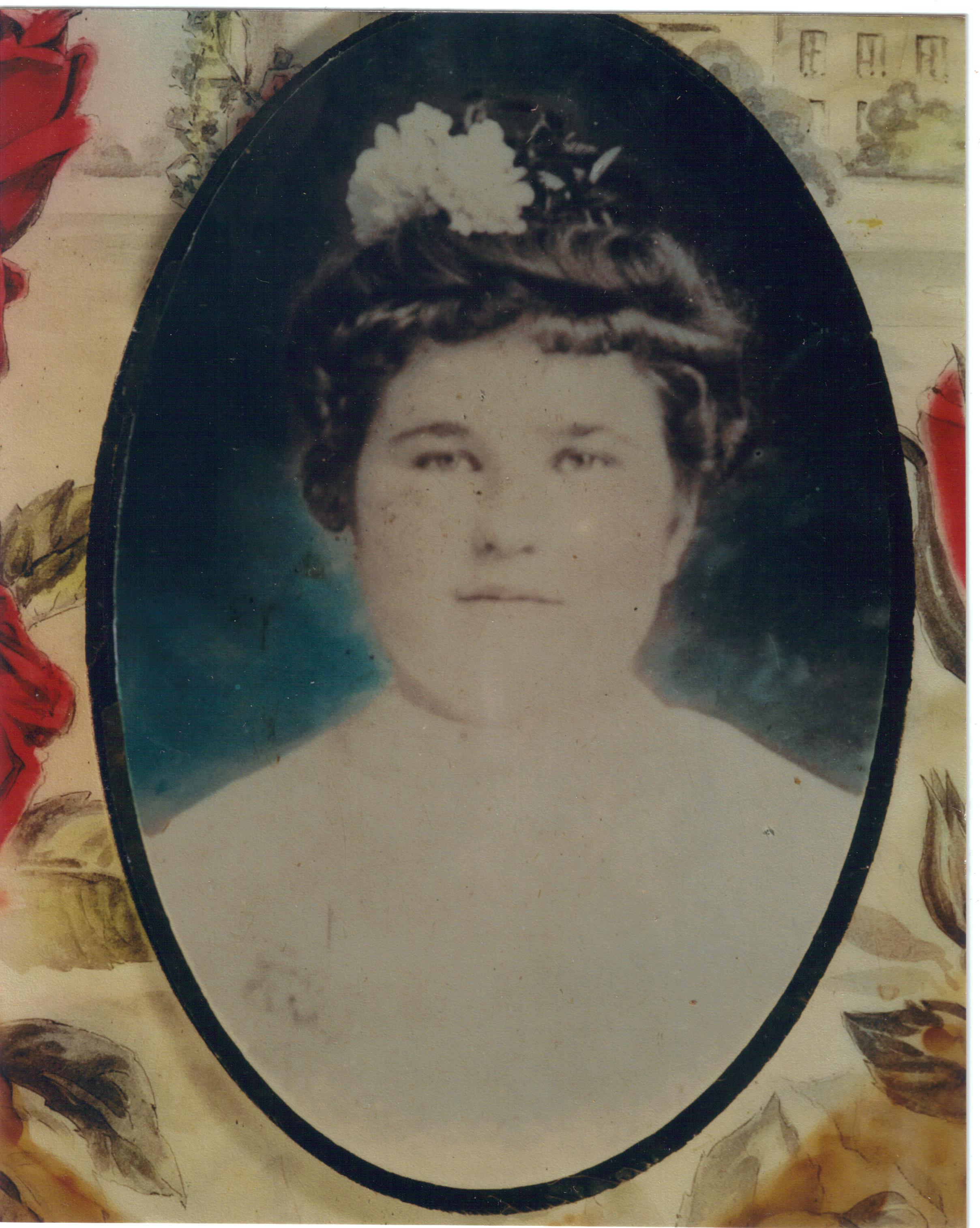
Eva Kellus Romanduski

Eva Kellus Romanduski

Paulette is a third-generation Lithuanian-American. Her maternal grandparents, Eva Kellus Romanduski and Picius Karvelis, both emigrated from Lithuania around 1900, initially settling in Indiana and marrying in 1912. Their oldest child, Anne, who is Paulette’s mother, was born in 1913, and a second daughter, Mary (who died in 1918 during the influenza epidemic), was born in 1915.

Picius (Paul) Karvelis

Picius (Paul) Karvelis

The family relocated to Springfield in 1916, and Picius became a coal miner. A hard-working man, Picius built the house where the family lived on Wood Avenue in Springfield. It was the same home that Paulette’s mother Anne lived in with her husband, Sicilian-American Jasper George, after they married in 1933.

Picius and Eva both passed away in the early 1930’s, so they never got to know Paulette or her older brother Donald, founder and owner of George Alarm Company in Springfield.

Jasper George and Anne Karvelis George, circa 1935

Jasper George and Ann Karvelis George, circa 1940

Although neither Eva nor Picius were known to possess any musical ability, they would most likely be proud of their granddaughter’s musical achievements. Paulette has embraced her craft to the fullest, completing master classes in piano and flute in cities throughout the U.S. and in renowned music schools in Salzburg, Austria and Grenoble, France, as well as in Poland. She is also a dedicated mentor to her students and loves fostering in them a passion for music.

Paulette George honor society

Paulette also enjoys traveling abroad and has visited more than 30 countries. She is an avid animal lover, especially of dogs, and is partial, of course, to her own loveable canines.

Meet Power Co. Executive Maria Race

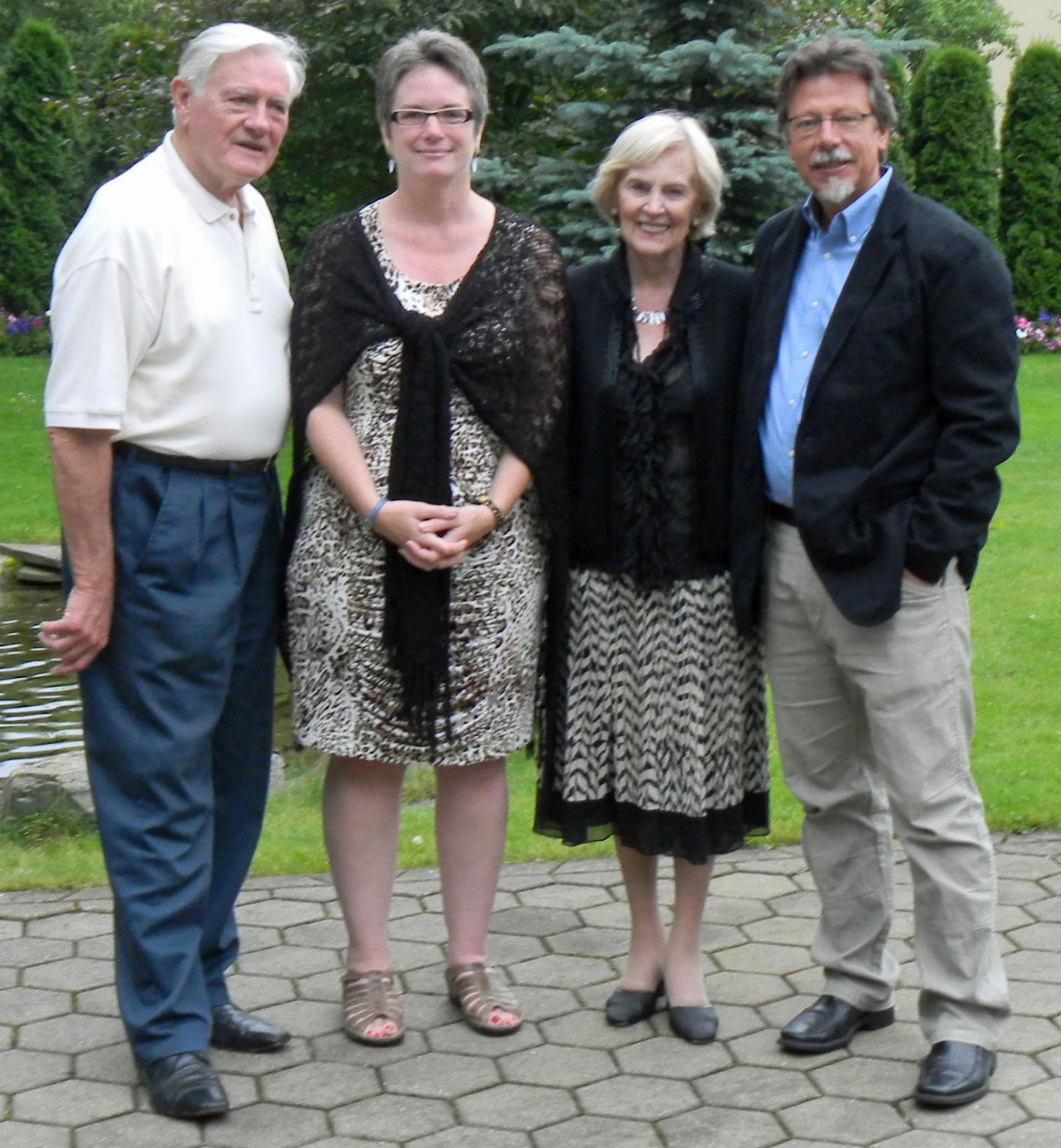
(l tor) Former Lithuanian President Valdas Adamkus, Maria Race, Alma Adamkus, Tim Race, 2011

(l tor) Former Lithuanian President Valdas Adamkus, Maria Race, Alma Adamkus, Tim Race, 2011

One of the most interesting people I have met through this blog is Maria (Fry) Race, a Springfield native and fourth-generation Lithuanian-American who lives in Elmhurst. Ill. and is director of environmental services for Edison Mission Energy, owner of 4 coal plants and 31 wind farms.

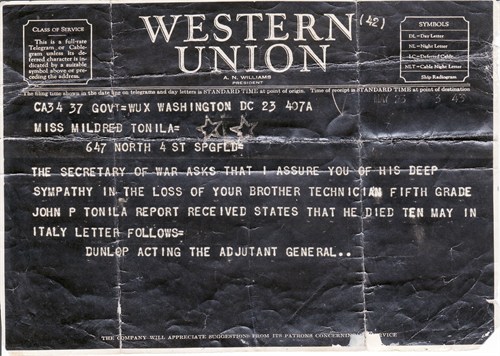
Maria grew up in the Laketown neighborhood, the older of two daughters of Jeanette (Tonila) Gooch and Frederick Fry. Her grandmother, Agnes (Tonila) Gooch, grew up on Reynolds St., one of nine children of John George Tonila and Agatha (Mankus) Tonila, who immigrated separately from Lithuania around 1900. Great-grandfather Tonila was a coal miner. One of his sons, John Tonila, (Maria’s great uncle and a Golden Gloves champ, according to family lore) gave his life in the WW II Battle of Monte Cassino near Rome, Italy in May 1944, and was memorialized with other parish war dead on a special plaque in Springfield’s Lithuanian-Catholic St. Vincent de Paul Church.

John Tonila death telegram

John Tonila death telegram

Maria’s parents were married and Maria was baptized at St. Vincent de Paul’s. “My younger sister Stefanie and I were the first in our family to go to college,” she recalls, “and my mother pushed us hard to be successful because she wished she had gotten the chance to go.” Stefanie had straight “A”s at the U of I in Champaign (Bronze Plaque 1987) and went to UIC for her medical degree. (Stefanie is now saving lives as a cardiologist in Boise, Idaho.)

Maria pursued a double major in art and physics at Parkland Community College, then got a B.S. in physics at the U of I Champaign, followed by a master’s in environmental technology at the New York Institute of Technology. Maria’s spirituality conflicted with the defense work that would have been the easiest application for her physics degree. So she moved into the environmental field, working in hazardous waste management. Now at Mission Energy, Maria says, “I manage people, compliance, and policy. It’s a very difficult field–very challenging–but very interesting.”

Over the years, Maria explored many religions: Judaism, Buddhism, and Unitarianism. But she says, “I have gone back to my Catholic roots, as the ancient voices called me from my ancestors on both the Lithuanian and Irish sides of the family.”

Jesus icon painted by Maria

Jesus icon painted by Maria

About a year ago, she started painting icons, which has become a passion. She is also an oblate at Monastery of the Holy Cross in the Chicago Bridgeport neighborhood, where there once was a Lithuanian church. Maria explains, “This means that I follow liturgy of the hours and St. Benedict’s Rule as closely as I can as a lay person living in the world. I regularly go to the monastery for classes. I am particularly devoted to St. Hildegard of Bingen, and have been to visit her relics. She was an artist and scientist and I feel she guides my life.”

Starting in the mid-1990s, while Lithuania was re-establishing itself and struggling to escape the grinding poverty of the long Soviet era, Maria began donating to medical relief charity Lithuanian Mercy Lift. http://www.lithuanianmercylift.org/about.html Then she began helping LML president Ausrine Karaitis locate older or discarded medical equipment in the UIC labs, where both women were working, to send to Lithuanian hospitals and nursing homes. In 2011, just after LML disbanded, Maria accompanied Ausrine to visit some of the facilities and people they had helped.

During that trip with her husband Tim, who also has Lithuanian roots, Maria got to visit with former Lithuanian President Valdas Adamkus and his wife Alma. (Mr. Adamkus was a Lithuanian-born U.S. citizen and a regional U.S. EPA administrator when he ran for and was elected to Lithuania’s presidency.)

Agnes Tonila rosary, black & white, center, Hill of Crosses, Siauliai

Agnes Tonila rosary, black & white, center, Hill of Crosses, Siauliai

While in Lithuania, Maria also took a rosary that had been at her grandmother Agnes’s grave at Calvary Cemetery and placed it at the famous Hill of Crosses in Siauliai. “It was hard to leave it there because I had had it for a long time, but it felt right,” Maria recalls. She has four sons: 17-year old twins Austin and Alec, who are high school seniors going to ISU and DePaul University next year. Her other sons are Ian, 15, and Julian, 12.