• Welcome!
  • An indelible role in our history
    • Historical Background, Influences
      • First Lithuanians in Springfield
      • Freedom and Assimilation
      • Divisions and Decline
      • The Mining Life
        • Honoring Central Illinois Mine Casualties
        • The Mine Wars
      • A Second Wave of Immigration: the ‘DPs’
      • Behind the Iron Curtain
      • “Singing Revolution”
        • “The Other Dream Team”
    • Lithuanian Historical Marker Dedication
      • Lithuanians in Springfield Historical Marker
      • A Time to Remember
      • Historical Marker Dedication Program
      • Photo Gallery
      • Marker ceremony noted in Shimkus newsletter
  • Elder Isolation is Elder Abuse
    • Open Letter to Ill. Gov. Pritzker, AG Raoul
    • Open Letter to Illinois Elder Abuse Task Force
  • Sandy’s Blog: News and Profiles
  • Voices of the “Third Wave”
    • Christmas Memories
    • Remembering January 1991
  • Springfield Lithuanian Families
    • Bakunas, Gestaut, Shadis, Petrokas, Chepulis
    • Local Lithuanians Prompt Newspaper Story
    • Stuches, Gillette, Cooper, Chesnut
    • Tisckos, Miller, Wisnosky
    • Treinis, Nevada, Yuskavich
    • Andruskevitch-Shoudis-Moser
      • Weddings
    • Baksys-Yamont
      • Singing Revolution Activities, U.S.
    • Banzin – Liutkus – Kellus – Gestautas
      • Memories
      • Trips to Lithuania and an appreciation of ancestry
    • Giedrys-Kudirka
    • Janners (Jankauskas), Gossrow
    • Kwedar, Olshevsky, Shupenus
    • Lelys, Lilles
      • 1970 Wedding, St. Vincent de Paul Church
    • Turasky, Yakst, Brazas, Stockus
    • Mankus-Tonila
      • Maria Fry Race & Tonilas
    • Zemaitis, Zubkus
    • Casper, Yanor, Walentukonis
    • Rackauskas immigration
    • Treinis-Banaitis
    • Bubnis, Guthrie, Walker
    • Grigsby, Dumbris
    • Missavich-Stankavich
    • Welch, Wilcauskis, Valentanovich
    • Stasukinas, Staken, Bubblis, Poskevicius
  • St. Vincent de Paul Lithuanian Catholic Church
    • St. Vincent de Paul murals resurface
    • Lithuanian Independence Day, 1950
    • People of the Church
    • People of the Church 2
    • People of the Church 3
    • People of the Church 4
    • Fr. Yunker College Scholars
      • Patricia Visnesky and Cynthia R. Baksys
      • Amanda Rackauskas Ross and Elaine (Manning) Kuhn
      • Barbara Blazis, John Dombroski, Patricia Naumovich, Mary Sitki
      • Diane D. Baksys and Emily Warren
  • Business & Professions
    • Journalist Matt Buedel
    • U.S. Senator Richard J. Durbin
    • Chernis: Midwest Demolition
    • Lobbyist “Limey” Nargelenas
      • Horace Mann CEO Marita Zuraitis
    • Nurse Joan Naumovich
    • Tony J. Yuscius, Advanced Digital Media
    • Business Writer Dan Naumovich
    • Teacher Elaine Kuhn
    • Power Co. Executive Maria Race
      • Pediatric Dentist Mary Ann Rackauskas
        • Nurse Debbie Ritter
    • Radio Host Sam Madonia
    • Turasky Meats
      • Tureskis Cleaners
  • The Lithuanian-American Club
    • Founding and Founders
    • Club Lobbies for Lithuanian Independence: Letter to President Bush
    • Recipes / Food
    • Travel

Lithuanians in Springfield, Illinois

Lithuanians in Springfield, Illinois

Monthly Archives: July 2014

Cops & Robbers

17 Thursday Jul 2014

Posted by sandyb52 in Sandy's Blog

≈ 4 Comments

What do the deaths of 12-year-old African-American Gilmore Johnson and 15-year-old Lithuanian-American Joseph Donner, both of Springfield, tell us about crime and punishment during The Great Depression? I was surprised to learn that even petty property crime by youths back then was often met with fatal gunfire, both by police and by family business owners.

This no doubt speaks to the high frequency—and the high stakes–of property crime as families struggled to survive the greatest economic calamity in American history, at the same time that local coal mines were conducting mass layoffs and the Progressive Miners of America (PMA) were on strike. The nature of crime and punishment during those trying years of wholesale unemployment and bread lines definitely seemed to pit struggling families against each other–just as the Mine Wars pitted the United Mine Workers against the Progressives.

I say that because the taverns and groceries being targeted for break-ins–and occasionally, armed robbery–were owned and defended by working families living on the premises. And, the policemen shooting to halt, maim or kill were often laid-off miners distinguished from the perpetrators they were shooting at mainly by the luck of having secured their jobs on the force.

The fact that men on both sides of the Mine Wars, as well as child burglars and the family business owners they targeted, pretty universally seemed to own or to be able to steal firearms underscores the fact that our seemingly crime-ridden times may not be unique.

Shot by Police

Joseph Donner, Jr. of N. 19th St. was born on May 8, 1917 in Piston, Pennsylvania to coal-mining father Joseph Donner, Sr. and mother Anna Zacarosky Donner, both born in Lithuania. Only a few months after I learned of this young man’s death, I stumbled upon his graduation photo from Ridgely School at the age of 15 in 1932.
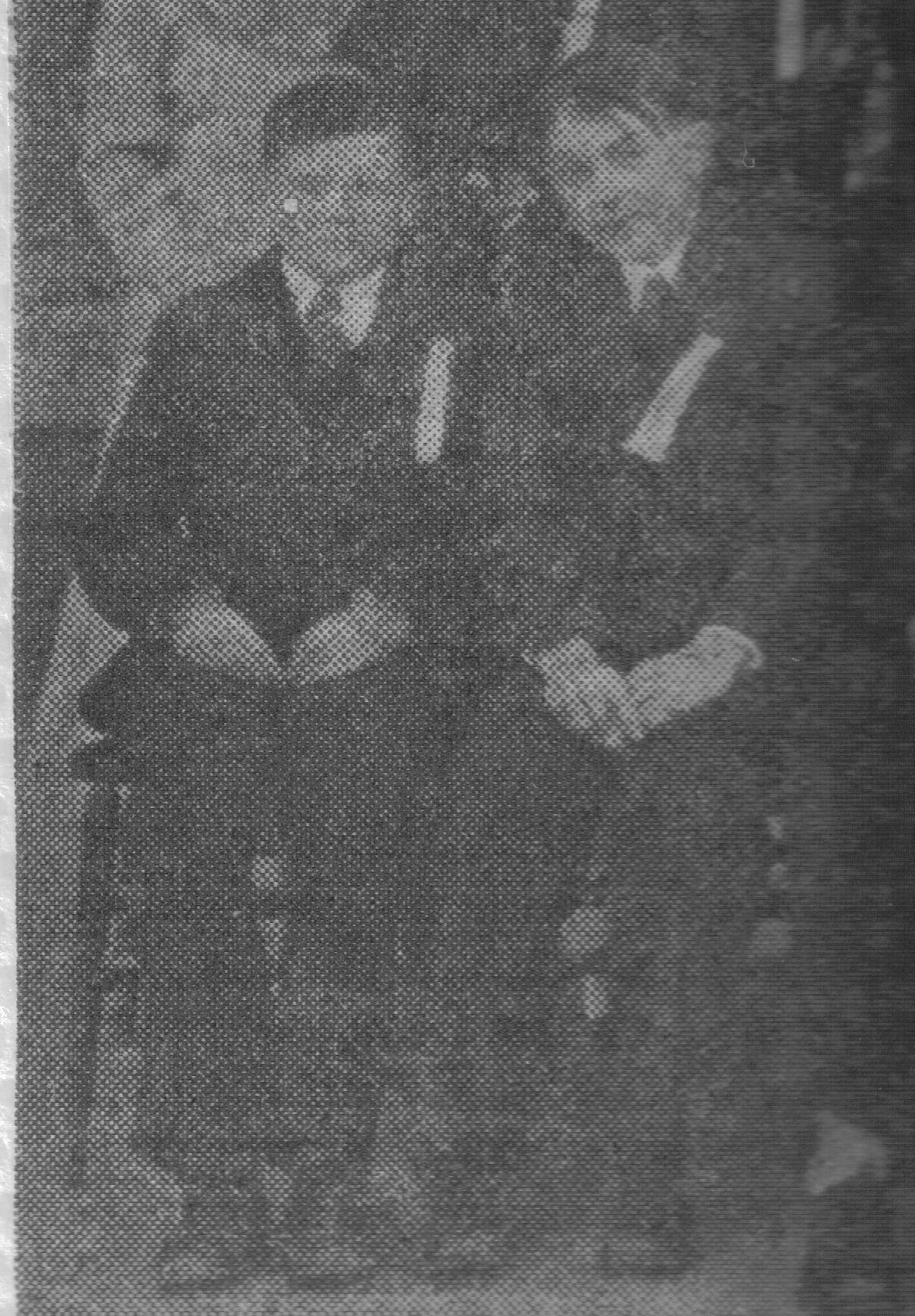
From left: Joseph Donner with friend John Shaudis at their Ridgely Grade School graduation, 1932.

From left: Joseph Donner with friend John Shaudis at their Ridgely Grade School graduation, 1932.

According to the Illinois State Journal, Joe apparently began participating in a string of petty burglaries and larcenies starting two months after his grade school graduation, on July 4, 1932, when he entered the Woodland Ave. home of Walter Hanson with an older boy, Joseph Orback, 17. Orback was the son of the late Frank Orback and Anna (Baksyte) Orback, my father’s paternal aunt.

On Dec. 1, 1932, according to the newspaper, Orback, Donner, Charles Jedrosky, 17, and George Sotak, 17, all–except Donner, of N. 17th St.–and likely all Lithuanian-Americans, broke into the Voyzel lunchroom on R.R. 8, taking a small quantity of tobacco and candy to sell. Then Orback, Jedrosky and Donner, minus Sotak, broke into the Frank Mason Grocery at Walnut & Calhoun Ave., where they were ambushed by police. Young Donner was shot in the back and the side when he ran away instead of obeying the order to halt. While initial reports indicated he was improving, poor Joe died of his wounds at St. John’s Hospital on Dec. 3, and was buried at Calvary on Dec. 6.

A State Journal article dated Dec. 1, 1932, states that Patrolmen John Rooney and William Cellini, and Detectives Edward Hagan and Samuel Phoenix, were the police who had fired the shots. The coroner’s inquest did not determine which officer fired the shots that hit and killed young Donner. According to Bill Cellini, Jr., grandson of Patrolman William Cellini, “Sam Phoenix (1903-73) was one of the few African-Americans on the force at that time. He must have joined at the same time as my grandfather, because on the 1930 census, Sam is listed as a coal miner at 520 North 12th. Then by 1931, he’s on the force. It’s remarkable that he got to be a detective in the short span from 1931-32.” Edward Hagan, despite his Irish-sounding name, was another African-American detective. Patrolman John Rooney was from England, and the 1930 census shows he immigrated to the U.S. in 1910.

Probable ringleader Joe Orback went on to violate the probation he was granted for the 1932 break-ins and was sent to Menard for two years in 1933. This seems to have launched him into a life of crime, since the 1940 Census finds him in prison at Marion. I sometimes wonder if young Donner might not have ended as he did if it hadn’t been the Depression, and he hadn’t taken up with the wrong older boys.

Shot by Tavern Owner

Gilmore Johnson, 12, of N. 14th St. was breaking through the window of a side door at Lapinski’s Tavern at 11th and Washington at 5:50 a.m. Dec. 20, 1937, while his 13-year-old accomplice Griffin Clark kept watch–when Lithuanian immigrant owner Simon (Sam, Sr.) Lapinski, who slept upstairs, was awakened by the noise and grabbed his gun. After Lapinski shouted at the boy, he took off south down 11th Street. Lapinski ran into the street and fired three shots in warning, while ordering Johnson (never having seen Clark) to halt, and then fired a fourth shot that he said he DID intend to hit the fleeing burglar—whom in the darkness, he didn’t know was just a boy. Young Gilmore was fatally wounded.

An unloaded .38 caliber pistol and a watch were found on him, taken from the Starlight Tavern at 1230 E. Washington, which the boys had previously broken into. The newspaper reported the two boys also had broken into the Edward McCann tavern at 917 E. Washington and the Leon Stuart filling station at 14th and Jefferson, and had been apprehended three times before and released, due to their youth. This time the surviving boy was turned over to juvenile authorities.

An “all-colored” coroner’s jury unanimously recommended that Sam Lapinski be turned over to a grand jury, and he was held for investigation by a grand jury, but I could find no further articles about what happened next. Sam, Sr. was active at St. Vincent de Paul Lithuanian Catholic Church and its chapter of the Knights of Lithuania. His son Sam, Jr., a former miner, had recently joined the Springfield police force and later took over Lapinski’s tavern.

My thanks to Bill Cellini, Jr. and Tom Mann, a retired Springfield police officer and genealogy researcher, for their assistance with this post.

Outlaws & Outliers

14 Monday Jul 2014

Posted by sandyb52 in Sandy's Blog

≈ 4 Comments

With the help of loving and intact families and their church, many Lithuanian-Americans here were able to rise above generations of harsh oppression in the old country and harsh conditions in the new to achieve a kind of impoverished respectability. Not, all, however. I would wager that almost every Lithuanian-American from Springfield has at least one outlaw or outlier in the closet, not too many generations back.

Some of these “outlaws” were probably genetically disposed to go a-wilding. The majority, I would guess, had never known a family or community life un-marred by unnatural death and spontaneous acts of violence: crimes of passion, temporary insanity or inebriation that served to relieve unbearable pressures from the daily struggles of living–unfortunately, by doing harm to a fellow human being who was similarly struggling.

Of course, there was little treatment for the disease of alcoholism, let alone the full spectrum of mental illness or criminal tendencies at the turn of the Twentieth Century—no welfare or social safety net. Insecurity–physical, economic and social–was the rule for most immigrants, and early death smote the upstanding as unexpectedly and frequently as the morally or criminally deranged. Property crime to support the family after the injury or death of a father in the coal mines launched more than one disadvantaged youth into the Illinois penal system.

Bootlegging

According to Wally Surgis, Jr., bootlegging during Prohibition provided the perfect pathway to illegal activity for Lithuanians and other immigrants for whom alcohol consumption and production was a way of life. In fact, pervasive alcoholism and crimes under-the-influence in burgeoning immigrant communities drove much popular support for the Christian Temperance movement that resulted in Prohibition.

Wally, Jr. reports that his Surgis (Sudrius) grandparents in Auburn were illiterate but owned a still. During Prohibition, Wally’s father, Walter, Sr., and his sister were employed by their parents to haul illegal, home-made alcohol to customers. Grandfather Frank Surgis, Sr. actually became quite rich from his bootleg trade, and later went to live with his daughter on E. Mason in Springfield, where medical treatment for black lung disease eventually ate up all his earnings, so that he died in the same poverty he thought he had escaped.

Young Wally, Sr. continued on the wrong side of the law, eventually running with the famous Southern Illinois bootlegging gang headed by immigrant Charlie Birger, and serving sentences at Menard (Chester) for bank robbery and bootlegging. Wally, Jr. adds: “During Prohibition or the Depression, my father and a friend from Auburn got hold of some phony deputy sheriffs badges and went into the bars in Springfield under the guise of being officers of the law. They confiscated the slot machines, took them somewhere and broke them open for the money inside. It didn’t take long for the big boys in Chicago to come downstate to put a permanent stop to this.

“My dad’s friend got wind of this and left town, but my dad was caught and taken out to Lake Springfield to be done away with. He somehow managed to escape when they stopped the car, dove into the Lake and swam away. He didn’t say, but I assume he was probably under fire as he swam to safety. He then got out and walked the railroad tracks back to Auburn to stay off the road. He said he packed some clothes, went hitch-hiking and didn’t care which direction, as long as it was far away. He ended up in Oklahoma, worked the coal mines there for a while and then rode the rails to Colorado. Dad stayed gone for three years and figured it was safe after that to come home. I doubt if he ever stole a slot machine again.”

Wally, Sr.’s criminal career did not later prevent him from working for Pillsbury Mills and the City of Springfield. He was also famous for fishing and gardening and sharing produce with the poor of E. Reynolds St. through friend and barkeep Tony Romanowski (Ramanauskas).

Untimely / Violent Death

To see just how pervasive crime and unnatural death were in the Lithuanian immigrant community here, one only need look at the Sangamon County Coroner’s inquest book from a 12-day period in February 1926. According to these records, on Feb. 9, Alice Tamoszaitis, 37, born in Lithuania, was shot and killed at 6:30 a.m. in her home at 1604 E. Carpenter by Charles Kaziusis, while the defendant was apparently “laboring under some delusion with murderous intent.” Kaziusis subsequently shot himself through his left lung and died on Feb. 22, according to newspaper reports.

The grave of Alice Tamoszaitis (Tamosaitiene), Calvary Cemetery

The grave of Alice Tamoszaitis (Tamosaitiene), Calvary Cemetery

John Blazis, 45, of 2565 S. College, was cut in half by a train on the Wabash tracks between the Wits and Iles junctions at 6:15 a.m. Feb. 18. No speculation was offered as to whether the death was intentional, but it appeared Mr. Blazis had fallen or was lying across the tracks. Then on Feb. 21, my father’s uncle by marriage, Frank Orback, Sr., died after consuming a quantity of 55-proof alcohol with traces of poison wood alcohol that had been sold to him (despite Prohibition) by Antanas and Ursula Lawrence (Launikonis), as alleged by Frank’s widow Anna Orback in a civil suit for $10,000 in damages, which she later dropped.

I almost always stumble over arrests/crimes involving local Lithuanian immigrants when searching newspaper archives for other information. For example, in 1910, Lithuanian immigrant William Gurski was charged with stabbing his countryman and N. 15th St. neighbor Tony Krodok in the right lung as he stepped off a streetcar following a dispute between the two men earlier that night in a downtown bar. Krodok was described as a boarder. Both men were probably miners. Lithuanian Mike Karinanski also was later held for complicity in the stabbing.

All in the Family Violence

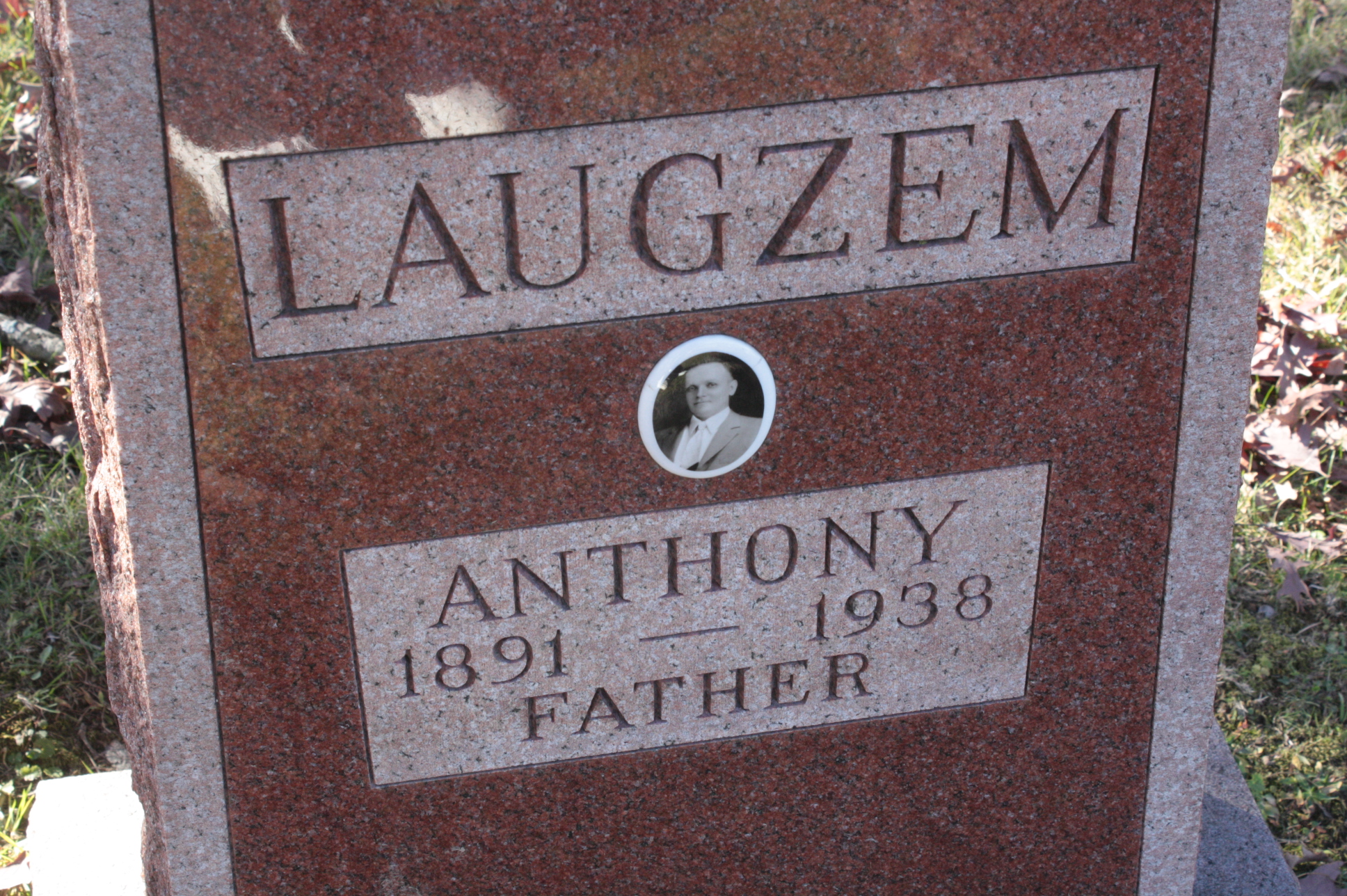
The case of Anthony (Antanas) Laugzem (1891-1938) is an example of the alcohol-fueled violence that could erupt at immigrant social gatherings. Despite his pleas of innocence, Laugzem was found guilty of murdering a fellow Lithuanian-American, Tony Pachules, by a Sangamon circuit court jury on Oct. 18, 1922, according to the Illinois State Journal. Party guests had placed bets on an informal dancing contest at the Laugzem home on E. Black St., in the Ridgely neighborhood. Laugzem testified that a dispute erupted between the victim and another man over their bets, and he asked both men to leave. Pachules, the victim, was shot in the back while walking away from the house. His deathbed statement claimed he turned and saw Laugzem firing from the porch, but Laugzem never wavered in his testimony that he remained inside the house and that the other man who was asked to leave must have shot Pachules.

Photo by William Cellini, Jr.

Photo by William Cellini, Jr.

Laugzem’s lawyer, Edmund Burke, a prominent former state’s attorney, appealed the conviction, unsuccessfully, all the way to the Illinois Supreme Court after being denied a new trial based on insufficient evidence. Burke’s insufficient evidence claim might have been based on the “X” signature by the illiterate victim on the written statement naming Laugzem. His 14-year trial sentence was upheld, even though he continued to deny guilt. (Laugzem’s daughter Stella Laugzem (Lang) later became the first of three wives who all predeceased John (Nevardoskus or Nevidauski) Nevada, who earned a purple heart in World War II.)

It seems clear that the same language and economic barriers that ghettoized immigrants also made violent crime largely an “all in the family” affair. Many individuals could survive and succeed only by cutting themselves loose from the lifelong burden of relatives who consistently drank away all their earnings, then begged for money, or descended into a life of crime. Clearly Lithuanian-on-Lithuanian violence, including domestic and sexual abuse, added significantly to the minefield of risks Lithuanian immigrants and their offspring had to sidestep while walking the “straight and narrow” in their adopted land.

Two Presidents Visit Springfield

05 Saturday Jul 2014

Posted by sandyb52 in Sandy's Blog

≈ 5 Comments

Antanas Smetona, President of Lithuania 1919-1920 and 1926-1940.

Antanas Smetona, President of Lithuania 1919-1920 and 1926-1940, Wikipedia. Photo owned by the National Museum of Lithuania. http://creativecommons.or/licenses/by-sa-4.0/

Due to its large Lithuanian population, Springfield has played host to two Lithuanian presidents over the years: to be exact, one president-in-exile and one president-to-be. The first man was the most important leader of Lithuania’s inter-war period of independence.  The second was a World War II exile who returned to lead Lithuania through the trials and triumphs of its early post-Soviet years.

On May 3, 1941, Lithuanian President Antanas Smetona became the first foreign president ever to visit Springfield, according to the Illinois State Journal. A life-long patriot who had worked for and signed the 1918 Act of Independence of the new Lithuanian republic following World War I, Smetona became Lithuania’s first president in 1919 and subsequently, its longest-serving leader. He visited Springfield as a president-in-exile following the Soviet invasion and illegal  annexation of Lithuania in the summer of 1940.

According to the newspaper, an official delegation including Springfield’s mayor met Smetona’s train from Chicago at the depot, and police led his motorcade to the Illinois Capitol. (So the public could line the streets, the route of the motorcade was printed in advance in the newspaper: west on Jefferson, south on Fifth St. and then west on Capitol Ave.) The official welcoming delegation included Fr. Stanley Yunker (Junkeris), of St. Vincent de Paul Lithuanian Catholic Church, and William Yates (Yacubasky), chair of the Sangamon County Republican Central Committee. Several local women also helped arrange the visit and welcome the president: Mrs. Verona Welch (Wilcauskas), Mrs. Bertha (Yacubasky) Adams (Adomaitis), and Mrs. Julia (Gedman) Lukitis.

One newspaper report said Smetona proceeded to have an informal meeting at the Executive Mansion with Gov. Dwight Green. Other reports said he was met at the depot and introduced at a luncheon at the Leland Hotel (sponsored by Springfield’s Mid-Day Club) by (acting governor) Lt. Gov. Hugh Cross, who likened the Lithuanian president to Abraham Lincoln and noted his achievement in establishing compulsory education and widely extending literacy.

St. Vincent de Paul Church choir in performance dress, undated State Journal Register photo, circa 1940. Ann (Tisckos) Wisnoski center, with necklace.

St. Vincent de Paul Church choir in performance dress, undated State Journal-Register photo, circa 1940. Ann (Tisckos) Wisnoski center, with necklace.

Prior to his speech in English and Lithuanian, Smetona was honored by the singing of the Lithuanian national hymn by St. Vincent de Paul’s choir (in costume) and the playing of the anthem and folk songs by George W. Killius on violin. Members of the choir that day included: Bernice Bernotas, Agnes Bakunas, Genevieve Bugaveski, Frances Petrovich, Bernice Kurila, C. Turasky, Petronella Shimla, Ann Zintelis, Virginia Shadis, Bernice Rautis, Mary A. Shimkus, and Antocie (sp?) Zipnis.

Following lunch, the Lithuanian president toured the Lincoln tomb, where he was greeted by other Lithuanian-Americans, and Lake Springfield, where he stopped at the home of Saddle Club owner Joseph Welch (Wilcauskas). Before returning to Chicago by train, Smetona was also feted at public reception at the Leland Hotel.

mystery photo: Mary (Dodd) Dunham Homer as a child with her mother Helen (Banzin) to left & looking down. Early 1940s.

mystery photo: Mary (Dodd) Dunham Homer as a child with her mother Helen (Banzin) Dodd to left & looking down. Early 1940s. Courtesy of Rick Dunham.

When I heard that local Lithuanians lined the streets to see President Smetona’s motorcade, and saw the dirndl dresses worn by the choir at Smetona’s luncheon, I wondered if this photo, owned by Rick Dunham, could have come from that day…? (Note the boy in Cossack hat.)

The State Journal reported that President Smetona’s luncheon address detailed the brutality being suffered by the people of Lithuania at the hands of the Soviet Union, pleading for the return of justice and freedom to his homeland. For more information about the remarkable life and career of Antanas Smetona, please see: http://en.wikipedia.org/wiki/Antanas_Smetona

A Second President visits

Fifty-six years and a long Soviet occupation later, Springfield was visited by Valdas V. Adamkus, a Lithuanian-born émigré who had risen to power inside the U.S. Environmental Protection Agency (EPA) in Chicago. Adamkus visited here on March 27, 1997 to give a talk at the University of Illinois at Springfield sponsored by the EPA’s International Division. He was in the process of retiring from the EPA and moving back to Lithuania, after re-establishing his citizenship there in 1992. Adamkus also likely was already in the process of raising $1.25 million, with the help of Chicago friends, for his successful run for the Lithuanian presidency in 1998.

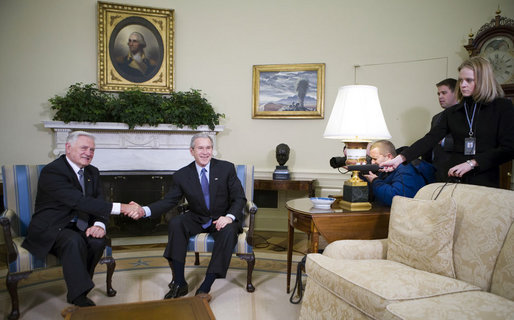
President George W. Bush exchanges handshakes with President Valdas Adamkus of Lithuania, Feb. 12, 2007. White House photo by Eric Draper.

President George W. Bush exchanges handshakes with President Valdas Adamkus of Lithuania, Feb. 12, 2007. White House photo by Eric Draper.

Members of the local Lithuanian-American Club, some of whom knew Adamkus personally (Ben & Vita Zemaitis), attended his March 27 talk and I believe, met him for dinner or a reception. Perhaps there was even a local fundraising event. Those photographed with Adamkus that day included: Romualda (Sidlauskas) Capranica, Rita Kupris, Vita Zemaitis, and Barbara Endzelis.

President Adamkus went on to lead Lithuania from 1998 to 2003, and then from 2004 to 2009, critical years for the country’s admission to the European Union and NATO, and its modernization and re-integration into the democratic world order. For more information about Valdas Adamkus, Lithuania’s émigré president, who was also the longest-serving senior executive of the U.S. EPA and largely responsible for the clean-up of the U.S. Great Lakes, please see: http://en.wikipedia.org/wiki/Valdas_Adamkus

Footnotes: In 1998, while I was working in Miami at a PR agency, I noticed a mistake on the front page of the Wall Street Journal. I promptly contacted the writer of the article to inform him that the Valdas Adamkus who had been cited for mysteriously or perhaps frivolously deciding to renounce his American citizenship had done so to become president of another nation: Lithuania.

In 2005, while visiting relatives, I was shown the Lithuanian Presidential Palace in Vilnius. It was interesting for me, while so far away from home, to think of the fellow Lithuanian-American residing there.

Our Sports Hall of Fame

01 Tuesday Jul 2014

Posted by sandyb52 in Sandy's Blog

≈ 2 Comments

Dr. Al Urbanckas (left) named to the Illinois State Journal-Register's Sports Hall of fame, 1992.

Dr. Al Urbanckas (left) named to the Illinois State Journal-Register’s Sports Hall of fame, 1992.

Lithuanian-Americans have contributed their share of Springfield sports heroes and athletic “greats.” Names like Rudis, Blazis, Banaitis, Wisnosky, Gurski, Darran, Gvazdinskas, Bestudik and Alane have graced the columns of our local sports pages over the years. However, even in this company, the Urbanckas name stands out.

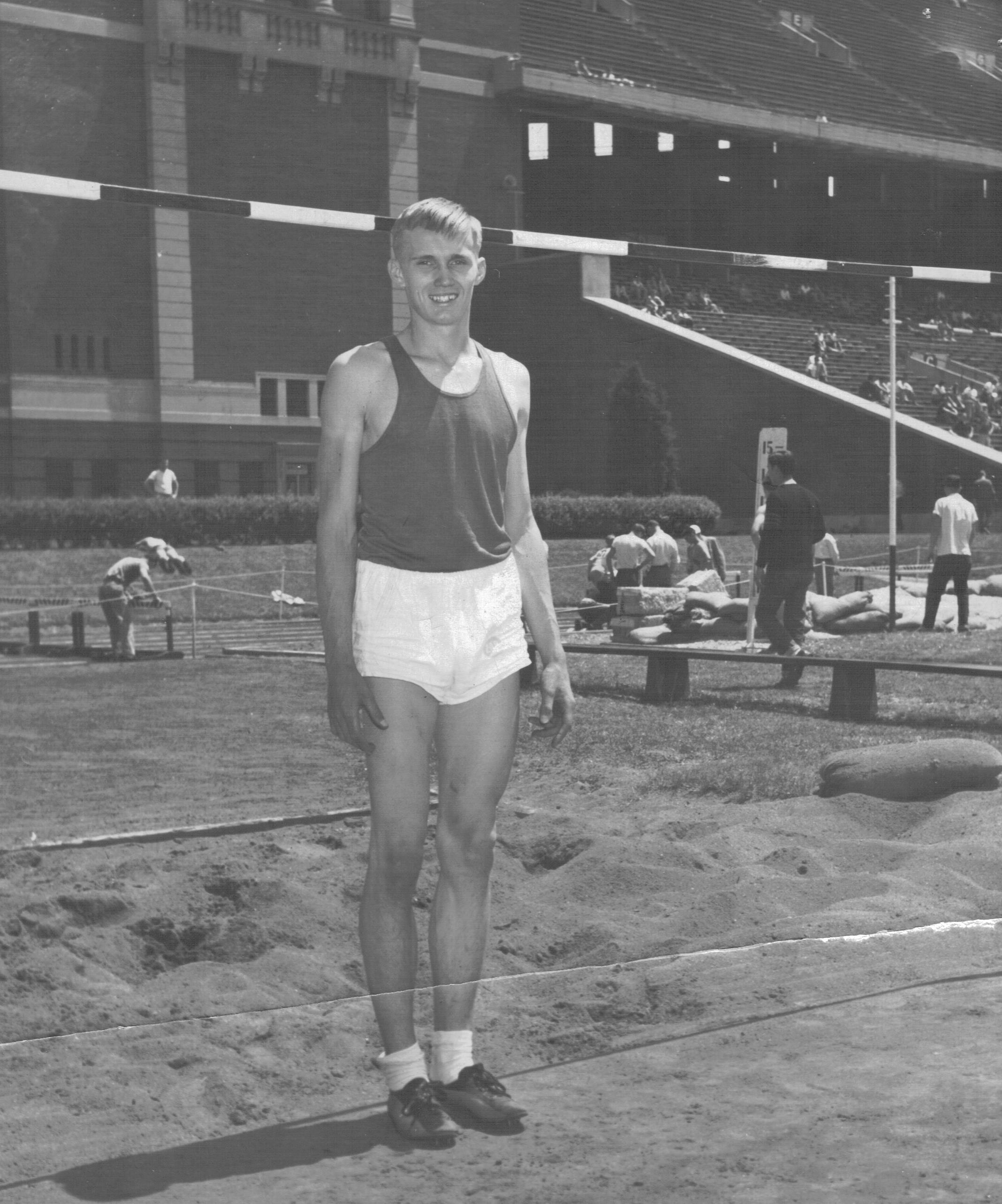
Al (Alfred) Urbanckas, Jr., who later became a Springfield dentist, played basketball for Cathedral Boys High School, becoming the first Cathedral athlete to lead the City Tournament in scoring the same year (1954) that he won the state high jump title. Dr. Al was all-city in basketball in both 1953 and 1954. Later, he set the Big Ten high-jump record on behalf of the University of Illinois (6-8 & 3/4 inches) that stood 1954-64, and in 1957 won the high jump in the Big Ten outdoor and indoor track & field conferences.

Al Urbanckas in high jump competition, 1950s.

Al Urbanckas in high jump competition, 1950s.

After he also tied for first place in the NCAA high jump competition that same year, Dr. Al was named Midwest track athlete of the year (1957) by Coach and Athlete magazine. His jumps routinely boosted U of I’s rankings at Big Ten track and field events throughout his college career.

Dr. Al’s uncle Peter Urbanckas, Springfield High School Class of 1934, played SHS basketball and football (as offensive and defensive left tackle). Known as the “Bone Crusher” on the gridiron, Peter later helped bring Golden Gloves (boxing) to the Illinois State Armory in Springfield, and still later was known as “Pistol Pete” for recruiting thousands of new members for Springfield’s YMCA 1968-94. He was inducted into Springfield’s Sports Hall of Fame (as a “Friend of Sport”) at age 85 in 2000, nine years after the induction of his nephew, Dr. Al.

Not to be outdone, Debbie Urbanckas (Jemison), daughter of Dr. Al and Peter’s great niece, was inducted into Springfield’s Sports Hall of Fame in 2014 for her outstanding career in Sacred Heart Academy and University of Missouri (Columbia) volleyball.

Debbie Urbanckas, high school.

Debbie Urbanckas, high school.

Debbie graduated from SHA in 1981 after being named to “All City Volleyball” in 1979 and 1980. At UM, Debbie was a starting outside hitter for four years and captain of the team during her junior and senior years. She set the university’s record for service aces in a four-game match, and held the record for kills –23 in one match—for five years. Debbie even made the final cut for the U.S. Junior Olympic Team.

One more Urbanckas, Dr. Al’s father and Peter’s brother Al, Sr., completed four decades of “chain gang” service at high school football games in Memorial Stadium at age 86 in 1997, along with his Lithuanian-American friend Peter Kurila. Al, Sr. had played football for SHS and was a member of the class of 1928.

Photo of Chaperone Mary (Rudis) Bestudik of the AAGPBL.  (From the official site of the AAGPBL.)

Photo of Chaperone Mary (Rudis) Bestudik of the AAGPBL. (From the official site of the AAGPBL.)

In addition to the four Urbanckases just mentioned, the Springfield Sports Hall of Fame also includes Lithuanian-Americans Ed Gvazdinskas (2004) and “Friends of Sport” Rich Lamsargis (1999) and Bill Maslauski (1997).

Inducted in 1993, Mary (Rudis) Bestudik was a multi-talented athlete (basketball, baseball, diving, bowling) who played women’s basketball at the regional and national level, and captained the 1934 AAU All-American basketball team. Nine years later, she teamed with Marge Tapocik to win the scratch and handicap doubles titles in the women’s city bowling tournament. An early champion of women’s sports, in 1948 Mary also chaperoned away games for the “Springfield Sallies” AAGPBL team (Remember the film, “A League of Their Own?).

Mary was the wife of Sports Hall of Fame member Joe Bestudik (2003),  a U.S. Navy veteran of World War II who was drafted by the Brooklyn Dodgers baseball team prior to the war. He played for several teams in the American League after the war, as well.

Read more: http://databases.sj-r.com/sports/hall-of-fame/inductee/331/#ixzz3MOuwjFvI

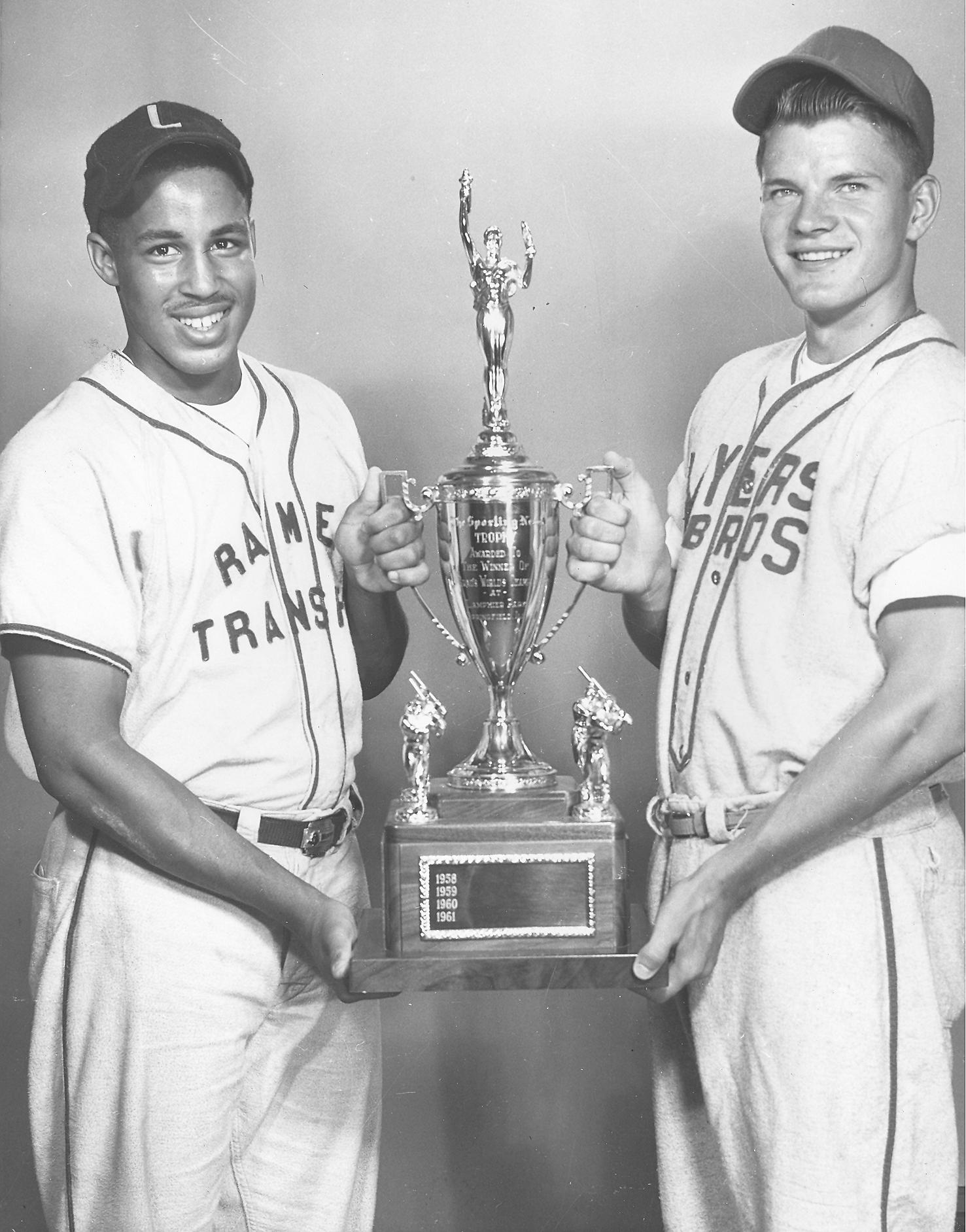
l to r: Gordon White and Dick Alane holding the trophy for the Colt League World Series, 1958.

l to r: Gordon White and Dick Alane holding the trophy for the Colt League World Series, 1958.

Here are some other notable Lithuanian-American sports men and women:

Matt Banaitis was a baseball catcher and winning quarterback (2014) for the Chatham Glenwood Titans.

Enoch Blazis and John Wisnosky played football for Griffin High School. After four years on the Griffin team, Enoch also played for the U.S. Naval Academy in Annapolis, M.D. (He’s now a development executive for St. Olaf’s College in Northfield, Minn.)

Dianne (Darran) Warren was the first Southeast High School swimmer to go to state in 1978. Swimming for Southeast in a city meet, her younger sister Kristen broke the record for the 500-meter freestyle that’s still on the board at Eisenhower Pool. She also went to state in the 200 and 500 freestyle, placing fourth in the 500.

Dick Alane, #35, knocks the ball down for Griffin High School's basketball team, 1958

Dick Alane, #35, knocks the ball down for Griffin High School’s basketball team, 1958

Dianne and Kristen’s dad Bud Darran, as president of Anchor Boat Club, spearheaded a Sports Night each year that featured a whole series of pro athlete speakers, including Coach Mike Ditka of the Chicago Bears. Bud also served as a high school swim “starter” for 37 years.

Dick Alane was a triple threat on the Griffin High School baseball, basketball and football teams.

John Gurski won the Springfield Public Links Golf Tournament in 1948.

From age 68 to 88, George Rackauskas was a committed volunteer organizer for The State Farm (LPGA) Classic at The Rail Golf Course (1980-2000).

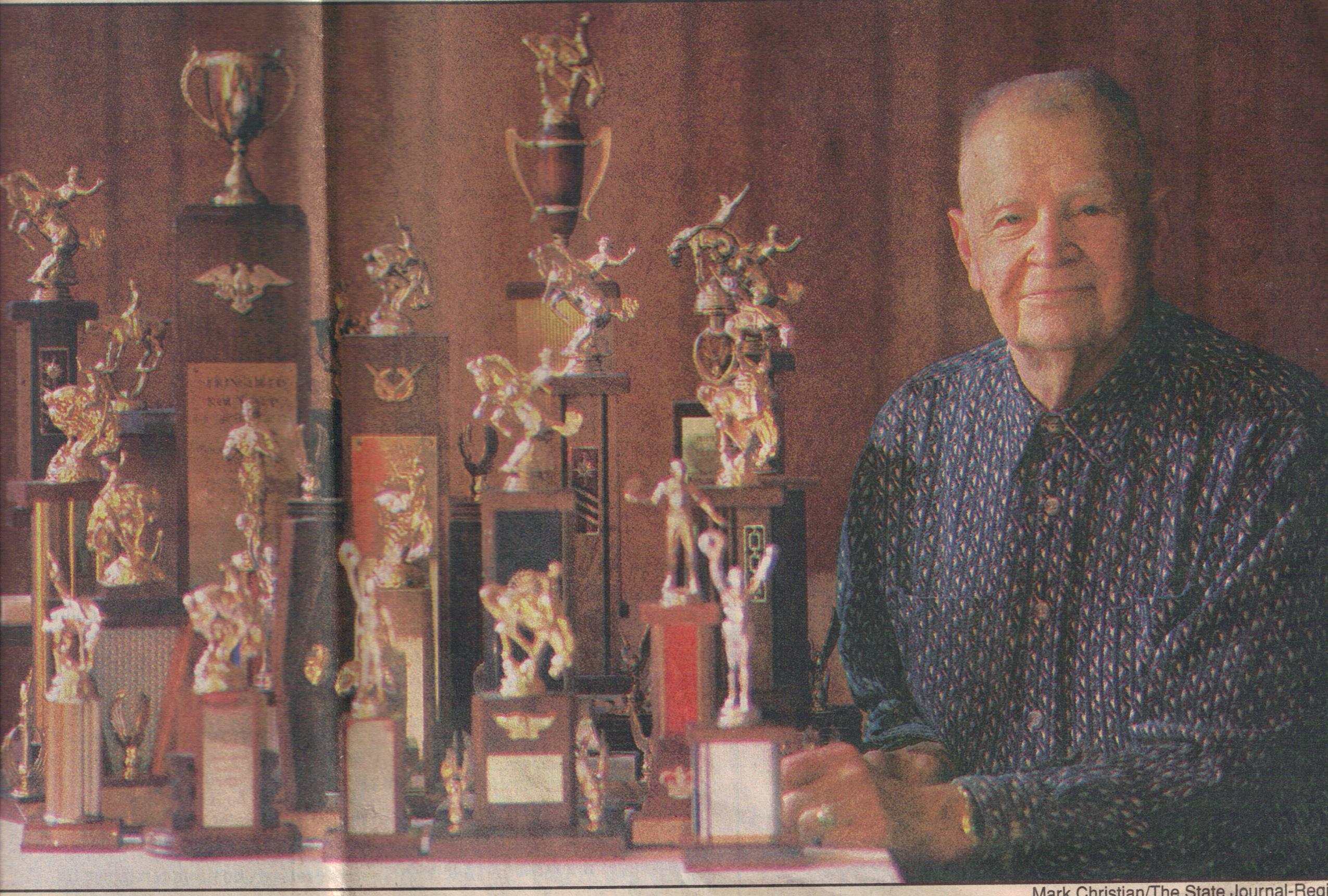
Peter Urbanckas,

Peter Urbanckas, “Friend of Sport” Hall of Famer, with his trophies, State Journal-Register, Dec. 25, 1997.

Blogroll

  • Enos Park Neighborhood Improvement Association
  • Illinois State Historical Society

Lithuanian Websites

  • Amber Reunion
  • Lithuanian World Center
  • Lithuanian-American Club of Central Illinois
  • Lithuanian-American Community, Inc.
  • Lithuanian-American Publications
  • Lithuanians Of Arizona
  • LTnews.net
  • LTUWorld
  • The Lithuania Tribune

St. Vincent’s murals resurface

Two of the murals from St. Vincent de Paul's Catholic Church have resurfaced. Take a look!

Search

Enter your email address to follow this blog and receive notifications of new posts by email.

Join 142 other subscribers

E-mail us!

Questions or comments? Please e-mail sandybaksys@gmail.com.

Email us!

Questions or comments? Please e-mail sandybaksys@gmail.com.

Blog at WordPress.com.

Privacy & Cookies: This site uses cookies. By continuing to use this website, you agree to their use.
To find out more, including how to control cookies, see here: Cookie Policy
  • Subscribe Subscribed
    • Lithuanians in Springfield, Illinois
    • Join 142 other subscribers
    • Already have a WordPress.com account? Log in now.
    • Lithuanians in Springfield, Illinois
    • Subscribe Subscribed
    • Sign up
    • Log in
    • Report this content
    • View site in Reader
    • Manage subscriptions
    • Collapse this bar
 

Loading Comments...