Immigrant Soldier to U.S. Citizen

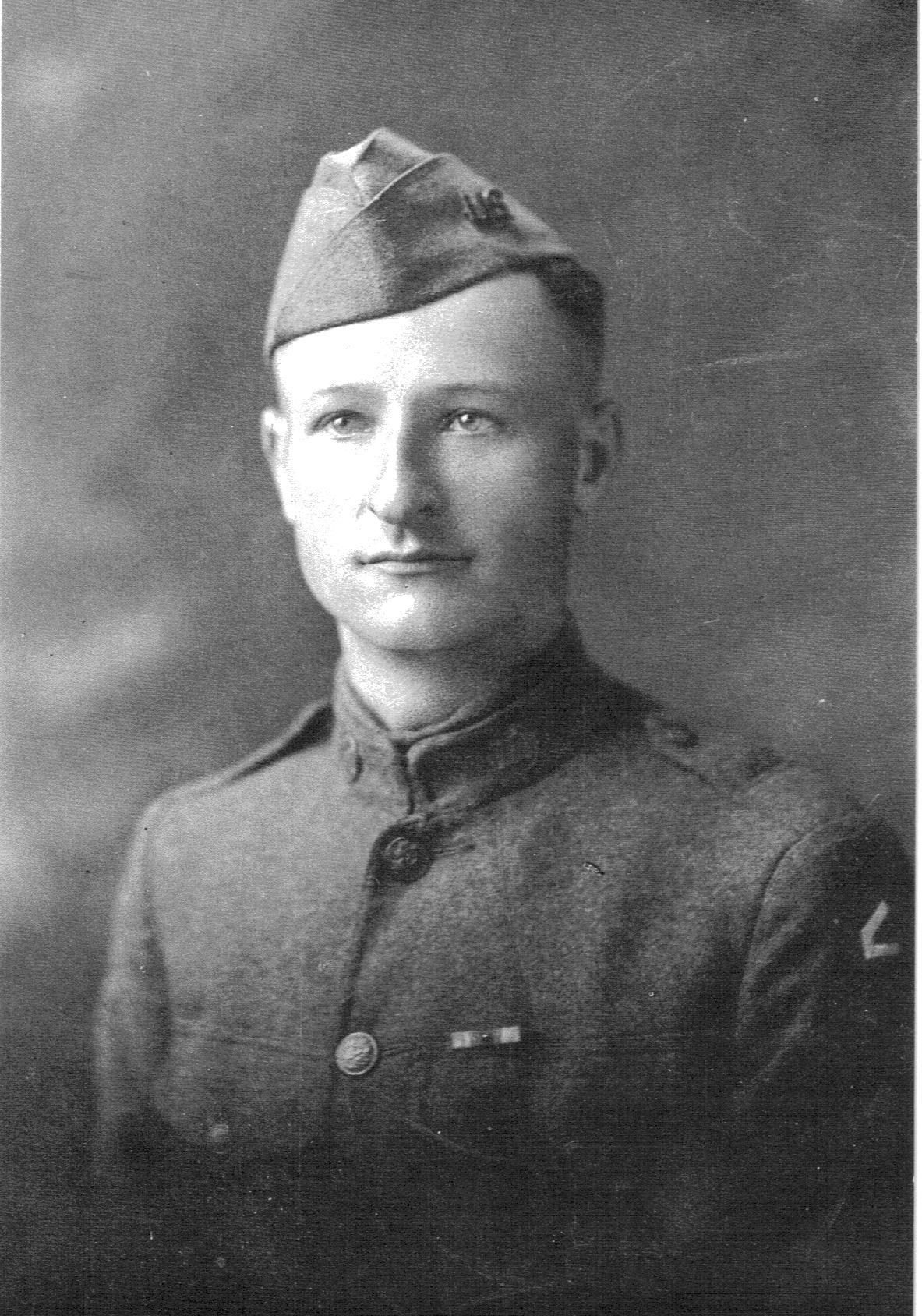
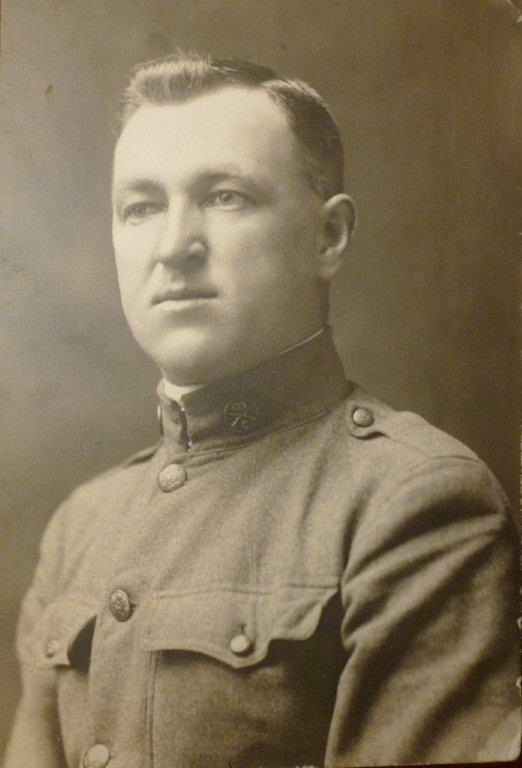
Lithuanian immigrant John Joseph Straukas, age 28, of Riverton, American Expeditionary Force, 1918.  He received expedited U.S. citizenship as a result of his service to our country in World War I.

Lithuanian immigrant John Joseph Straukas, age 28, of Riverton, American Expeditionary Force, 1918. He received expedited U.S. citizenship as a result of his service to our country in World War I.

Editor’s note: An estimated 50,000 Lithuanian immigrants wore the U.S. uniform in World War I. William Cellini, Jr. writes today to commemorate all the immigrants who served and to explain how war could unlock the door to U.S. citizenship.

Immigrants in War, Citizens in Victory
By William Cellini, Jr.

Foreign-born citizens had served in the U.S. military for over 100 years prior to our country entering World War I. However, the “War to End All Wars” was unique in terms of the number of non-U.S. born men drafted into the military.

On April 6, 1917, Congress declared war on Germany and immediately passed the Selective Service Act requiring all men in the U.S. between the ages of 21 and 31 to register at their community draft boards. Within a few months of initial registration, about 10 million men across the country responded. By the summer of 1918, eligibility was expanded to include men 18 to 45 years old. Included in this wide net were native, naturalized, and alien men.
Kansteon Staikunas (Kanstantas Steikūnas), 28, born in Balninkai, Lithuania. Illinois National Guard (later the 33rd Division, U.S. Army 129th Infantry, Company C). Killed in action during the battle of Meuse-Argonne, Oct. 11, 1918., 28, Illinois National Guard, killed in the battle of Meuse-Argonne, Oct. 11, 1918.

Kansteon Staikunas (Kanstantas Steikūnas), 28, born in Balninkai, Lithuania. Illinois National Guard (later the 33rd Division, U.S. Army) 129th Infantry, Company C. Killed in action during the battle of Meuse-Argonne, Oct. 11, 1918.

As the numbers of immigrant men called-up for military service increased, alien draftees were offered an expedited route to full U.S. citizenship regardless of their immigration status. Modifications for soldiers were made to all three key parts of the naturalization process: the Declaration of Intent, the Petition for Citizenship and the issuance of the Certificate.

Under the modified process, the residency requirement of five years before submitting a Declaration of Intent to become a U.S. citizen was eliminated. In addition, an expedited Petition for Citizenship was granted. Typically, the Petition required an oath of allegiance to be taken at the immigrant’s local courthouse. As an alternative, immigrant soldiers signed a pledge to the United States called a “written oath” and had two U.S. citizens verify their petition in writing, supplanting the need to go to a court. One can imagine written verification quite willingly being given by alien soldiers’ U.S.-born commanding officers and comrades-in-arms.
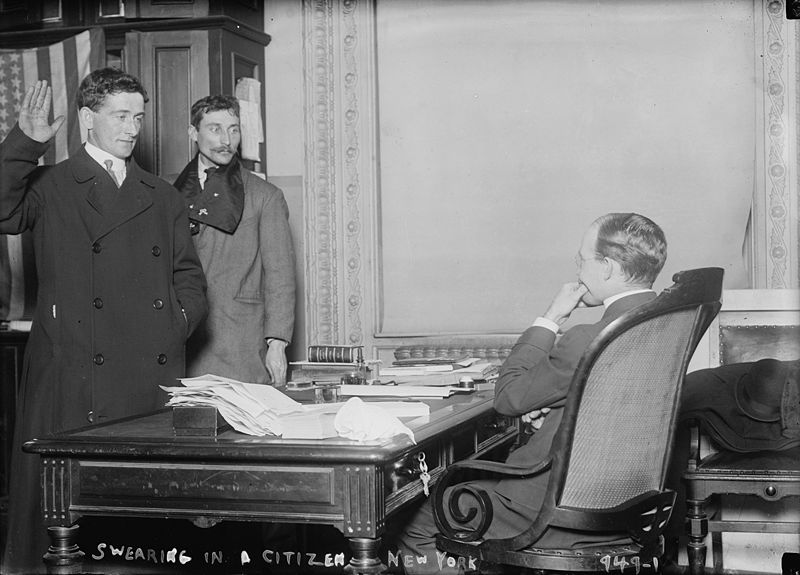
Courthouse oath. Naturalization image from the Library of Congress.

Courthouse oath. Naturalization image from the Library of Congress.

Finally, as an alternative to enduring the waiting period of several years to receive a Naturalization Certificate, once a soldier’s Petition was filed under the new war-time rules, the Certificate was granted immediately upon processing and approval. Conversely, immigrants asking for draft exemption or discharge from service would automatically have their citizenship process cancelled and would be forever disqualified from becoming citizens of the United States.

From May 8 to November 30, 1918, the government counted 155,246 immigrant soldiers among the newest citizens of the United States, not including an undetermined number of alien soldiers granted citizenship while stationed overseas.

Training and Commanding the Non-English Speaker

The unprecedented number of immigrants culled from a huge and diverse population of non-native English-speakers presented a challenge to their training and consolidation into an integrated fighting force. Seeing the need to address this, the U.S. War Department created a Foreign-Speaking Soldier Subsection (FSS) to assist in the training of immigrants who could not speak English.
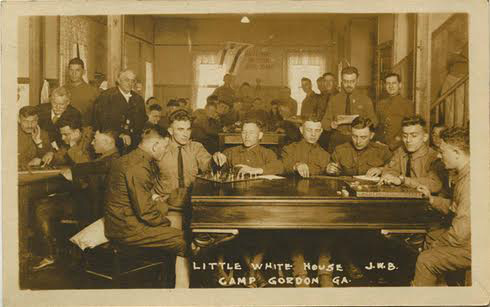
Camp Gordon, Georgia during World War I. Courtesy of flickriver.com

Camp Gordon, Georgia during World War I. Courtesy of flickriver.com

Lt. Stanislaw A. Gutowski, a naturalized citizen born in Russian-occupied Poland, led the first step in the training process. Gutowski investigated FSS military camps of Slavic-speaking soldiers because he could speak Russian and Polish and witnessed the use of interpreters alongside commanders to instruct non-English speaking inductees.

Auburn, Ill. Lithuanian-American who trained at Camp Gordon.

Auburn, Ill. Lithuanian-American who trained at Camp Gordon.

This method proved ineffective, as inductees were often moved out of combat instruction and placed on kitchen duty. Consequently, Gutowski and his staff developed a plan allowing foreign-born officers to lead ethnic-specific companies, “without encouragement of immigrant ‘clannishness.’” These ethnic companies were formed as a contingency so that if called into combat, non-English-speaking soldiers would have an officer to communicate with them in the field.

Due in part to the numerous dialects spoken by inductees, the FSS favored using officers who spoke another language at home with family members over those who had learned a second language through study or travel. (This would have qualified the bilingual sons of immigrants.)
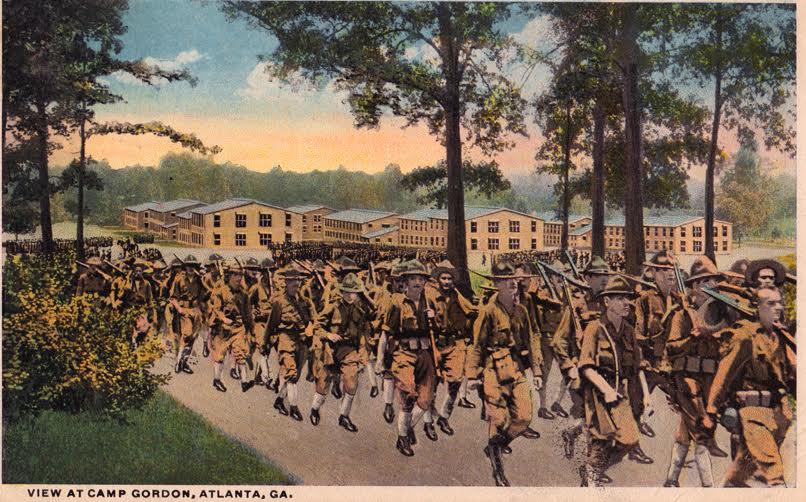
Postcard of Camp Gordon, near Atlanta.  Courtesy of foundpostcard.com.

Postcard of Camp Gordon, near Atlanta. Courtesy of foundpostcard.com.

The influx of foreign-born inductees grew so numerous by the spring of 1918 that the U.S. Infantry created “development battalions” of non-English speaking soldiers. At Camp Gordon near Atlanta, an experiment was conducted in the training of several thousand non-English speaking draftees, who were divided into three groups: 1.) a Development Battalion of physically fit men; 2.) a Labor Battalion of disloyal and enemy aliens and 3.) a Non-combatant Service group of physically unfit men with a proficiency in a trade. At Camp Gordon, the two most populous ethnic companies were Polish-born and Italian-born soldiers. Training in the soldiers’ native tongues was supplemented by instruction in English grammar.

By the war’s end, one in five inductees in the U.S. military were foreign born.

Sources:
Abbott, G. (1921). The immigrant and the community. New York: Century.
Gentile, F. N. (2001). Americans all!: Foreign-born soldiers in World War I. College Station: Texas A&M University Press.
Infantry Association. (1919). Infantry Journal, Vol. 15. Washington D.C.: United States Infantry Association
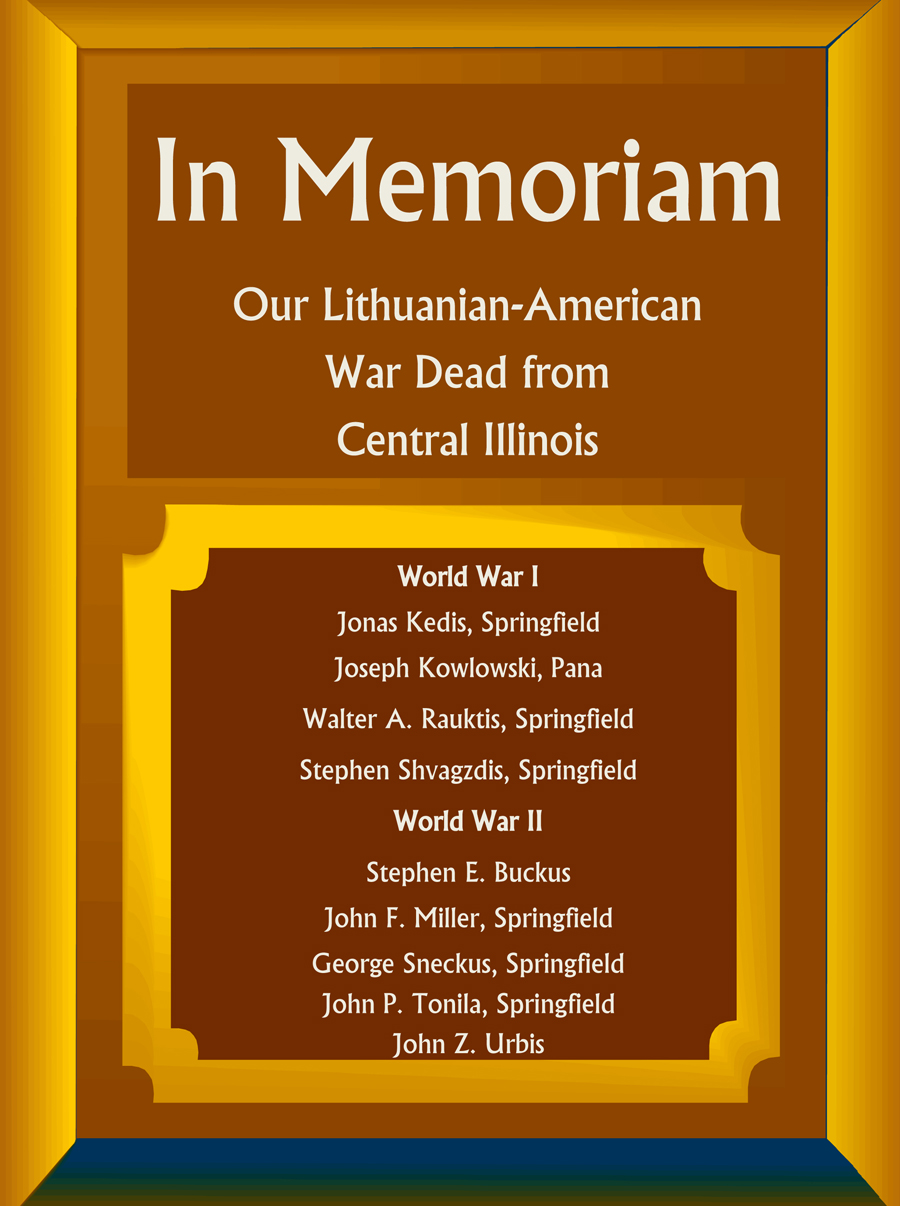
Designed by Melinda McDonald of Rochester, Ill.
Designed by Melinda McDonald of Rochester, Ill.

Lithuanian Ladies Night Out: When Wine and Rivers Flowed

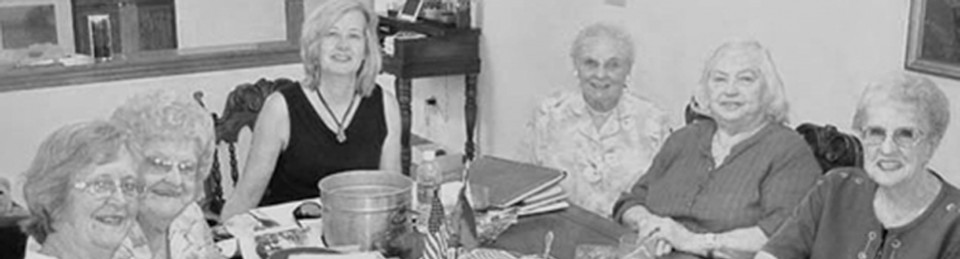
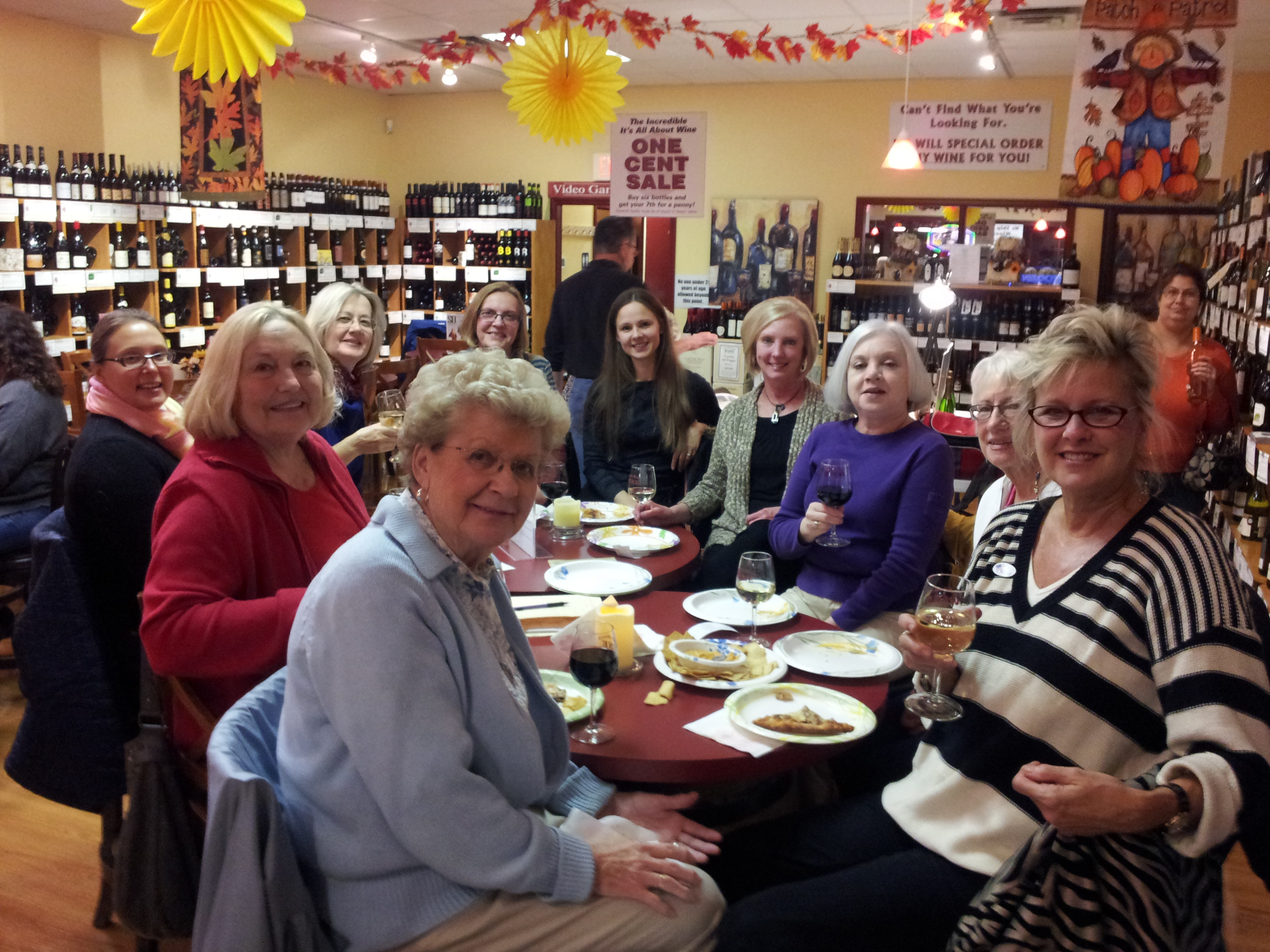
Counter-clockwise around the circle, from bottom left: Josephine, Sandy, Kristina, Sandy, Irena, Asta, Joanie, Mary, Sharon and Teresa.

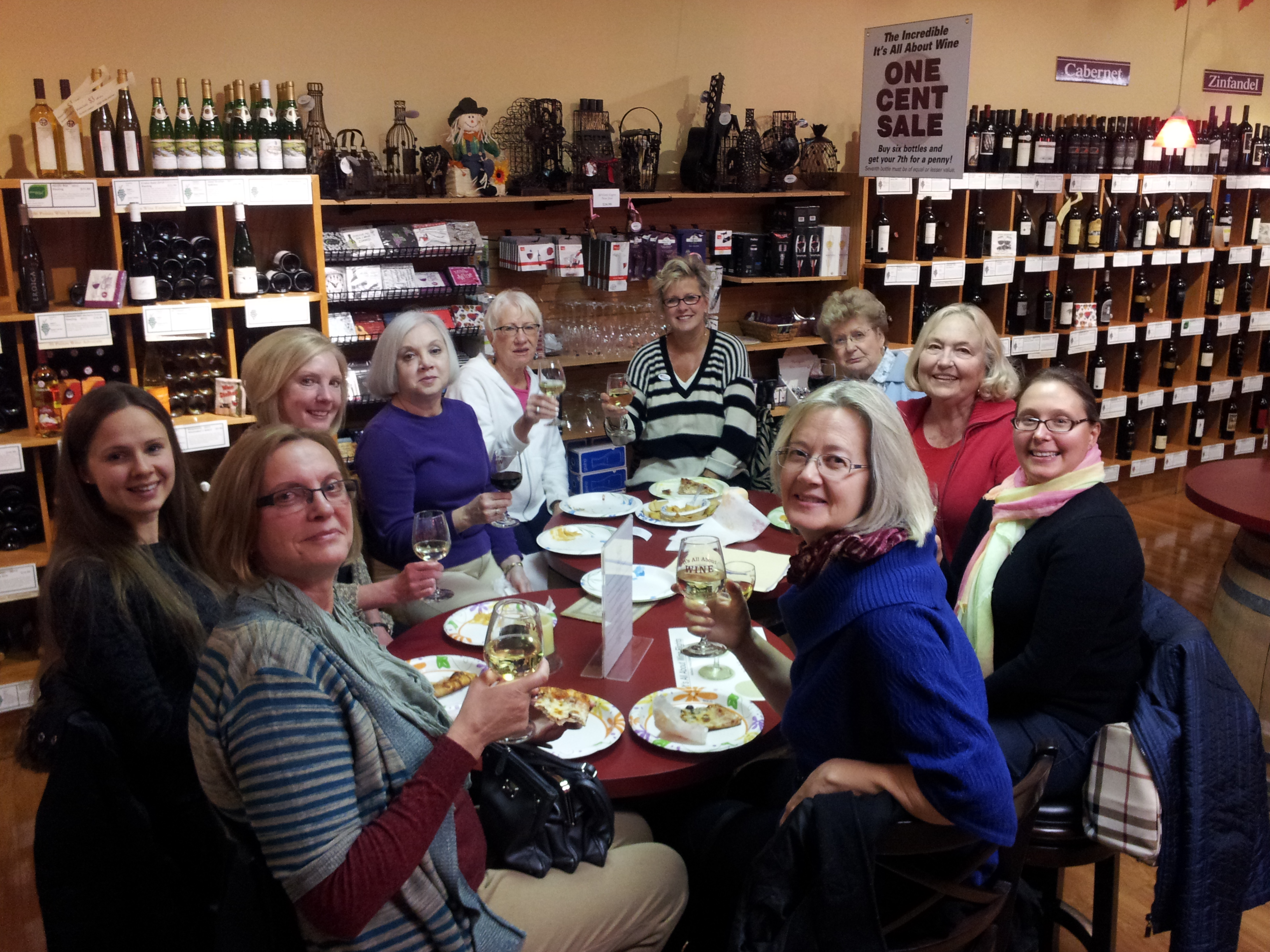
Clockwise around the circle, from bottom left: Josephine, Sandy P., Kristina, Sandy B., Irena, Asta, Joanie, Mary, Sharon and Teresa.

Nov. 4 election night in Springfield was also “Lithuanian Ladies Night Out.” Ten of us gathered to share wine, memories, smiles and questions at a shop called “It’s All About Wine.”

I couldn’t help feeling that our immigrant ancestors were smiling down on us, and maybe also tipping a glass in heaven, if that’s allowed. (It would be hard to imagine a Lithuanian heaven without some kind of alcoholic spirits.)

The store’s proprietor obliged with a few smartphone photos of our group, to which I remarked that no flash would be required due to such an excess of blonde hair.

Clockwise from bottom left: Irena, Asta, Joanie, Mary, Sharon, Teresa, Josephine, Sandy P, Kristina, and Sandy B.

Clockwise from bottom left: Irena, Asta, Joanie, Mary, Sharon, Teresa, Josephine, Sandy P., Kristina, and Sandy B.

Mary M. brought a hummus dip to go with our wine, and also the plates and napkins necessary to divvy up and devour a pizza.

Our upcoming Lithuanian-American Club Christmas Party on Dec. 6 was mentioned, as well as a possible Nov. 22 caravan to Grand Duke’s Restaurant and Racine Bakery in Chicago.

Coal Miner with a Poet’s Heart

My favorite part of the evening, other than introducing my long-lost Orback cousin, revolved around a hand-written music book belonging to coal-mining immigrant Leonard Naumovich, Sr., whose granddaughters Joanie and Mary were present.  Grandfather and great-grandfather to the city’s large Naumovich clan, Len, Sr. died in 1934.

When two of our “Third Wave” Lithuanian immigrants, Asta and Irena, graciously did an on-demand translation of some of Len, Sr.’s handwriting, we made an exciting discovery.

We learned that Len was not only literate and educated, but that he was also a fan of Maironis (1862-1932), the leading poet of Lithuania’s national revival after hundreds of years under the Polish or Russian heel.  This daring late-19th Century renaissance of the Lithuanian language and national consciousness, while Lithuania was still under the rule of the Russian Czar, coincided with Len’s own life and times.  And he apparently remained a part of it even after immigrating to the U.S.

Len’s fragile 100-year-old music book is also an inspiring testament to the spirit of music and poetry that lived on in the heart of a poor coal miner with no opportunity for the life he would have chosen to live, if he had had a choice other than mining coal.

the cover of Leonard, Sr.'s hand-inked music book. See words "Kur Bega Sesupe" at bottom.

The cover of Leonard, Sr.’s hand-inked music book. See words at the very bottom.

The mysterious words “Kur bėga Šešupė” that Len, Sr. wrote on the bottom front cover of his book turn out to be the opening of the most famous Maironis poem, ever: “Where the Sesupe River Flows:”

 Lithuanian Lyrics  and Approximate English Translation

Kur bėga Šešupė, kur Nemunas teka:  Where the Šešupė River runs, where the Nemunas River flows

Tai mūsų tėvynė, graži Lietuva:  That’s our fatherland, beautiful Lithuania.

According to Wikipedia, “Almost every Lithuanian can recite these words by heart. The poem is so well-known that it is treated as an unofficial national anthem.”

Inside Len, Sr.’s book are the words and music to another Maironis poem: “Riding Day:” The poem in translation begins: “Although I rode all day and I rode all night, I arrived at nothing; Then suddenly, I came upon a beautiful lake…”

"Tojau Diena" -- "Riding Day."  The poetry of Maironis united lyrical visions of the Lithuanian countryside with folk songs.

“Jojau Diena” — “Riding Day.” The poetry of Maironis united lyrical visions of the Lithuanian countryside with folk music.

You can read more about Maironis here: http://www.lituanus.org/2002/02_3_02.htm   And here:   http://www.lituanus.org/1963/63_1_03.htm

And, since several of us remarked that we couldn’t remember hearing spoken Lithuanian, check out an audio reading of the poem, “Kur bėga Šešupė” at this link (you will need Windows Media Player):

Naumovich Family Memories

The Leonard Naumovich family is one of the largest Lithuanian-American families in Springfield, thanks to Len and wife Jean’s 10 children, and their children. Like all large and successful families, it grew from modest roots and weathered real adversity. Leonard and brother Joe’s mother Josephine (daughter of Lithuanian immigrant coal miner Benedict Deresker), lost two successive Lithuanian immigrant husbands to the mines, including Len and Joe’s father Leonard Naumovich (Lith. Naumavicius?), Sr.

L to r:  Joe and Leonard Naumovich, Jr. in full altar boy regalia, circa 1932

L to r: Joe and Leonard Naumovich, Jr. in full altar boy regalia, circa 1932

Len, Sr. died when his boys were just seven and five years old, leaving Josephine with no husband (again), and a total of five children to support, including three from her first husband, John Budwitis.

It seems to me that some families just know how to pull together to survive hardships. Some adults are better at keeping their nerve and their wits about them in extreme conditions. They just keep on working and doing the right thing day by day. Josephine was such a woman. After being widowed for the second time, she supported her family as long-time housekeeper for the Cathedral of the Immaculate Conception downtown for $30 a month. The cost of taking the bus to and from work ate into even that small sum.

But somehow, despite everything, Josephine found the time and energy to remain active in St. Vincent de Paul Lithuanian Catholic Church. Joe and Len can still see in their minds the carefully cleaned bathtub at the family home (at 1127 Percy Ave.) filled with the ingredients for the stuffed kielbasa their mother always hand-mixed for the church’s annual bazaar. Josephine also served as an officer in the church’s women’s sodality. A 1936 newspaper article (two years after husband Len, Sr. died) also lists Josephine on the refreshments committee of the Lithuanian Republican Club of Springfield.

Joe and Len were no slouches, themselves, holding down newspaper delivery routes while going to school and helping around the house. They can still remember their dad’s 1934 wake, held at home, according to the custom of the day. Len, Sr. had died suddenly of pneumonia after an accident at the mine at 11th and Ridgely forced the miners to use a distant exit well north of the Fairgrounds and walk home in the middle of winter without their coats. A base “layer” of black lung disease, the universal miner’s scourge, no doubt contributed to the onset and severity of Len’s pneumonia. (John Budwitis, Josephine’s first husband, had died in 1923 at age 33 in an explosion in the same mine, where he was a “shot firer” igniting gunpowder to create controlled explosions to break up seams of coal. One newspaper account actually says he was a last-minute “substitute” in that most dangerous of jobs, which would explain the so-called “windy shot” accident that took his life.)

Laid Out in the Living Room

Len and Joe’s dad was laid out in the living room of the same two-bedroom home as Budwitis probably was–11 years later. Mourners who came and went from the house all night were fed ham and sausage from the kitchen, which also held a keg of beer. A huge flower bouquet on the front porch marked theirs as a home in mourning. After a 24-hour wake, including an all-night vigil, their father’s body was taken to St. Vincent de Paul’s, where the open casket was photographed on the steps of the church surrounded by mourners.

Leonard Naumovich, Sr. with mandolin, circa 1925.

Leonard Naumovich, Sr. with mandolin, circa 1925.

Immigrant miner Len Naumovich, Sr. had been a sacristan at St. Vincent’s. His collection of musical instruments from the attic, after he died, included a mandolin, violin, trumpet and baritone horn. Life without a father couldn’t have been easy for young sons Len and Joe. But life for the two Naumovich boys did go on, closely charting the spiritual ups and economic downs of the Lithuanian-American experience in Springfield.

As a teenager, one of the boys briefly worked for Jake Cohen at the Cohens’ Peoria Rd. grocery for a nickel an hour–until he left to work at a nearby grocery for 10 cents an hour. During Advent every year, St. Vincent’s pastor, Father Stanley Yunker, made his round of home visits to collect the annual parish dues of $8 per family. Len and Joe remember wooden kegs of herring for advent and Kucios, the Lithuanian Christmas Eve celebration, that were sold by Wally Mouske’s grocery on Peoria Rd. south of Griffith.

Leonard, Sr.'s hand-inked music book.  The quality of his handwriting indicates that he was literate before he arrived in the U.S. to mine coal. Note the Polonized spelling

Leonard, Sr.’s hand-inked music book. The quality of his handwriting indicates that he was literate before he arrived in the U.S. to mine coal. Note the Polonized spelling “Naumovicz,” the root of the resulting Naumovich spelling.

Len and Joe also remember voters being coaxed to the polls with the reward of a small bottle of liquor, each. And the night “Shorty” Casper’s illegal still near the Peoria Rd. railroad tracks exploded, burning down the alleged canning shed that hid it, to Shorty’s exclamations that it must have been his tomatoes that blew up. Ethnic Lithuanian picnics at the Wedgewood Pavilion north of the Fairgrounds were well-attended—and frequently punctuated by brawls.

During the “Mine Wars” (1932-36), miners from the opposing unions, not to mention Peabody company thugs, were accustomed to walking around with loaded guns in their waistbands. Len and Joe remember state militia men lining Sangamon Ave. on both sides to create a corridor of safety for children to walk home from St. Aloysius school.

Endemic corruption in Springfield and Sangamon County included suspected police collusion in prostitution and the punchboard business, once a legal, then an illegal form of gambling. Greek-American state’s attorney George Coutrakon famously “cleaned up” Springfield in the 1940s and ’50s.

A page from Len, Sr.'s personal music book:

A page from Len, Sr.’s personal music book: “Jojau Diena” words and music in his own hand. Being able to write Lithuanian was rare for an immigrant of the time due to the Russian czar’s ban on the Lithuanian language. Len, Sr.’s education was likely the product of a determined effort by his own mother, with the aid of smuggled books.

Joe Naumovich still passionately remembers the unrelenting poverty of the Great Depression. The lack of jobs continued, despite Roosevelt’s New Deal, all the way until World War II, when weapons production finally re-opened idled factories.

Today Joe can look back on a long and successful career at the Internal Revenue Service. Len worked at Sangamo Electric and later CWLP as a building and stores supervisor. Both graduated from Cathedral Boys High School, the predecessor of Griffin High School and SHG.

Many thanks to Tom Mann, Leonard, Jr.’s son-in-law, for research, photos, and setting up my interviews with Len and Joe.

The Political Rise of the Adamitis & Yacubasky Families

Don

Don “Doc” Adams (Adomaitis), courtesy of SangamonLink.org

Up From Mining and Bootlegging: The Political Rise of the Adamitis-Adams and Yacubasky-Yates Families

The story goes that for decades, Republican leader Don “Doc” Adams (Lith. Adomaitis) of Springfield exercised significant patronage power in both the public and private sectors. When “Doc” died in 2011 at age 75, his obituary listed leadership roles with the Illinois State Republican Central Committee, the Illinois Republican State Convention, the Illinois Electoral College, and the Republican National Committee. These roles put him at the heart of city, state and national politics for decades.

Pretty good for the grandson of a Lithuanian immigrant killed in our local mines. But maybe not surprising to those who knew “Doc” as the product of the union of two families, the Adams-Adamitises and Yates-Yacubaskies, who had been working together since the early 1930s on their joint economic and political climb up from the mines–through bootlegging and the grocery/tavern business–to the ultimate prize of patronage-rich politics.

Death in the Mines

On the Adams side, the story begins with “Doc’s” grandfather, immigrant coal miner John Adamites (Adomaitis), who died in 1907 as a result of an accident at Springfield’s Illinois Midland Coal Co. mine, leaving behind a widow and four children. One of those was “Doc’s” father John Joseph Adamitis, who was born in 1899 and served in World War I.

In 1924, a “Mr. and Mrs. John Adamites” were issued federal “liquor writs,” along with 11 other central Illinois individuals and couples, enjoining them from using their soft drink business in Pawnee to sell “intoxicating liquor.” Then in 1927, another Illinois State Journal-Register article reports that brothers John Joseph and William Adamitis of North 17th St. in Springfield were arrested after a raid of rooms above their grocery at 1530 Sangamon Ave. revealed a 20-gallon copper still, “some home brew mush, 120 bottles of home brew, nine gallons of alcohol, and a quantity of alleged whiskey.” (This all happened before John Joseph married Bertha Yacubasky in 1932 and “Doc” was born in 1935.)

In the early 1920s, newspaper reports also say that a John Adomaitis sang in the locally renowned Knights of Lithuania (K of L) Branch 48 choir. In 1925, he was elected president of the local branch following the branch’s leadership by the charismatic Lithuanian composer Alexandras Aleksis.

In the early 1930s, it appears that John began to build his Knights of Lithuania support into a base for entering traditional party politics in the wider community, along with his wife and two of her brothers, Joseph and William Yacubasky (Yates). It’s likely that John liked his first taste of politics inside the K of L. It’s also my hunch that after facing raids, imprisonment and fines from government authorities over the alcohol business during and after Prohibition, Adams and the two Yates brothers decided it was time to get some of that political power–and protection–for themselves.

If You Can’t Beat ‘Em

So, in 1931, the three men and Bertha (who had also been involved in the Knights), along with other Lithuanian-American businesspeople and neighbors from the North 17th St. area, founded the Lithuanian Social and Political Club of Sangamon County. This was one year before the infamous central Illinois “Mine Wars” (1932-36) broke out. I can only wonder what impact the Mine Wars had on this fledgling ethnic political organization, at a time when the strife between the United and Progressive Mine Workers unions tore many ethnic groups, neighborhoods, and families apart.

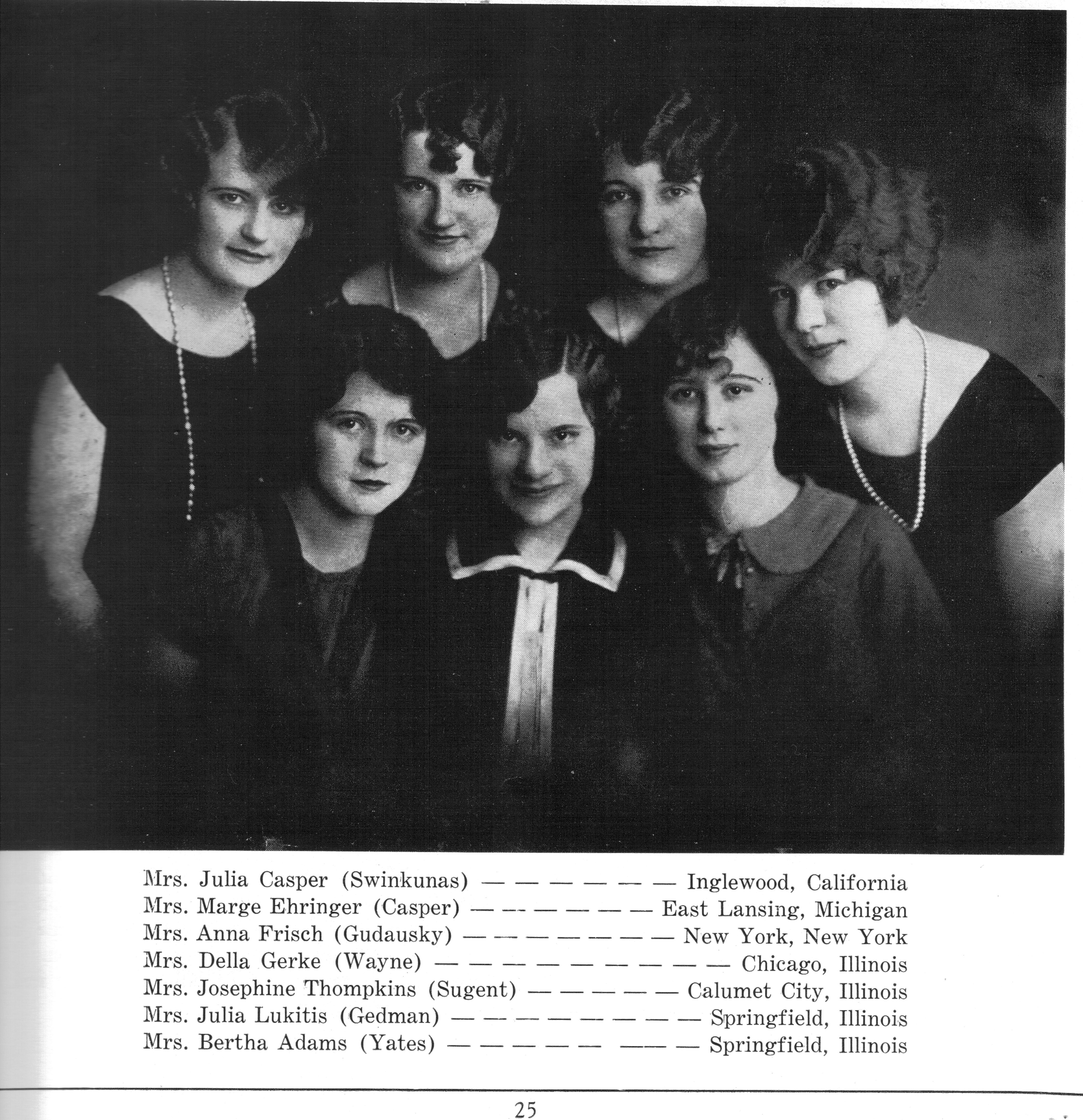
The beautiful Bertha (Yates) Adams, right edge, back row, with friends from St. Vincent de Paul Church, circa 1930.

The beautiful Bertha (Yates) Adams, right edge, front row, with friends from St. Vincent de Paul Church, circa 1930.

Although the original group first met in 1931 at the Labor Temple at 6th and Washington streets, by 1936 the organization was renamed the Lithuanian Republican Social Club and was meeting at the Arion hall to hear an address criticizing Franklin Delano Roosevelt and The New Deal. John Adamitis was the chairman of that meeting at the Arion, supported by committee chairpersons Mrs. Joe Welch (Wilcauskas), William Yates, William Stankavich, and Mrs. Wallace (Julia) Olshefsky. Subsequent meetings, according to the newspaper, were held at Republican headquarters on the west side of the (Old State Capitol) square. There were also many picnics and other social events to gather and galvanize the Lithuanian-American Republican faithful, including food, musical performances, and games and activities for children.

Apparently, a full spectrum of ethnic Lithuanian beneficial and political organizations still proliferated through the 1940s, in some cases serving as stepping stones for their leaders into community-wide politics. An Illinois State Journal article from 1943 mentions no fewer than seven local “Lithuanian societies” as sponsors of a 25-year celebration of Lithuanian independence that year at the Centennial Building next to the Illinois State Capitol. Those were: the Lithuanian Roman Catholic Alliance of America, Branches 275 and 158; the Federation of Lithuanian Workers Branch 29 (a communist-leaning successor to the Lithuanian Roman Catholic Alliance of Labor and possibly, also, the Lithuanian Socialist Federation, that was later named the Lithuanian Association of Workers branch 29 or the “Lithuanian Lodge,”) the Lithuanian Roman Catholic Women’s Alliance Branch 56, the Lithuanian Democratic Social Club, the Lithuanian Cultural Society and the L.D.L.D.A.(?)

The Yates & The Blue Danube

Here our story backtracks to “Doc’s” maternal line, the Yacubasky-Yates family. Tony (Antanas) Yacubasky immigrated to the U.S. in 1890. His first stop was the Shenandoah, Penn., coal fields, where he married Mary Lesko and two of the couple’s three daughters were born. In 1906, the family moved to 1501 Pennsylvania Ave., (the same block where my mother grew up). Sons Joseph and William  were born.

The Yates family were co-founders in 1931 of the aforementioned Lithuanian Social and Political Club. After serving as a Republican precinct committeeman for several years, 25-year-old William was selected the Republican candidate for county auditor in 1932. After his election defeat, William was appointed deputy probate clerk. In 1933, as Tony Yacubasky and sons Joseph and William prepared to advance their family even more ambitiously in business and politics, they saw becoming more publicly “Americanized” as a critical component and filed in circuit court to change their surname to Yates.

That same year, which saw the end of Prohibition, the Yates family built a large tavern/dinner club called The Blue Danube next to their grocery. The tavern was managed by Joseph Yates, as his brother William presumably spent the majority of his time in politics. The Blue Danube had a kitchen, a dance floor that was “well sanded and waxed,” and an ample area for tables and booths–but its claim to fame was its “magic bar.” One newspaper writer described it as “electrically charged in such a way that when specially-treated glasses are placed on it, they are illuminated in many colors. This gives the appearance of nothing short of magic, and has proven a very popular source of entertainment.”

The Blue Danube’s motto was, “where courtesy prevails,” and it featured festive New Year’s parties and Sunday dinners of either roast young duck, fried, milk-fed spring chicken, T-bone steak, frog legs, breaded veal cutlet, or roast loin of pork with many different sides, including “Chinese” celery salad and lime and grapefruit salad, plus a full spread of desserts—all for just 65 cents. Also on the menu were “fancy mixed drinks, the finest of wines, liquors and beer, good music and dancing.”

Liquor License Wars & World War II

However, as early as December 1934, The Blue Danube was caught in a liquor license dispute between Springfield Mayor John Kapp and the city’s liquor board. The Yates family claimed that they had paid the city clerk for their license, which was never issued, and that they were operating under a personal pledge from Mayor Kapp.

The licensing board cited The Blue Danube not just for the failure to have a license to sell alcohol, but also for hosting dancing without a permit and serving alcohol after 1 a.m. The establishment’s windows were also cited because they did not provide a good view into the club from the street—-thereby making it easier to serve alcohol after hours without detection.

In 1935, at age 68, immigrant Tony (Antanas) Yates died. Perhaps as a result of this loss and ongoing “political” troubles, in 1938, The Blue Danube was sold to Kenneth Goby and Harold Cusick–reportedly, so that Joseph Yates could devote all his time to the grocery side of the family business.

By 1942, Joseph’s brother William was chairman of the central committee of the Sangamon County Republican Party. Joseph had closed the Keys Ave. grocery and enlisted to serve in World War II. He is reported by the newspaper to have rushed home to his ill mother’s bedside, with the aid of the Red Cross, just before shipping off to military service. The brothers later operated Y-B Market at First and North Grand Ave. and the nearby Ann Rutledge Pancake House, the most wonderful restaurant in Springfield, for many years as they continued in Republican politics.

“Doc” Picks up the Mantle

I would guess that when it was his turn to carry on—and build upon–his father’s and uncles’ political legacy starting in the 1960s, “Doc” Adams got a nice leg-up from the Republican contacts and organization his three elders had formed. However, although “Doc” no doubt wore their mantle as he entered politics, it’s a testament to his own hard work and political skills that he managed to eclipse the wildest dreams of his immigrant/ethnic forebears by serving and leading the Republican party both locally and nationally for more than 30 years.

Many thanks to Tom Mann for finding State Journal-Register articles that contributed mightily to this post.

Lawyer to Lithuanians

As a lawyer to his fellow Lithuanian immigrants in Springfield, Isidor Yacktis (1883-1953) leveraged his higher education and social status to serve as a mediator between his own people and mainstream Americans to whom the immigrant “hordes” seemed unruly, threatening–and potentially even disloyal. It couldn’t have been easy being an ambassador of the higher potential largely invisible within his community of illiterate miners and laborers back around the time of World War I.

Yacktis, Isidor. c. 1915, Ill. State Jounral Register archive

Illinois State Journal-Register archives, circa 1915

Yet it appears that Mr. Yacktis was first publicly called upon–and rose–to this role as soon as he was admitted to the Illinois State Bar. The year was 1915, and the extreme barbarity of World War I in Europe had already become frighteningly apparent. Neutrality-loving Americans were feeling queasy about immigrants here manifesting the national interests and hostilities of their countrymen back home and dragging the U.S. into the Great War.

Modeling U.S. Citizenship & Patriotism

Therefore, on July 4, 1915, the Illinois governor, lieutenant governor, and other dignitaries held their first large, public meeting to welcome newly naturalized citizens at the arsenal (Illinois Armory) at Second and Capitol, according to the Illinois State Register. Somewhere around a thousand people attended and were exhorted by the governor to give up all former lines of nationality in hopes “that America might be spared participation in the War.” The “right hand of fellowship” was extended on behalf of the city, a speech was given on The Ideal Citizen, and Mr. Yacktis addressed his own people, along with newly-minted U.S. citizens of German, Italian, Scandinavian, English, Scottish and Irish birth, to set a public example of “his unequivocal allegiance to the stars and stripes.” The Declaration of Independence was read, and “Illinois” was sung, accompanied by the Capital City Band.

Eighteen months later, as the U.S. was officially entering World War I, America’s “loyalty” concern became immigrant men responding to the new military draft. The Illinois State Register described a mass “Americanization” meeting on Jan. 12, 1917 at Palmer Elementary School on Springfield’s north side. “While nations across the sea are at war, the United States is busy arousing the love of America among her foreign-born citizens,” the paper proclaimed.

Germans, Italians and Lithuanians were gathered at the school to be formally addressed by a representative of each of their nationalities, including Mr. Yacktis. “The foreigners listened attentively to the admonitions of the representatives of their own governments, who told them they must give unfaltering allegiance to the country of their adoption and be loyal to the American flag and American institutions,” the January 13 article went on.

Included on the program were “simple” explanations of American government at the city, state and national level by a U.S. district court judge. Then a chief examiner for the U.S. Department of Immigration and Naturalization explained the requirements of U.S. citizenship. The mass meeting closed with the singing of “America”—and most likely, the registration of many young immigrant men to enter the charnnel house of trench warfare in Europe. Many male immigrants officially documented their intent to become citizens at this time, and achieved citizenship upon their discharge from military service, provided they survived the War.

Still Lithuanian at Heart

That same year, Mr. Yacktis expressed his identity as a Lithuanian by penning an op-ed for the Illinois State Register entitled, “Lithuania, a Separate Nation,” explaining the distinct nationality of the Lithuanian people and arguing against Polish designs on parts of post-Russian Lithuania.

Several months earlier, Isidor had leaned a little more to his American side, publishing his name in a display ad in the Register supporting the “Committee to Make Springfield Dry.” Prohibition was certainly not a sentiment shared by the majority of his immigrant countrymen. However, that may have been precisely why he supported it, as a way to combat alcoholism and its attendant social ills.

In 1918, Isidor appears in an article encouraging community-spirited individuals to join the YMCA and pay for a six-month “Y” membership for two returning soldiers or sailors. Again in his role as an official voice and ambassador for his community, Mr. Yacktis’s name appears in several additional display ads placed by members of the Illinois Bar on major political and social issues. Another newspaper report finds Mr. Yacktis investing $25,000 in a Flexotile (roofing and wall tile material) manufacturing concern with four other local men, probably lawyers. No mention is made of the success or failure of that business.

Probate & Family Law

In his general practice legal career, Mr. Yacktis seems to have operated from an office at 213 S. Sixth St., where he also let at least one room for $5 a month in 1946. He also appears in a 1937 newspaper mention for regularly giving food and water to a stray kitten living near the Johnny Orlove Tavern, whose paw had been gnawed off by rats. So Mr. Yacktis was a humane man, as well.

Along the way, he represented the following families in estate matters: Grigisky, Lagunas, Yustus, Kasper (Kasparavicius), Lukitis/Gedman and Karvelis. He represented the Adeikis and Kaslauckas couples in chancery (divorce) court. He also represented a Max Bracius, who had been struck on his bicycle by a city water truck. These are the records I found, but I’m sure in his long career, Mr. Yacktis represented many, many clients.

My special thanks to Tom Mann for uncovering several of the feature articles mentioned in this blog, and to Bill Cellini, Jr. for originally drawing my attention to Mr. Yacktis.

Joe Koncius & Lithuanian Language School

Joseph Koncius, former Springfield Lithuanian language school teacher, with his wife Giedre and daughters (l to r) Maria and Ruta. Circa 1970.

Joseph Koncius, former Springfield Lithuanian language school teacher, with his wife Giedre and daughters (l to r) Maria and Ruta. Circa 1970.

Usually when you meet a person born in the U.S. who speaks Lithuanian, it turns out that they grew up in the Chicago area and went to Lithuanian Saturday school in Marquette Park or Lemont. Few know there was a once a small Lithuanian Saturday school in Springfield for children of the post-World War II immigrants, called displaced persons or “DPs.”

Violeta Abramikas Abad of Ohio, a former child DP, tells me that the Uzgiris DP family hosted such a school in their Springfield home from 1949 through about 1957. This made sense, since the Uzgirises had three of the seven children attending the school—and the largest study table.

After writing so much about the illiteracy that blighted the lives of “first wave,” turn-of-the-century Lithuanian immigrants, I must underscore the dedication to education that was a hallmark of the “second wave” of Lithuanian immigrants after World War II, like the Uzgiris, Paulionis, and Sidlauskas families. Even my immigrant father, who grew up on a subsistence farm in the Lithuanian countryside between the Wars, benefited from the mandate of the newly independent Lithuanian republic to begin providing the universal education that the Lithuanian people long had been denied, first under feudalism, then the Russian czars.

As a country boy needed for hours of farm-work every day, my father didn’t get further than the government’s mandatory three years of reading, writing, and math. Reading was limited to a few books and a weekly or monthly newspaper read by kerosene lamp or candlelight after a long day’s work. Dad later prided himself on learning English well enough to read the State Journal-Register every day, and in fact, regarded our daily newspaper—any daily newspaper– as a kind of gift.

Other Lithuanians who ended up in the U.S. after 1948 were urban professionals with far more education, and evinced a singled-minded pursuit of higher education for their children, even in the DP camps of war-ravaged Germany. Springfield’s Lithuanian Saturday school was a direct outgrowth. And one remarkable man who helped organize the school, my father’s friend Joseph (Juozas) Koncius, embodied the quest for education like no one else.

Joe with his "princess" granddaughters Sigita and Ina.  Circa 1990

Joe with his “princess” granddaughters Sigita and Ina. Circa 1990

Neither one of countless immigrant professionals reduced to manual labor by insurmountable language barriers, nor a young child just starting school, Joe was in the midst of his high school education in Silales, Lithuania when World War II intervened. Somehow, he managed to complete his gymnasium studies as a displaced person in Eichstätt, Germany in 1946. Joe then went on to study philosophy and pedagogy at Eichstätt College. And, with other Lithuanian students in Eichstätt, he edited a chronicle called “Ukonas” before immigrating to Springfield in 1949.

In Springfield, Joe was one of several single men living in apartments owned by Sam Lapinski, Jr. on or near East Washington St. That’s when 25-year-old Joe somehow met my still-single 30-year-old father Vince, and the two pal-ed around in Dad’s car. Already fluent in Lithuanian, French, German, and Russian, Joe doubtless impressed Dad with his dream of being admitted to a U.S. college to become a language teacher. But first he had to learn still another language—English.

In the meantime, Joe put his new pedagogy skills to work for the first time by helping the Uzgiris family organize Springfield’s Lithuanian Saturday school. From about 1950 to 1957, Violeta remembers attending the school at the Uzgiris home every Saturday morning from 9 a.m. to noon, along with Rimgaile (daughter of August) Paulionis, as well as young Egidijus, Sarunas, and O’Tilija Uzgiris. Older Uzgiris brother Vytas taught, in addition to teachers Joe Koncius and Stase Sidlauskas (whose sons Audrys and Jonas Sidlauskas also attended the school) and a single man, Mr. Spetyla. Violeta remembers studying the history of Lithuania along with Lithuanian grammar, reading and writing.

In the early 1950s, Joe achieved his dream and was admitted to the University of Illinois Champaign-Urbana, where he graduated in 1956 with a master’s degree in education and a certification to teach the French language. Already qualified in German, after further study Joe earned the necessary certification also to teach Russian. Then from 1956-1987, he made his career teaching French, German, and Russian at Riverside-Brookfield High School in the Chicago area, and heading the school’s Foreign Languages Department.

Joe and wife Giedre, 1990s.

Joe and wife Giedre, 1990s.

Even after Joe’s death in Lemont, Ill. on Sept. 10 this year, his dedication to education continued with a request for memorial donations to Child’s Gate to Learning, a charity supporting education in Lithuania. Joe also lived his life-long Lithuanian patriotism in service to numerous Lithuanian-American organizations, serving as secretary of the Lithuanian Foundation and media/publicity chair for the Lithuanian Opera in Chicago.

In 1989 he spearheaded a relief fund to rebuild the Catholic church in his hometown of Kaltinenu, Lithuania, after it burned. He also participated in a dental charity called the Lithuanian Fund for Healthy Teeth. And from 1956, he was a member of the Lithuanian Newcomers (Ateitininkai) society, where he held the honorary position of Kestutis and various posts on the board of directors. Joe captured his own life experiences in a memoir entitled, A Journey into a Secret Country.

Undoubtedly, his most enduring legacy is his impact as a teacher on thousands of language students, beginning, I am honored to say, here in Springfield. Joe, his surviving wife Giedre Teresa (Kizlauskaite); daughters Maria Bereckis and Ruta Salkliene; grandchildren Benjamin, Hanna, Ina and Sigita; great-granddaughter Matija; and nephews Arunas Koncius and Alfonsas Vitkevicius, would surely be proud to know how some of Joe’s first language students here in Springfield realized their own educational potential.

Joe, his wife Giedre, her mother Brone Kizlauskas (Kizlauskiene) and Koncius daughters (l to r) Ruta holding Sigita and Maria holding Ina. 1980s.

Joe, his wife Giedre, her mother Brone Kizlauskas (Kizlauskiene) and Koncius daughters (l to r) Ruta holding Sigita and Maria holding Ina. 1980s.

Vytas Uzgiris graduated from the U. of I. and became an M.D.; Sarunas Uzgiris also graduated from the U. of I. in mechanical engineering, went on to get his Ph.D. and become a university professor; Egidijus Uzgiris graduated U. of I. in engineering with highest academic honors, his name inscribed in the university’s Bronze Tablet for posterity; and finally, O’Tilija, the youngest and only girl, graduated from the U. of I. in Russian, which was in demand at the time, as Chinese is today. She earned her master’s degree and started work as a translator for the Chicago library system.

Dedicated to the memory of my father’s unforgettable friend, a gifted teacher who prevailed over great adversity to realize his dreams.

The Bernotas Family in Photos

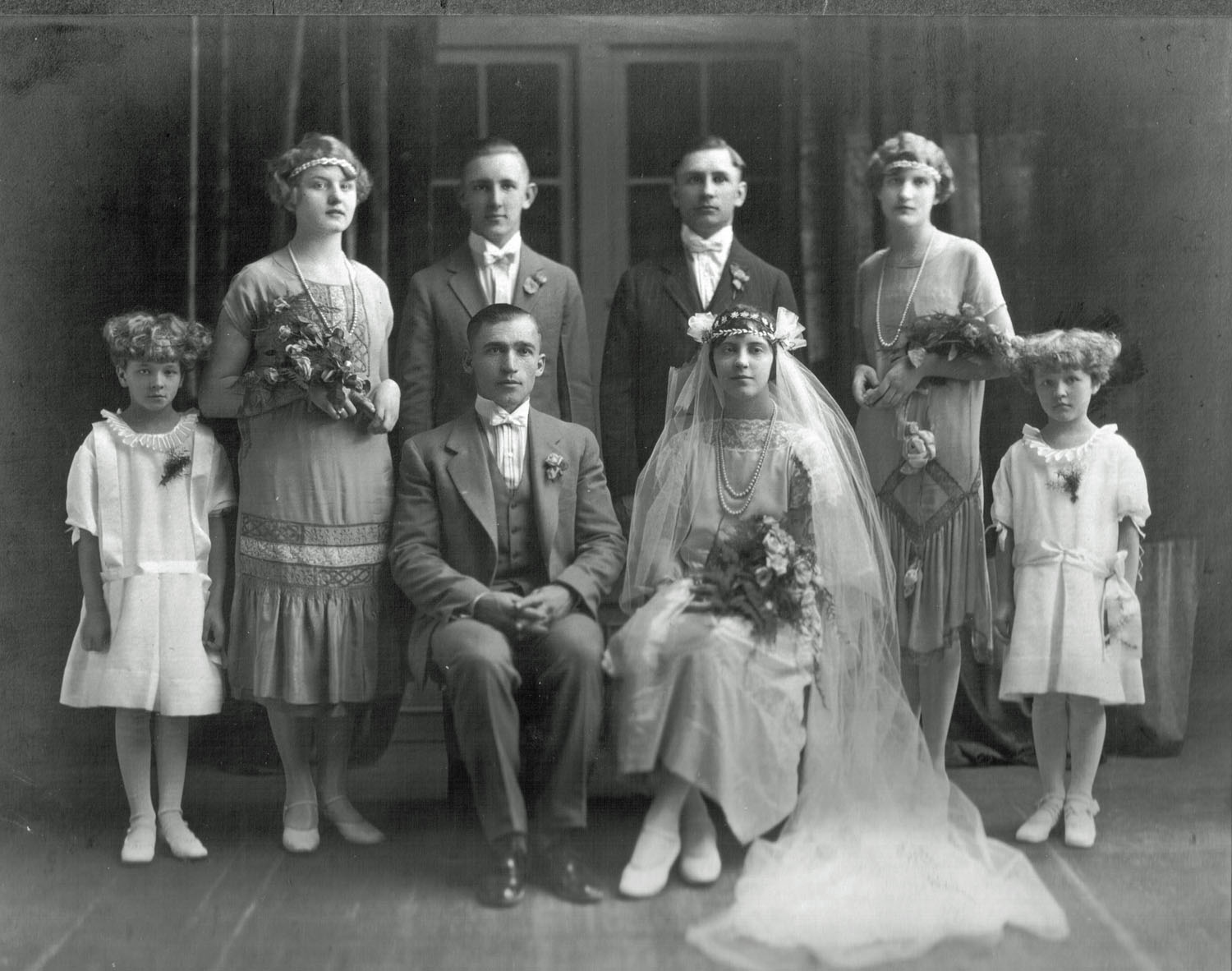
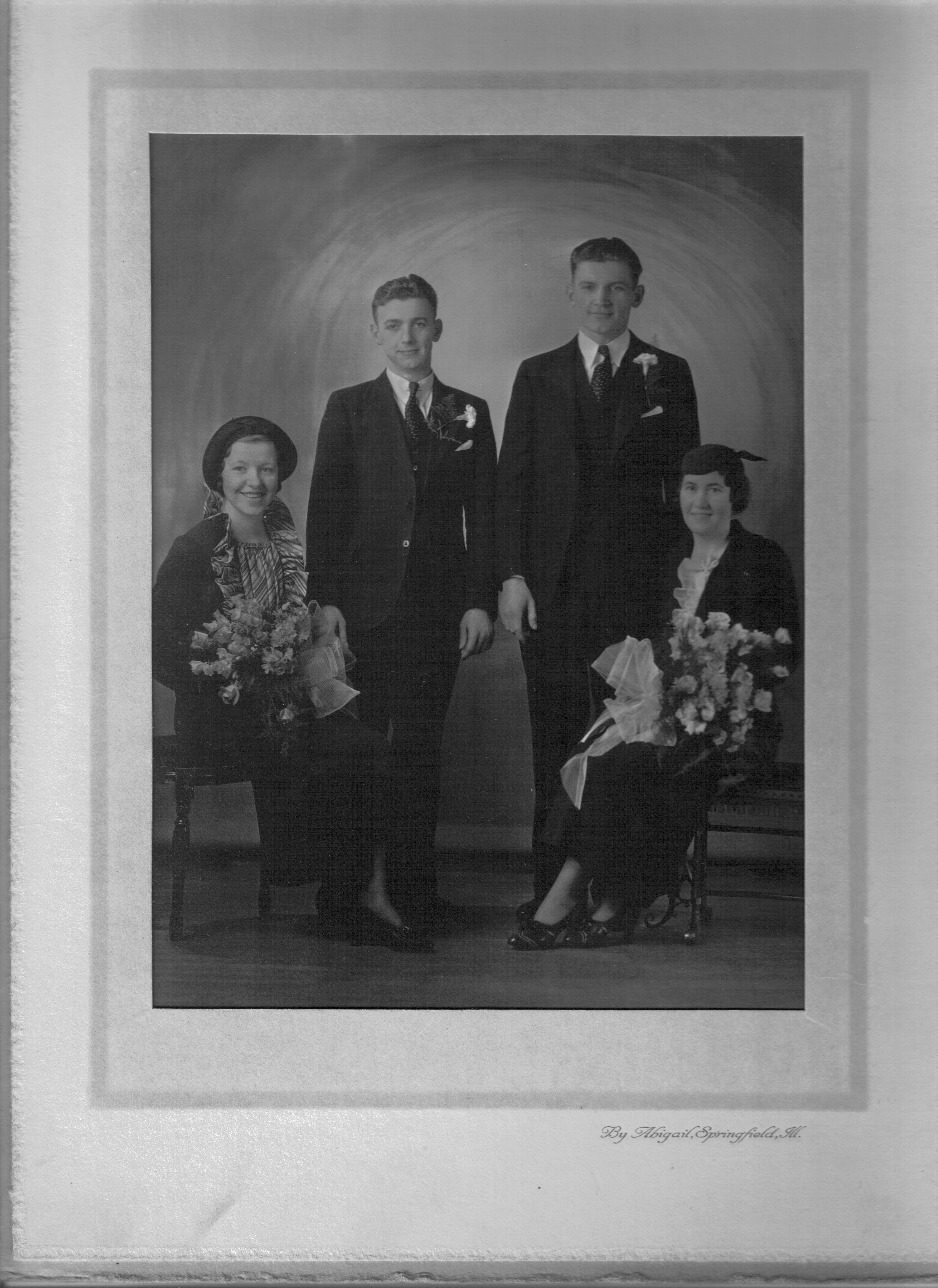
I believe this is the wedding of Anna Klimaitis and Peter Bernotas, 1916.

I believe this is the wedding of Anna Klimaitis and Peter Bernotas, 1916.

Peter (Petras) Bernotas, the son of Casimir (Kazimieras) Bernotas and Agatha Tisckos, was born in 1878 in Vilnius, Lithuania. He first immigrated to Chicago, where he became a naturalized U.S. citizen in 1905. At age 38 in 1916, Peter married 16-year-old Anna Klimaitis (Claimaitis?), daughter of Vincent (Vincas) and Anna (Ona) Matuliczuite (Matulis?) Klimaitis of Naumiestis, Lithuania. Matulis-Klimaitis daughters Anna (born 1900), Adella (born 1902), and Mary had all been born in the coalfield county of Lanark, Scotland, where their miner father and mother had immigrated after marrying in 1898 in Władysławowo, Poland.

Anna (Klimaitis) Bernotas with her mother, Anna (left) and her sister Adella (right).  Sitting man with fiddle possibly young Anna's husband Peter Bernotas.  Circa 1925.

Anna (Klimaitis) Bernotas with her mother, Anna (left) and her sister Adella (right). Sitting man with fiddle possibly young Anna’s husband Peter Bernotas. Circa 1925.

Coal miner Vincent Klimaitis preceded his family to central Illinois, and wife Anna and their three daughters followed him to the U.S. on the Anchor Line ship SS California out of Greenwich, Scotland in 1913. Given the age difference between Peter Bernotas and his young bride Anna, I wonder if maybe Anna’s father Vincent was a coal-field acquaintance of Peter and made the introduction. Bernotas clipping 001

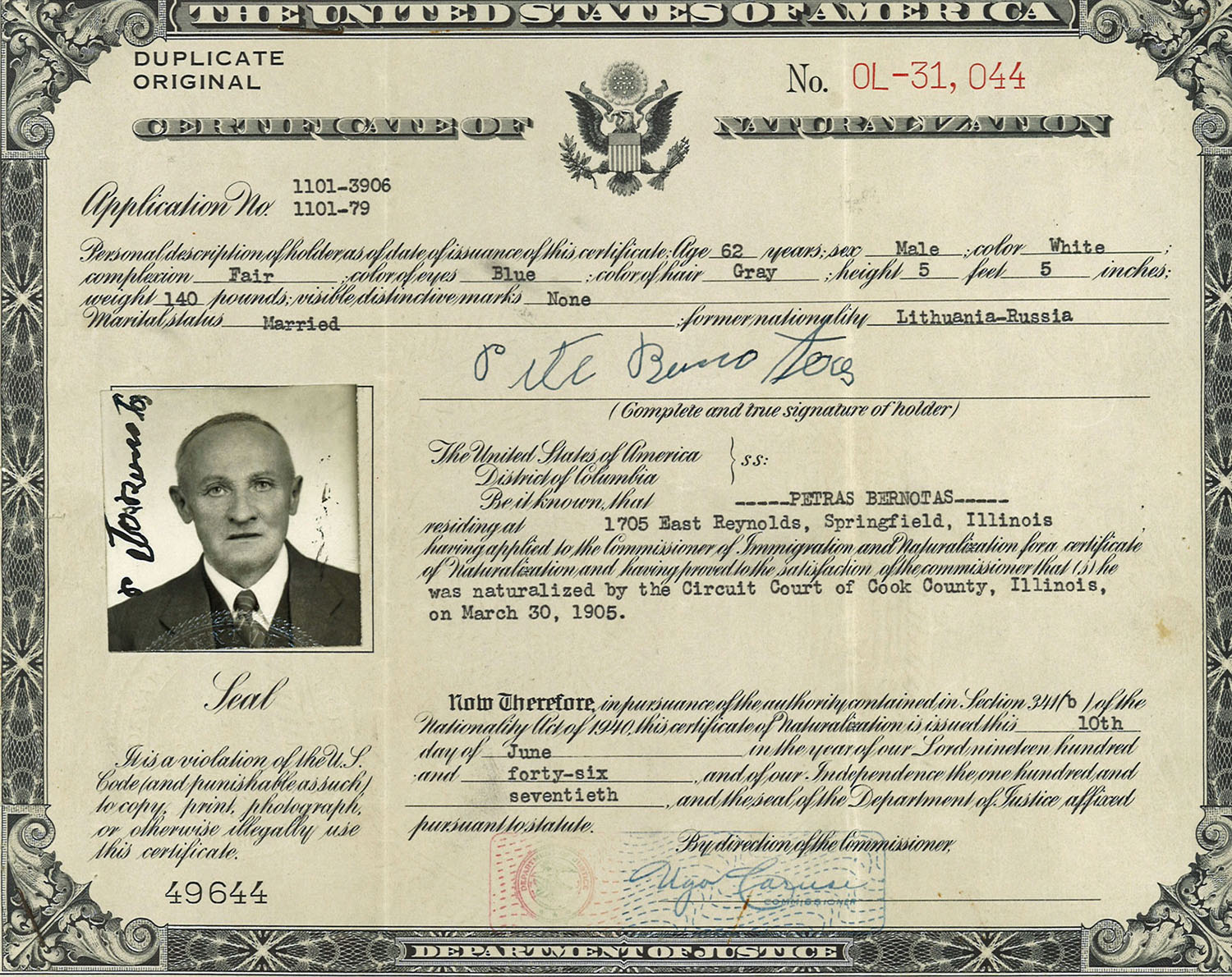
Photo of Peter Bernotas at age 68 in 1946.

Photo of Peter Bernotas at age 68 in 1946.

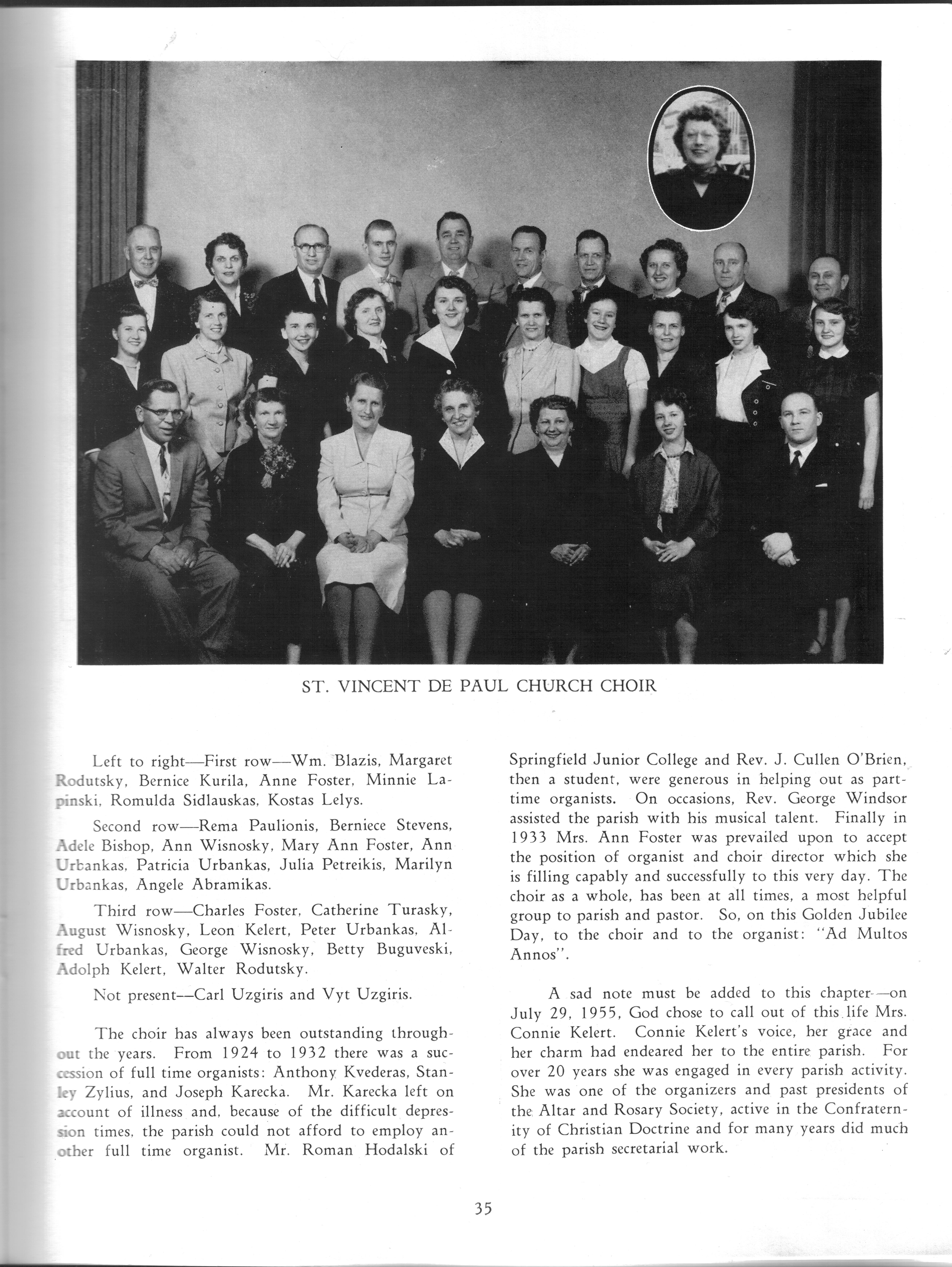
Two things are notable about this series of photos: first, the aging affects of coal mining and perhaps, related illnesses. You can see Peter Bernotas at 38 in his wedding photo, in his early 40s as the seated fiddler, at age 63 in his 25th wedding anniversary news clipping, and finally, at 68, and likely seriously ill, in his naturalization certificate photo. (From her 25th anniversary photo at age 41, one can also tell that being a miner’s wife has not been easy on Anna Klimaitis Bernotas). Peter’s naturalization certificate, itself, is interesting in that it appears to have been secured in his last days, 41 years after U.S. citizenship was legally granted. Maybe he wanted to have this precious document before he died, to pass down to his children? One can also tell from his signature that handwriting, and literacy, were likely achieved after he was an adult, as was the case with so many Lithuanian coal miners and their wives. After Peter Bernotas and Anna Klimaitis married in 1916 and went to live at 1705 E. Reynolds St., they had three children: Anthony Peter, born in 1917, Vetout (Vytautas), born in 1923, and Bernice (Bernotas) Stevens. The family attended St. Vincent de Paul Lithuanian Catholic Church, where Bernice appears in several photos.

St. Vincent de Paul Church sodality officers, circa 1940.

St. Vincent de Paul Church sodality officers, circa 1940.

The church choir with names, from 1956 Jubilee book

The church choir with names, from 1956 Jubilee book.

Anthony Peter and Vetout Bernotas, circa 1940

Anthony Peter and Vetout Bernotas, circa 1940

All three of the Klimaitis-Bernotas offspring appear to have served in World War II: Anthony Peter as a U.S. Army corporal, Vetout in the U.S. Air Force, and Bernice as a Navy “Wave.” (Bernice later moved to California.)

Bernice Bernotas, World War II.

Bernice Bernotas, World War II.

Anthony married Dorothy Jane Hall and the couple had children Terrence Michael, Susan Marie, Denise Anne, and Stephen Anthony, who affectionately called their Grandma Anna “Nano.” After living at Nano’s on E. Reynolds for a time, Anthony and his wife Dorothy built their own home at 2437 E. Keys, in Grandview. He worked as a machinist at FiatAllis. The family attended St. Cabrini Church.

Bottom left: Bernice Stephens and Tony Tamoszaitis as godparents to newborn Susan Bernotas, early 1950s.  Bottom right, from left: Klimaitis sisters Adella, Mary, and Anna, 1968.

Bottom left: Bernice Stephens and Tony Tamoszaitis as godparents to newborn Susan Bernotas, early 1950s. Bottom right, from left: Klimaitis sisters Adella, Mary, and Anna, 1968.

Susan (Bernotas) Potter, the main informant for this piece, fondly remembers Nano’s Lithuanian cooking. Susan continues to make kugelis (kugele), “little ears” (asuki), and a dumpling dish she calls kalasky (koldunai?). She and her brothers also make the honey-citrus spiced whiskey drink viditas, especially for Christmas.

Front little guy:  Stephen Bernotas. Middle row, from left: Anna (Nano) Bernotas, Denise Bernotas Fox, Susan Bernotas Potter. Back row, from left:  Terry Bernotas, Dorothy Hall Bernotas, Anthony Peter Bernotas. Easter Sunday, April 10, 1966.

Front little guy: Stephen Bernotas.
Middle row, from left: Anna (Nano) Bernotas, Denise Bernotas Fox, Susan Bernotas Potter. Back row, from left: Terry Bernotas, Dorothy Hall Bernotas, Anthony Peter Bernotas. Easter Sunday, April 10, 1966.

A few interesting facts about the Klimaitis-Bernotas clan:

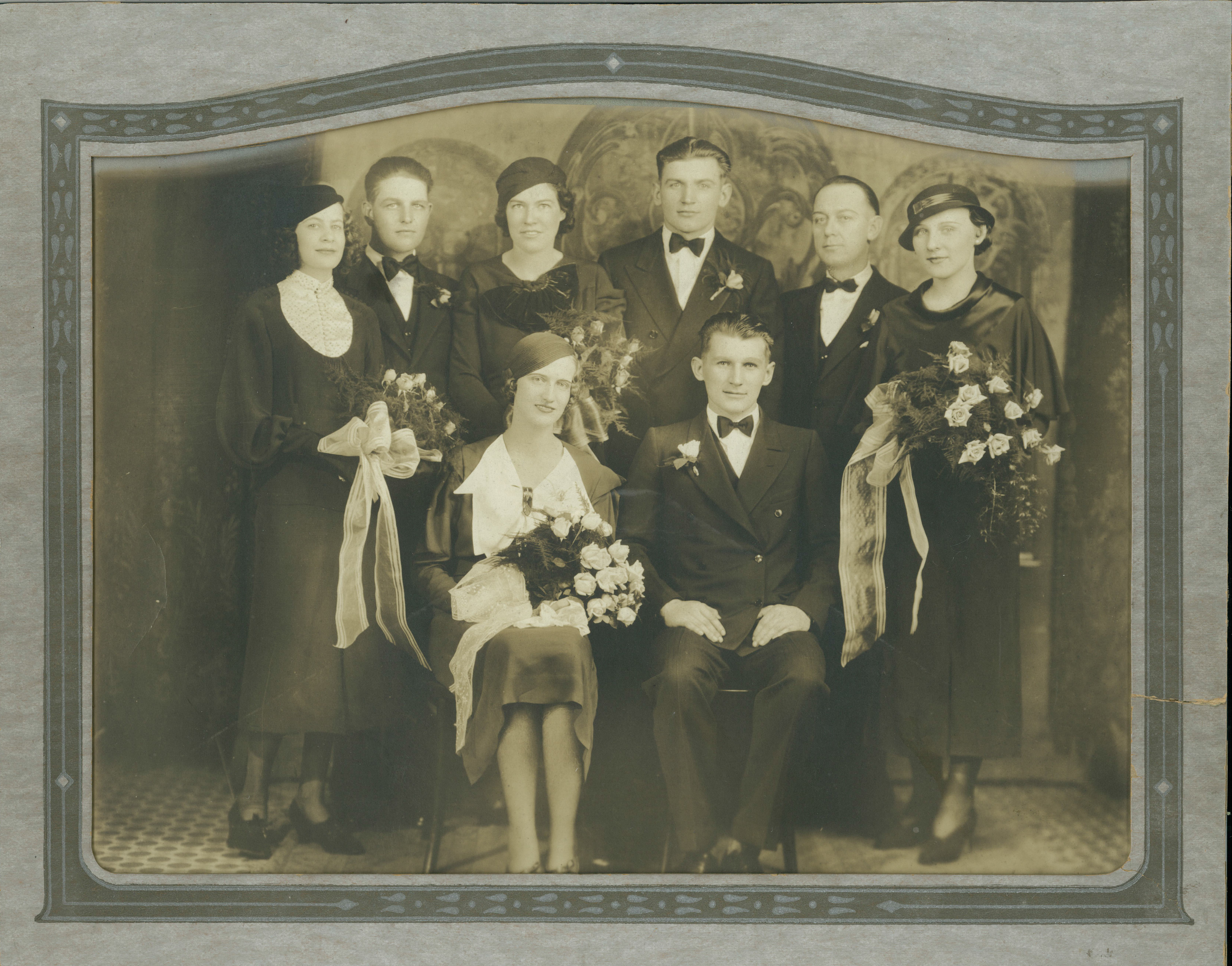
Adella (Klimaitis) Bernotas and Michael Makarauskas wedding, 1936.

Adella Klimaitis and Michael Makarauskas wedding, 1933.

In 1933 Adella, the sister of Anna (Klimaitis) Bernotas, married Michael Makarauskas, older brother of Springfield McDonald’s restaurant founder John Makarauskas. Michael of Smilga, Lithuania, sailed from the Latvian port of Liepāja in 1922 with his mother and younger brother, John, on the vessel Estonia. That was the year they were finally reunited with their father, who had immigrated to Springfield just before the outbreak of World War I, which ended up dividing the family for almost a decade.

possibly Michael and Adella Bernotas Makarauskas, left; John and Mary (Gidus) Mack, right.  Circa 1936

from left: Michael and Adella (Klimaitis) Makarauskas, John and Mary (Gidus) Mack, right. 1930s.

Adella and Michael Makarauskas’s 1933 marriage was ill-fated. Michael was killed in a railroad accident in 1936 or 1937. Records show Adella married again in 1938 to William J. Laukaitis (parents Joseph and Valeria Galinis Laukaitis), of Cherry, Illinois. William was a veteran of World War II and Korea. However, Adella and William divorced in 1943, and Adella was subsequently married for a third time, to Marshall Dirksen.

Riverton Riot

In the early years of the 20th Century, local newspapers reported Lithuanian ethnicity in crimes of violence, much as media later in the century reported race. As a newspaper reporter in the early 1980s, I remember how the practice of race identification in the news was debated before it changed, along with the custom of identifying all women as Mrs. or Miss.

However, it’s easy to see why a “Lithuanian” brawl could have seemed relevant to U.S.-born readers back when immigrant-on-immigrant crime in the impoverished neighborhoods, often called “patches,” where immigrant miners lived, socialized, drank and fought, so often stereotyped them in the news.

July-December 1906, the Illinois State Register covered a “Riverton Riot,” allegedly by three related Lithuanian saloon-keepers, that resulted in the near-death of the local marshal, John A. Cline. The prosecution side of the story was that Cline ordered Lithuanian immigrant Maude (Martha) Grigiski (Grigiskis) to close her Riverton saloon, which was illegally open on a Sunday. Maude reportedly refused, pulled a gun and backed Cline out of her yard. Then her husband, William, arrived, seized the officer’s club and started beating him over the head. Maude reportedly joined in the beating with the butt of her pistol, while brother-in-law Peter (Simon) Grigiskis arrived and allegedly started beating Cline with a brickbat.

The three Grigiskises were charged with assault and battery with intent to kill, and “riot.” They made bail of $1,200 each, apparently after William exited first and sold some property to bail out his wife. Marshal Cline received 56 stitches to close wounds on his scalp.

The newspaper reported “almost the entire village” was subpoenaed in the case, many as “character witnesses.“ Those who had not been subpoenaed came along to witness the proceedings, so that the courtroom was full even before the trial  began. The paper also reported, “Most of the witnesses in this case will be Lithuanians, and an interpreter will be necessitated.”

When the defense took the stand, the Grigiskises proceeded to make a case for their actions based on the alleged “immoral character” of Marshal Cline, which was attested by many (presumably Lithuanian) witnesses. William Grigiskis then testified that the assault was the result of Cline first attacking his wife. Maude testified that she had closed her saloon as ordered, but then Cline insisted they go back inside to see if anyone was still there, at which point he made advances and knocked her out with his revolver.

The real issue could have been the law closing saloons and taverns, frequently operated by immigrants for immigrants, on Sundays, back in the time of 70-hour, six-day work weeks, when Sunday was the only day off for workmen to drink and socialize–and for tavern-keepers to earn a living. In New York City back when Teddy Roosevelt was police commissioner, more than 10,000 German immigrants marched to oppose a similar Sunday tavern closing law. So, such bans were not only likely a precursor to Prohibition, they almost undoubtedly were aimed at immigrant workmen and tavern-keepers. In fact, Simon Grigiski had been fined $25, along with six Italian tavern-keepers, back in 1902 for the same offense, according to the newspaper.

After weeks of trial, on Dec. 29, 1906, the Illinois State Journal reported, Simon was acquitted, and William and Maude Grigiskis were convicted, denied a new trial, and fined $100 plus costs, each: a total judgment amounting to $400. (One has to wonder at a fine, only, for assaulting a lawman—maybe it was a compromise of some sort based on real doubts as to Cline’s character?)  It’s unknown if the Grigiskises were allowed to re-open their saloon.

Lithuanians Ralph Patkus, Tony Gabriel and Peter Soto were also reportedly arrested or charged with participating in the assault on Cline. One can almost imagine the whole Lithuanian neighborhood joining in a fight apparently in defense of their countrymen, and against a well-known and despised representative of the law. (The three other men were not tried.)

“One Carved at a Christening”

My favorite example of Lithuanian immigrant stereotyping in the news is: “Lithuanian Celebration in Devereaux ‘Patch’ Results in the Usual Quota of Cracked Pates.” This State Journal article from January 1910 goes on to report “a miniature riot, such as usually accompany Lithuanian christenings.”

The “Patch” was a poor immigrant neighborhood near the Devereaux Heights Peabody coal mine four miles north of Springfield. Lithuanian immigrant Charles Rokinh reportedly beat Tony Shodwit with a blackjack and cut him with a knife at the home of the christened infant (or maybe outside). The paper also reported, “Several swollen pates and blackened eyes are said to have resulted from the Sunday night celebration.”

Other Headlines

  • Luke Terlis testifies he did not mean to shoot Joe Timmis on July 4, 1906. “Terlis declares that the shooting was accidental, as the ball pierced his own hand before it struck his friend.” Both men are coal miners. “Their knowledge of the ways of this country is exceedingly limited, and they speak very broken English.”

According to the Illinois State Journal, Terlis offered a bribe of $20 not to be arrested when accosted at his Devereaux Patch boarding house by a deputy. Timmis and other witnesses agree that the shooting was accidental and occurred when Terlis tried to prove to a group of miners standing at the corner of Peoria Rd. and Sangamon Ave. that his gun was unloaded. Timmis’s wife later testifies that Terlis had made advances and wanted to do away with her husband, who was critically wounded in the gut.

  • Mike Krizonoski is charged with conducting a “blind pig” (operating a speakeasy) in Devereaux Patch, November 1911.
  • Lithuanian Mike Rester is charged with stabbing fellow Lithuanian Frank Kerns during a brawl at the Jacob Usman saloon in March 1907.
  • Charles Yotus pleads guilty to selling liquor in Devereaux Patch for three days before he was caught, September 1911.
  • Peter Akulaitis shoots and kills Joseph Linc in self-defense in the Ridgely neighborhood, September 1906. Linc was wielding a two-bladed pocketknife and cut Akulaitis severely before he was shot. The gun was believed to have been passed off to a friend in the crowd “who secreted it.”
  • John Lawrence and Eva Adamitis are both charged with assault with intent to kill in April 1946. Eva reportedly shot John in the face after he beat her in her home.
  • Lithuanians Charles Shadwich, Charles Tyrones, Pete Zolden, Joe Savage and Robert Skeets are arrested Christmas Eve 1911, for gambling (a dice game) on East Washington Street.

Many thanks to Tom Mann of Springfield for uncovering these headlines by generously investing his time in research.

The Galman Family Band

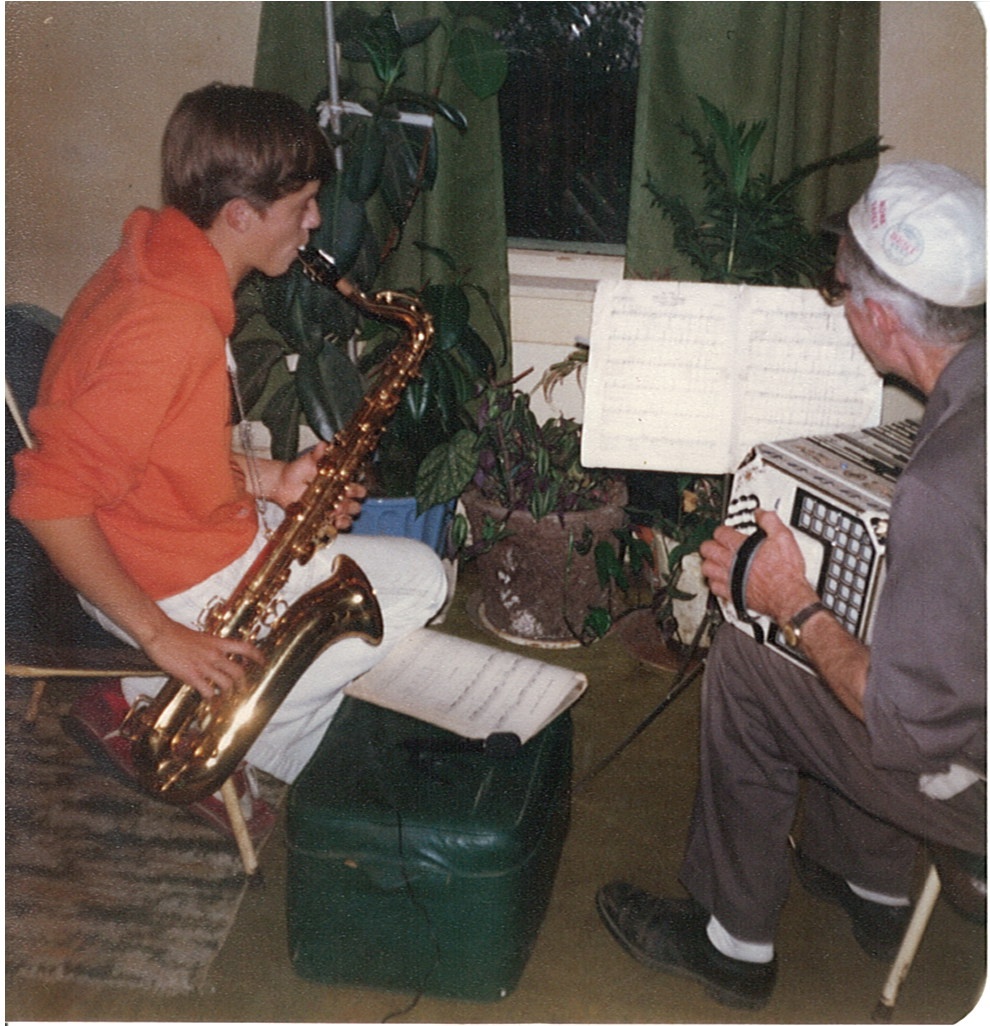
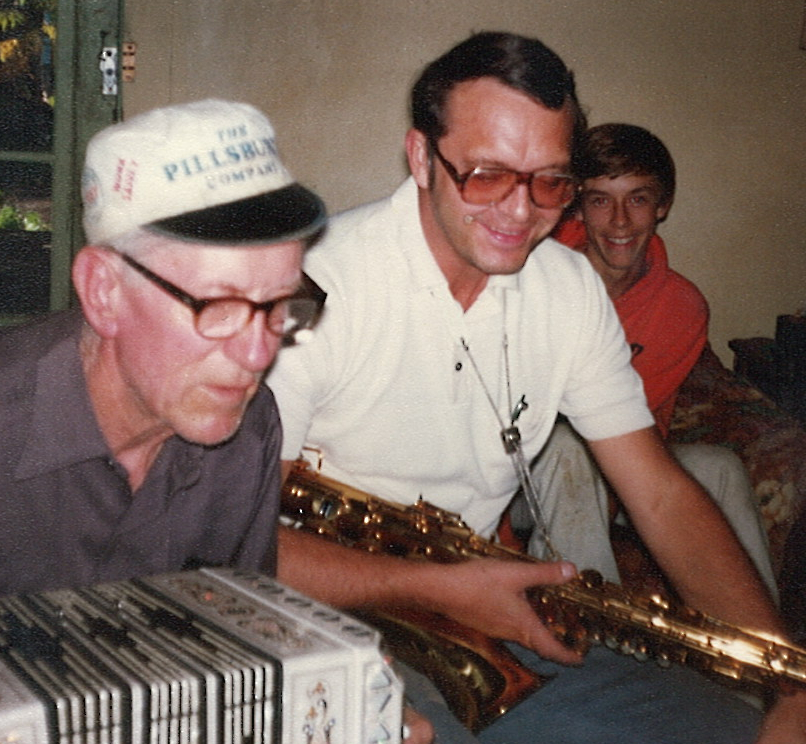
Young David Black plays tenor sax with his grandpa, John Galman, Jr., on concertina, 1979.

Young David Black plays tenor sax with his grandpa, John Galman, Jr. on concertina, 1979.

Those of us who grew up watching “The Lawrence Welk Show” with our ethnic parents and grandparents remember their enjoyment of the accordion and polka music, even as we embraced the “Rock ‘n Roll” revolution of our own generation. Back in the 1950s and ‘60s, more than one young Elvis or Beatle wannabe had to take accordion instead of guitar lessons at the behest of parents who were still part of a musical tradition going back to the Old Country. Whether your immigrant forebears were from Lithuania, Hungary, or Poland, traditional music—at least as it survived in Springfield—seemed to be defined by the concertina (or squeeze box) and lively, danceable tunes.

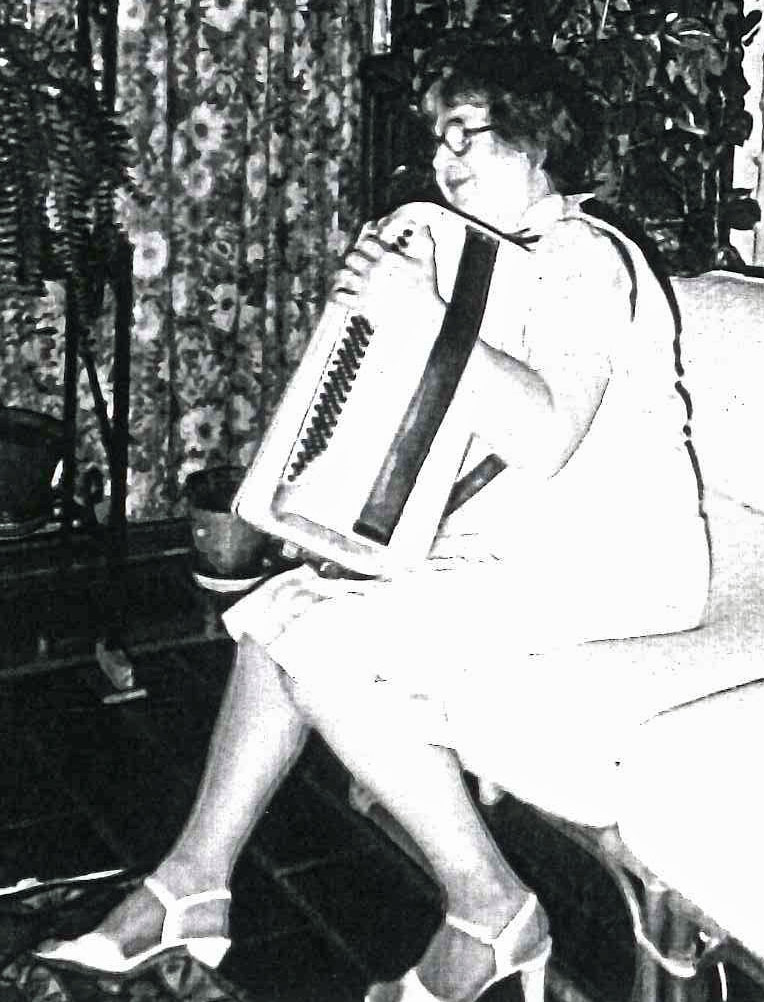
One of the few valuables my mother Josephine (Kohlrus) Baksys retained from her immigrant youth (both her parents and several siblings were born in Veszprem County, Hungary) was a huge accordion, on which she sometimes played the gypsy song “Dark Eyes.”

Josephine (Kohlrus) Baksys playing son-in-law Jay Wheeler's accordion, 1984, Courtland, Calif.

Josephine (Kohlrus) Baksys playing son-in-law Jay Wheeler’s accordion, 1984, Courtland, Calif.

When we were big enough, we girls were allowed to carefully take the huge instrument out of its red velvet-lined case and try to pick out a tune. It was like playing the piano—if you had to hold that piano in your arms and play it without being able to see any of the keys, while also pumping a giant bellows. Just making that full-size accordion “breathe” was hard work.

My close encounters with the accordion are echoed even more sweetly and strongly in the memories of David Black, a Lithuanian-American of the Galman clan who grew up in Springfield but now lives in North Carolina. David has been a musician most of his life, starting with alto sax in Fairview Grade School, progressing to tenor sax in the Stage Band at Lanphier High School and the Jazz Band at LLCC—and later, weekend gigs with jazz and R&B bands in Silicon Valley, where David worked in high tech after earning pre-engineering (LLCC) and computer science (U of I Champaign) degrees.

David, who also plays the electric and acoustic bass, grew up knowing music has no boundaries, as he was exposed to both the music of his times and the concertina-polka passions of his maternal grandfather John Galman, Jr.

Jonas Galminas (John Galman, Sr.) Certificate of U.S. Citizenship, 1931.

Jonas Galminas (John Galman, Sr.) Certificate of U.S. Citizenship, 1931.

The Galman story goes back to Lithuanian immigrants Jonas and Eva (Shouygaska or Swieguski) Galminas, who immigrated to the U.S. in 1905. Jonas, who changed his name to John Galman, Sr., was a coal miner who became a naturalized U.S. citizen in 1931 at age 53. He and Eva raised sons Antanas (Antone), Adolph, John, Jr. and Charles Galman at the family home at 1728 E. Moffatt St.

David Black as a little boy with his Grandpa John Galman, Jr. circa 1965.

David Black as a little boy with his Grandpa John Galman, Jr. circa 1965.

John, Jr. (1909-1998) was the “music man” of his extended family who loved, collected and played concertinas: small, accordion-like instruments. According to David, “Grandpa played the concertina very well, and he used to play polkas with me on tenor saxophone. He would drive to Chicago and buy these marvelous, large concertinas of a type called Chemnitzer, named after the area of Germany where they were invented.” For a time, John, Jr. also played concertina for the customers at Lithuanian-owned Pokora’s Tavern on South Grand Avenue East.

Grandpa John is remembered working as a master plasterer and at the Illinois department of signs, before joining Pillsbury Mills, where he worked as a custodian for many years. Relatives also report that during Prohibition, John, Jr. made bulk sugar deliveries or “runs” to the still in the basement of The Mill tavern at 15th and Matheny.

John, Jr.'s wife Clema in Oklahoma.

John, Jr.’s wife Clema in Oklahoma.

Growing up on Fairfield Dr., David still remembers watching his grandfather walk home from Pillsbury along the C&IM tracks with a cotton sack of donuts slung over his shoulder. David explains: “707 N. 19th, where he and my grandmother Clema lived, was a block south of the C&IM switchyard. Grandpa must have worked near or knew someone in the Pillsbury test kitchen where they baked all kinds of stuff. That’s how he got the powdered donuts and angel food cakes to bring home and share with us.”

Grandpa John was also a good home cook who had about a fifth of his garden in dill weed and garlic, and who enjoyed making dishes with shrimp, as well as turtle and rabbit soup. When he was about five, David’s grandpa took him fishing at Lake Springfield, where David caught a 4.5 pound catfish—huge for such a little boy. “It was funny; even though all grandpa ever used was a cane pole and bobber, he always caught about three times as many fish as I did.”

Grandpa John, Jr., bottom left, with sons David, upper left, and John III--and daughter Marilyn.

Grandpa John, Jr., bottom left, with sons David, upper left, and John III–and daughter Marilyn.

Grandpa John, his wife Clema and their family (sons David and John III and daughter Marilyn) associated with other Lithuanian-Americans in the neighborhood, especially the Albert Stasukinas family that owned Alby’s Tavern. David Galman (David Black’s uncle) was so close to Albert’s son John Stasukinas that he was nicknamed “Stutz.” The Galmans also socialized at the Lithuanian-American tavern just around the corner at 1737 E. Moffatt:  The Lazy Lou, which was owned by Frank W. and Mary (Gerula) Grinn.

David’s mom Marilyn Galman graduated from Lanphier in 1959. “I remember her telling me she was a Lanphier track queen, and after graduating, she also did a few modeling jobs. She was a pretty woman with an irresistible smile,” he recalls.After high school, Marilyn worked for the Illinois Department of Vocational Rehabilitation until marrying Jerry Paul Black in 1962. Three sons followed: David, Dan, and Tim.

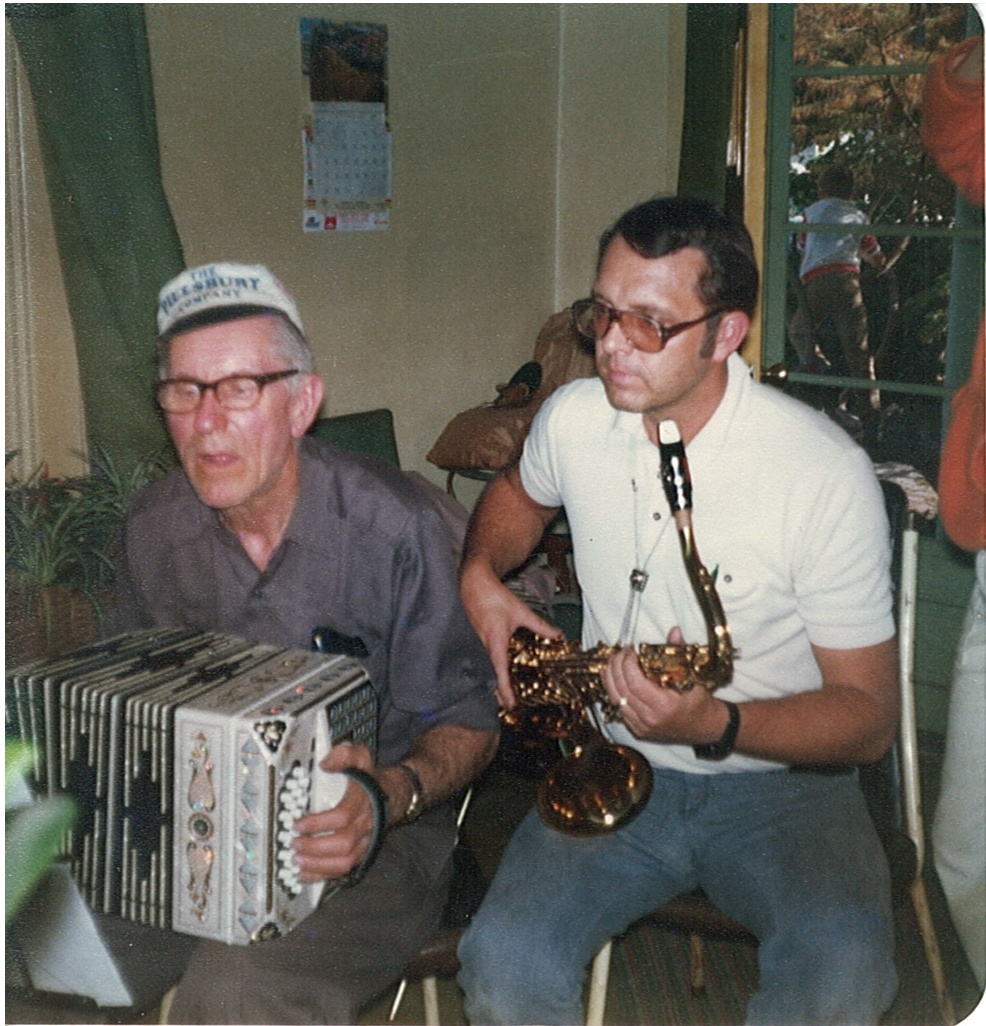
John Galman, Jr. on concertina and son-in-law Jerry Black on tenor sax, 1979.

John Galman, Jr. on concertina and son-in-law Jerry Black on tenor sax, 1979.

David actually gets his musical ability from both sides of the family. Dad Jerry, a photogrammetrist (map-maker) with IDOT’s Aerial Surveys department, played gigs on tenor sax with the Harmony Brothers Band, featuring Ben Harmony. Even as a baby, David remembers hearing his father play electric piano at home, and it was his dad who later introduced him to the saxophone.

At times, Grandpa John, Dad Jerry and David formed their own family band. These lovely photos capture a day in 1979 when David and his dad took turns accompanying Grandpa John on the tenor sax as John taught them polka classics on “his wondrous Stradivarius concertina.”

Grandpa John (in his Pillsbury hat) on concertina, with his son-in-law Jerry on tenor sax and grandson David Black, 1979.

Grandpa John (in his Pillsbury hat) on concertina, with his son-in-law Jerry on tenor sax and grandson David Black, 1979.

Yunker Scholarship Returns

It’s baaaaaaack.

After an absence of several years, the Fr. Yunker College Scholarship  was just advertised in the July 27 edition of the Catholic Times.

After an absence of several years, the Fr. Yunker College Scholarship was just advertised in the July 27 edition of The Catholic Times.

About three weeks ago, a diocesan official agreed to speak to me about the transfer of the Fr. Yunker College Scholarship Fund from a bank in Cleveland to the Foundation for the People of the Catholic Diocese of Springfield. The official told me that the transfer of the scholarship was finally complete after some costly legal wrangling. It was necessary, he said, due to the bank charging costly fees that had depleted the $100,000 principal amount bequeathed by Fr. Yunker back in the 1970s (which is never supposed to happen in a scholarship fund).

The interior of St. Vincent de Paul Lithuanian Catholic Church

The interior of St. Vincent de Paul Lithuanian Catholic Church

The remaining principal at the time of transfer to the Springfield diocese this year was about $62,000. That should rise again quickly as investment returns are fed back into the principal, along with being directed into scholarship grants.

The fund’s reduction in principal was not the reason why no grants have been made over the past several years, however. The reason for that was the Great Recession and the absence of sufficient investment income on the scholarship’s principal, given historically low interest rates on the kind of safe investments in which the principal must be held to preserve it in perpetuity. (Investment income is the sole authorized source of the scholarship’s grants to students.)

Fr. John Nolan later confirmed to me that the scholarship fund had been received by the diocese and that the first round of applications in several years would soon be advertised and taken. He said he was “not at liberty to discuss” the amount of principal or the value of the grants to be made this year — either in aggreggate, or the amounts that would be granted to the individual winners. If anyone finds out through the application process of a member of your family, would you please let us know?

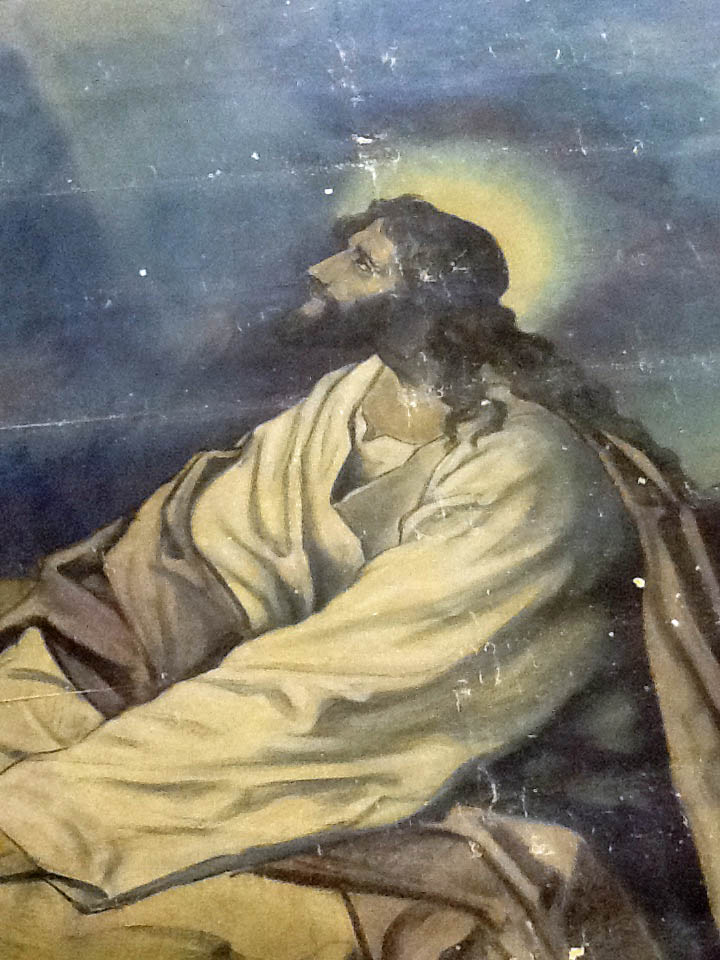
Jesus in the Garden: ceiling mural salvaged from the church before demolition.

Jesus in the Garden: ceiling mural salvaged from the church before demolition.

Finally, I heard this week from Scott Mumford, the new editor of Catholic Times, that the ad above had just run. How wonderful that the scholarship, which helped several of my own sisters attend the University of Illinois, is finally active again.

Since several officials have speculated out loud to me that maybe awards were also not made, in recent years, due to a dearth of qualified applicants, please spread the word by sharing this blog post, or the linked application form below, with descendants of parishioners of St. Vincent de Paul’s with college-age children.

Click to access Lithuanian_Student_Assistance_Fund_2014_Application.pdf

After fearing the scholarship would be de-linked from new generations of parish families, I was pleased to see that the requirement of family relation to the parish is still there, as it has been historically, and as Fr. Yunker surely intended. What a wonderful tribute to the Lithuanian immigrants, their children and grandchildren who poured their blood, sweat and spirit into their beloved church.