• Welcome!
  • An indelible role in our history
    • Historical Background, Influences
      • First Lithuanians in Springfield
      • Freedom and Assimilation
      • Divisions and Decline
      • The Mining Life
        • Honoring Central Illinois Mine Casualties
        • The Mine Wars
      • A Second Wave of Immigration: the ‘DPs’
      • Behind the Iron Curtain
      • “Singing Revolution”
        • “The Other Dream Team”
    • Lithuanian Historical Marker Dedication
      • Lithuanians in Springfield Historical Marker
      • A Time to Remember
      • Historical Marker Dedication Program
      • Photo Gallery
      • Marker ceremony noted in Shimkus newsletter
  • Elder Isolation is Elder Abuse
    • Open Letter to Ill. Gov. Pritzker, AG Raoul
    • Open Letter to Illinois Elder Abuse Task Force
  • Sandy’s Blog: News and Profiles
  • Voices of the “Third Wave”
    • Christmas Memories
    • Remembering January 1991
  • Springfield Lithuanian Families
    • Bakunas, Gestaut, Shadis, Petrokas, Chepulis
    • Local Lithuanians Prompt Newspaper Story
    • Stuches, Gillette, Cooper, Chesnut
    • Tisckos, Miller, Wisnosky
    • Treinis, Nevada, Yuskavich
    • Andruskevitch-Shoudis-Moser
      • Weddings
    • Baksys-Yamont
      • Singing Revolution Activities, U.S.
    • Banzin – Liutkus – Kellus – Gestautas
      • Memories
      • Trips to Lithuania and an appreciation of ancestry
    • Giedrys-Kudirka
    • Janners (Jankauskas), Gossrow
    • Kwedar, Olshevsky, Shupenus
    • Lelys, Lilles
      • 1970 Wedding, St. Vincent de Paul Church
    • Turasky, Yakst, Brazas, Stockus
    • Mankus-Tonila
      • Maria Fry Race & Tonilas
    • Zemaitis, Zubkus
    • Casper, Yanor, Walentukonis
    • Rackauskas immigration
    • Treinis-Banaitis
    • Bubnis, Guthrie, Walker
    • Grigsby, Dumbris
    • Missavich-Stankavich
    • Welch, Wilcauskis, Valentanovich
    • Stasukinas, Staken, Bubblis, Poskevicius
  • St. Vincent de Paul Lithuanian Catholic Church
    • St. Vincent de Paul murals resurface
    • Lithuanian Independence Day, 1950
    • People of the Church
    • People of the Church 2
    • People of the Church 3
    • People of the Church 4
    • Fr. Yunker College Scholars
      • Patricia Visnesky and Cynthia R. Baksys
      • Amanda Rackauskas Ross and Elaine (Manning) Kuhn
      • Barbara Blazis, John Dombroski, Patricia Naumovich, Mary Sitki
      • Diane D. Baksys and Emily Warren
  • Business & Professions
    • Journalist Matt Buedel
    • U.S. Senator Richard J. Durbin
    • Chernis: Midwest Demolition
    • Lobbyist “Limey” Nargelenas
      • Horace Mann CEO Marita Zuraitis
    • Nurse Joan Naumovich
    • Tony J. Yuscius, Advanced Digital Media
    • Business Writer Dan Naumovich
    • Teacher Elaine Kuhn
    • Power Co. Executive Maria Race
      • Pediatric Dentist Mary Ann Rackauskas
        • Nurse Debbie Ritter
    • Radio Host Sam Madonia
    • Turasky Meats
      • Tureskis Cleaners
  • The Lithuanian-American Club
    • Founding and Founders
    • Club Lobbies for Lithuanian Independence: Letter to President Bush
    • Recipes / Food
    • Travel

Lithuanians in Springfield, Illinois

Lithuanians in Springfield, Illinois

Monthly Archives: January 2014

The Chepulises and Champion Garage

25 Saturday Jan 2014

Posted by sandyb52 in Sandy's Blog

≈ 8 Comments

Champion Garage, 1939

Champion Garage, 1939

Founded by Joe (Sr.) and William Chepulis, Champion Garage at 820 E. Black Street celebrated 50 years in the auto body and auto repair business in 1986. Back in 1936, cars were heavy, metal-plated tanks compared with today’s alloy and plastic-bodied vehicles. They were also mechanically simple compared with today’s mechanical-electrical-digital wonders.

Remember chrome bumpers? Now, those were not just crash, but demolition derby-worthy. Remember when cars had faces, with headlights for eyes and grilles like grins?

Champion saw it all, over the years, while providing a livelihood for Joe and Bill’s families. One of the most interesting photos of the business, to me, includes Champion’s tow-truck from a simpler time, with home-made lettering on the door.

Mary Ann and Bill Chepulis with tow truck

Mary Ann and Bill Chepulis with tow truck

Joe, Bill and Mary Ann were the children of Lithuanian immigrants Carl (Karolis) and Mary Eva (Lelesius) Chepulis. Carl was a coal miner born in 1884 in the Marijampole area. Also born in 1884, Mary Eva came to the U.S. when she was 18 with a cousin name Kurila. Carl and Mary Eva married in 1908 at St. Vincent de Paul Lithuanian Catholic Church. Their first child was born in 1909. The family lived on North 15 St. for many years, across the street from the Sluzalis home.
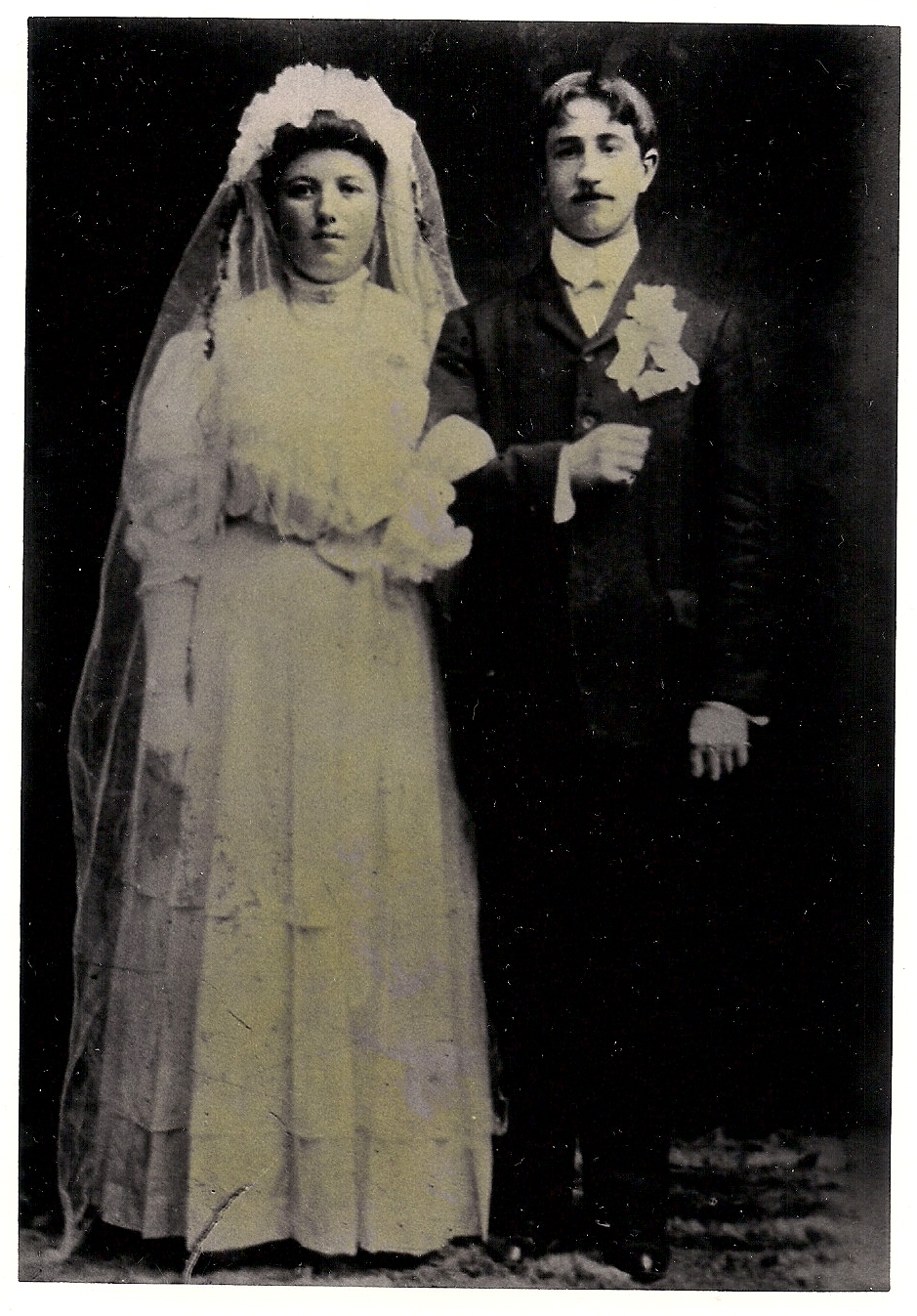
Mary Eva & Carl Chepulis wedding, St. Vincent de Paul's Church

Mary Eva & Carl Chepulis wedding, St. Vincent de Paul’s Church

Both Joe and Bill ended up working in the area’s coal mines, at first to take their father Carl’s place on days when he couldn’t work. (Carl suffered for years from black lung disease, and died of it at age 66.) Joe and Bill later took up auto body work at Gietl Brothers Garage on Second St. near the Capitol. They learned the trade and opened their own garage, Champion, in the heart of the Great Depression in 1936.

Here are a few comments that have already been made about Champion and its founders:
— “I worked at Marine Bank for years re-possessing cars, and Joe was our tow truck driver. He could hook and snatch the car before people even knew what happened to them!”
— “I remember Joe, Jr. and his family from my many visits to the shop as an auto claims rep long ago. Stepping into their shop was like a step back in time…Joe Sr. and Mrs. Chepulis were very kind. I remember Joey and his mom running the place after his dad died…”

Champion Garage, 1940

Champion Garage, 1940

Families back then had to pull together just to make it, and that may explain why Joe, Sr. didn’t marry and leave home until he was 35, Mary Ann until she was 40 and Bill until he was 50. Joe, Sr.’s daughter Mary also recalls: “Dad had an Indian Motorcycle, a really famous brand. If anyone had one today, it would be worth a fortune. However, he was a bit of a daredevil and he had an accident with it, had to go to the hospital, and while he was in the hospital, his mother sold it.”
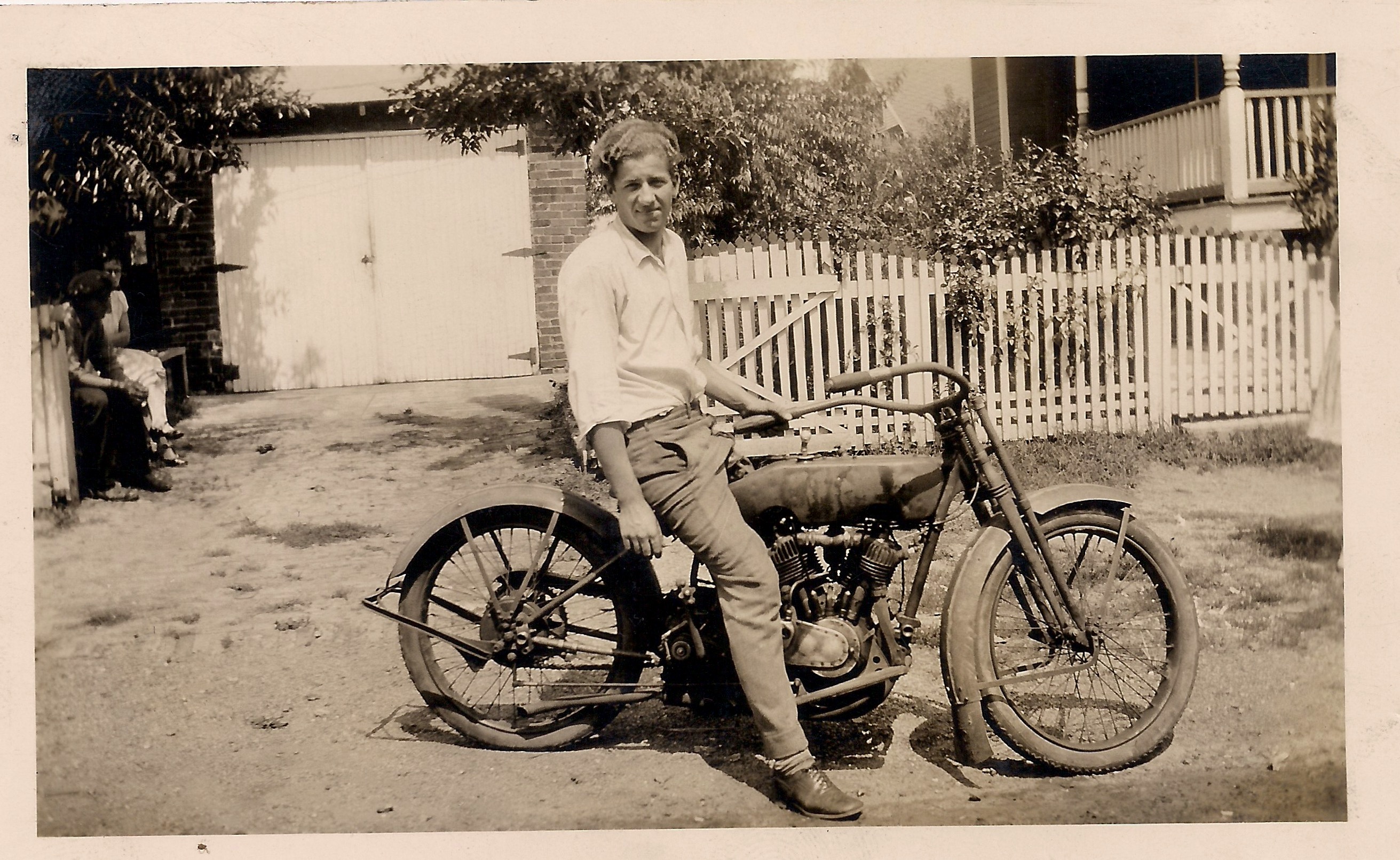
Joe, Sr., 18, on his Indian motorcycle, August 1928.

Joe, Sr., 18, on his Indian motorcycle, August 1928.

Additionally, Mary remembers visiting Grandparents Carl and Mary Eva after they moved to North Peoria Road, just east of old Gate 3 of the Illinois State Fairgrounds. Mary recalls, “I’d go over there and she’d braid my hair, pulling the two braids together at the back of my head and tying them together with a ribbon. They had chickens and a cow, and every once in a while, the cow would have a calf. I remember having to walk home to our house on North 15th Street though cow fields.

“I also remember that we parked cars at Grandma’s during the Fair: Cars were 50 cents for the day, motorcycles, a quarter. I was so impressed as a kid when my Uncle Bill built a stand to sell sodas.”
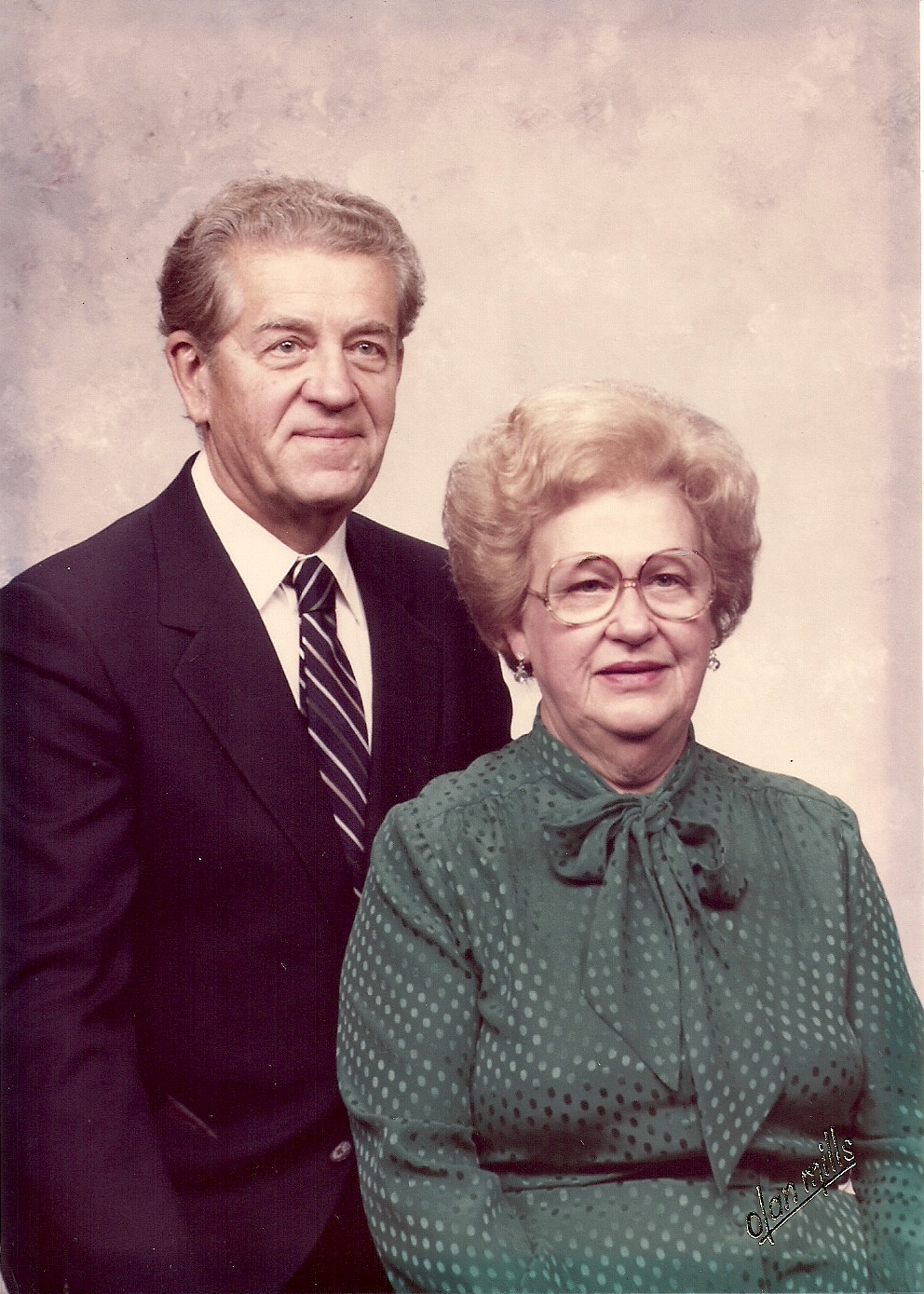
Joe, Sr. and Sylvia (Petrokas) Chepulis

Joe, Sr. and Sylvia (Petrokas) Chepulis

Joe Chepulis, Sr. married Sylvia Petrokas at St. Vincent de Paul’s, where they had met. Sylvia was the daughter of coal-mining Lithuanian immigrant Stanley W. Petrokas, who was the son of Ignatius and Barbara (Gestaut) Petrokas. Sylvia’s mother was Catherine Rice (Rieskevicius), who was the daughter of Adam and Anna (Senkos) Rieskevicius. Catherine died in 1924 at the age of 25, leaving Stanley with two daughters, Sylvia and Ruth Petrokas (Lustig), whom he raised by himself.

In addition to daughter Mary, Joe, Sr. and Sylvia had four other children, who all attended St. Aloysius Grade School: Joe, Jr., who took over the garage when his dad became ill in 1987; John, an electrician; Bernadine, who studied music at the American Conservatory of Music in Chicago; and Patricia, who retired from the state and also earned a nursing degree. All the girls attended Ursuline Academy.

Back row, l to r:  Joe, Jr., Mary, Patricia. Front row: John and Bernadine.

Back row, l to r: Joe, Jr., Mary, Patricia. Front row: John and Bernadine.

Mary holds bachelor’s and master’s degrees in education from SIU-Edwardsville and has worked for decades as an advocate for the disabled. She also is a former secretary and long-time member of the Lithuanian-American Club. Joe, Jr. has two children and five grandchildren, John has two children and one grandchild, Bernadine has two children, and Mary has a daughter.

As for Champion Garage, Mary’s brother Joe, Jr. operated it until about 2006, and then began renting it out to another auto body operator.
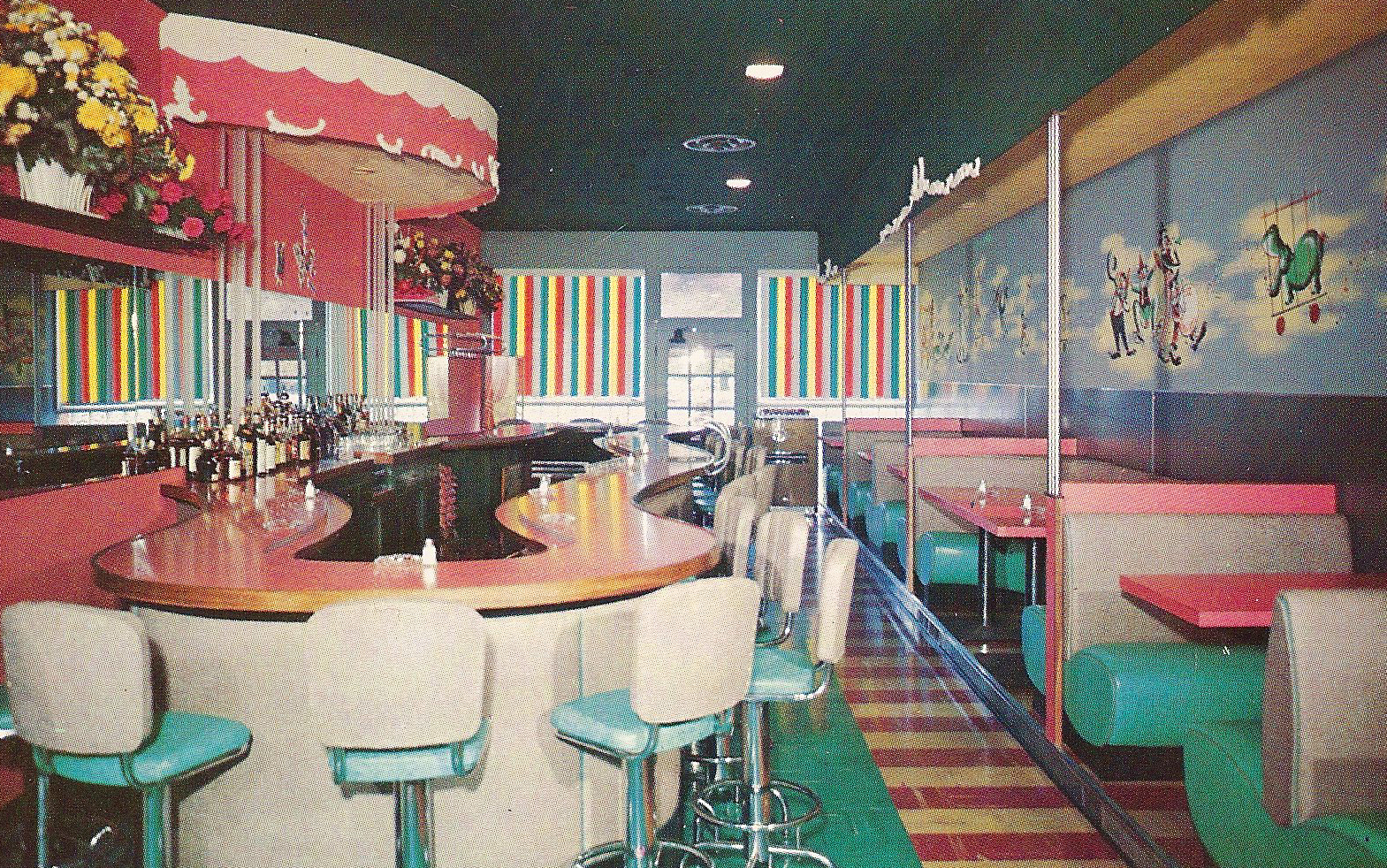
Taking a Spin at the Cara-Sel Lounge

19 Sunday Jan 2014

Posted by sandyb52 in Sandy's Blog

≈ 5 Comments

The Cara-Sel, 7th and North Grand Ave.  Interior, undated.

The Cara-Sel, 7th and North Grand Ave. Interior, undated.

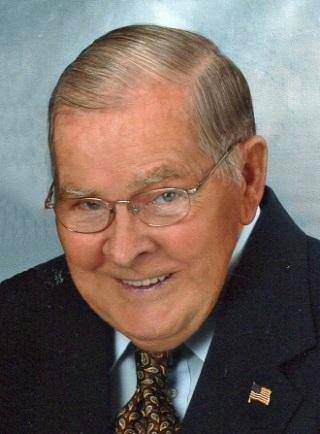
One of the more colorful Lithuanian-American businesses in Springfield was the Cara-Sel Lounge, 7th and North Grand Ave., operated for 17 years by World War II veteran Tony Yuscius. Tony, who died at 86 in 2009, was the son of Lithuanian-born coal miner Joseph and Marcella (Radavich) Yuscius. After Joseph died of black lung disease, Tony’s mother Marcella and her many children fell on hard times. (The Cohen family, who operated a grocery, and later, The Mill tavern and restaurant, are said to have assisted Marcella–and many others–with grocery credit.)

Yuscius Family

Marcella and five of her children with husband Joseph, 1920s.

The hard times known by many Lithuanian families in Springfield, generated by death in or from the mines, not to mention mass mine layoffs, led youngsters like Tony and his siblings to work from a young age to support their families. The same conditions led many to launch their own small businesses as soon as they were able.

Tony Yuscius serving Joe Saputo in dark sweater, according to Sandra Coffee. Joe and his brother Frank  operated Saputo Twins Corner downtown.

Tony Yuscius serving Joe Saputo in dark sweater, according to Sandra Coffee. Joe and his brother Frank operated Saputo Twins Corner downtown.

Tony’s business opportunity did not come until sometime after he graduated from Lanphier and served in the U.S. Army in the European-African-Middle Eastern Theatre during World War II, earning three bronze service stars.

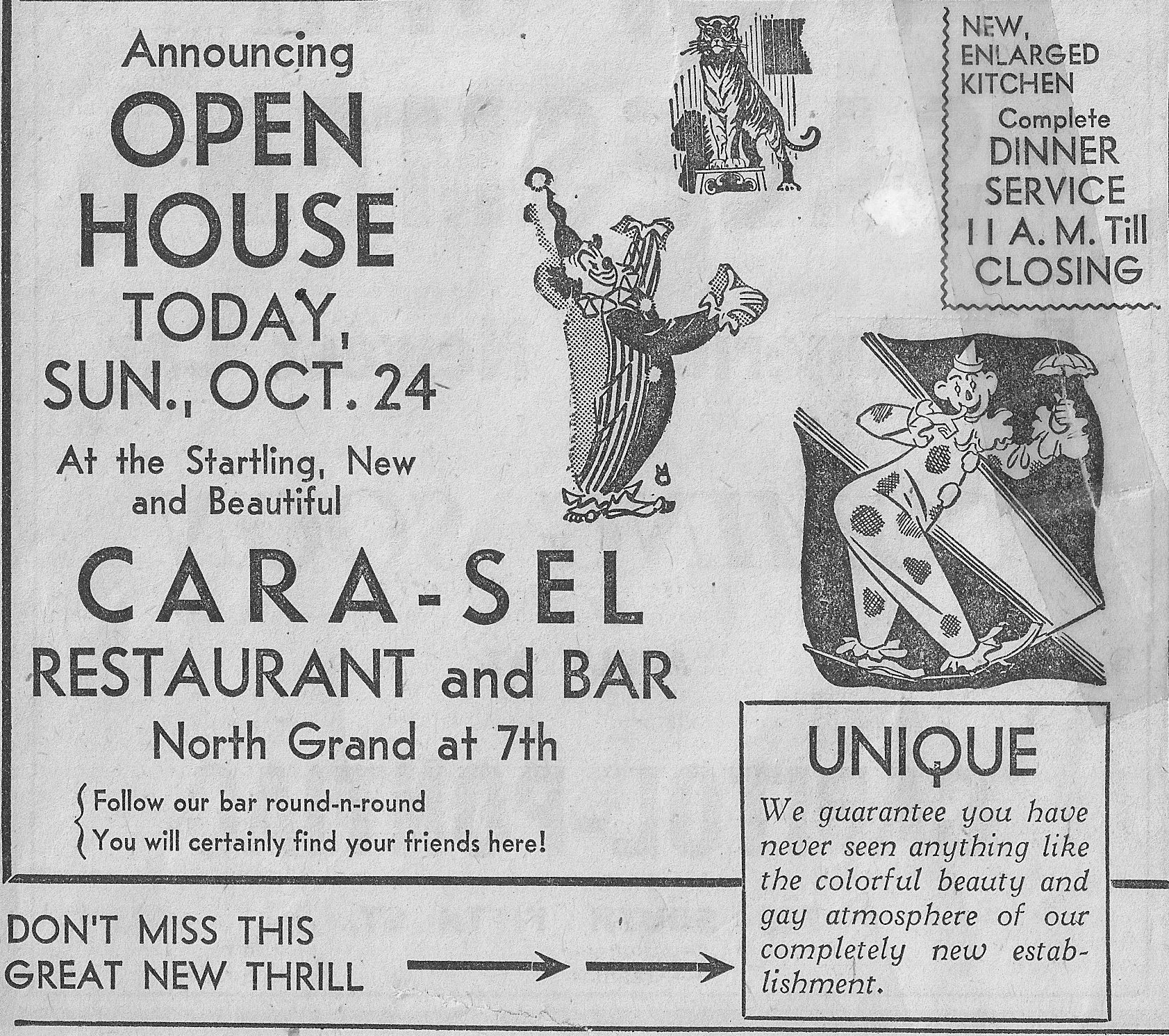
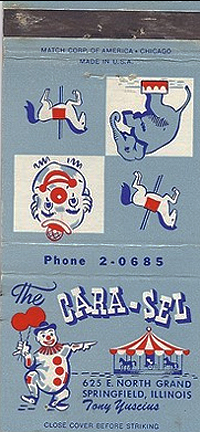
It’s hard to know how Tony got the idea for the Cara-Sel Restaurant and Bar– a play on the world “carousel–” with its colorful circus-theme décor and circular bar. (“Follow our bar round ‘n round—you will certainly find your friends here.”)

undated newspaper ad

undated newspaper ad

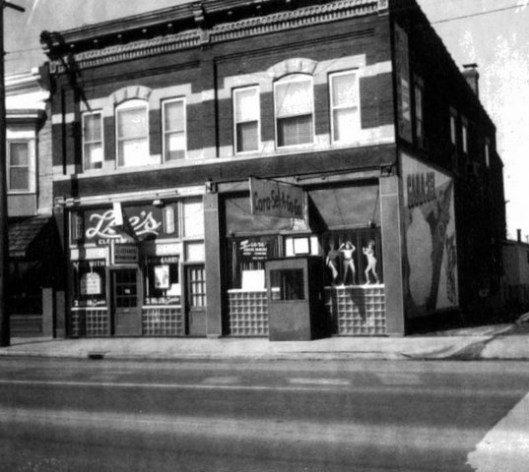
Tony and his wife Carol operated the Cara-Sel from sometime in the 1950s until the early 1970s. There were many neighborhood tavern and restaurant proprietors in Springfield during that period, so one can imagine it was a challenge to find a niche, to really stand out. After a more family-oriented start indicated by its circus theme and enlarged kitchen, the Cara-Sel hopped on the “mod” train sometime during the 1960s, with mini-skirted dancing “go-go” girls at night, like those on popular TV shows “Rowan and Martin’s Laugh-In” and “Hullaballoo.”

Cara-Sel, 1967

Cara-Sel ‘A-Go-Go,’ 1967. Sangamon County tax files.

The establishment really made an impression on those who still remember it today:

–“When I went there it was a nice place for a couple of girls to go, have some drinks and maybe meet a couple of guys. I also went there on dates, like after a movie.”
–“Go-go girls would dance on the bar, and in front of the bar—also in the back room.”
–“I used to walk by the Cara-Sel on my way to Edison Middle School, and then Lanphier High School. Recently, I found out that a girl I went to school with worked there in the 1970’s.”

Cara-Sel matchbook cover

Cara-Sel matchbook cover


— “When I was a boy, my father drove a truck and would arrive home on Saturday mornings, at which time I would accompany him to the Carousel (sic) for lunch. Late at night, there were cages and go-go girls, and still being in grade school, I would not have been welcomed. The Teamsters had their office directly across the street. One block to the east was the Pantheon Theatre, and next door was Palazollo’s Soda Shop, where all the Lanphier students gathered. Noonan Hardware and Ben Franklin Five and Dime were on the same block.”


–“They had a left-handed/right-handed drinking club. You had to drink with whichever hand (on the wall?) behind the bar was lighted. We paid to join and there was a fine for getting caught drinking with the wrong hand. The reward was a free eat and drink party once a year for the members. Neat place.”

In an ironic twist, sometime in the 1970s or maybe early 1980s, Tony and his wife Carol completely reversed direction, closed the Cara-Sel and opened the Northtown Child Care Center, a day care they operated for 20 years. Tony had two brothers: Stanley and John Yuscius, and five sisters, Mary Yuscius, Ann Asher, Josephine Pavletich, Ardella Dodd and Patricia (Walter) Bietsch.

Cara-Sel exterior, undated

Cara-Sel exterior, 1954.

His son, Tony J., a 1979 graduate of Griffin High School, is a second-generation entrepreneur as founder and president of another cutting-edge Springfield business, Advanced Digital Media.

Advanced offers video crews for hire, and more note-worthily, a website called blueroomstream.com that live-streams unedited coverage of virtually every news conference in the Blue Room of the Illinois Statehouse, as well as other political and government events, including some committee hearings and rallies.

Tony J. Yuscius, Advanced Digital Media

Tony J. Yuscius, Advanced Digital Media

Tony J’s innovative business grew out of his many years with the Illinois Information Service, helicoptering around the state at a moment’s notice with Illinois governors Thompson and Edgar, recording gubernatorial public appearances and speeches with his trusted minicam.

Tony also has a daughter, Susan Yuscius (husband, Larry O’Brien) of Springfield; three grandchildren, Jewel and Megan O’Brien and Tori Yuscius (Tony J.’s daughter), and several nieces and nephews.

Tony Yuscius, obituary photo. Sangamon Valley Collection, Lincoln Library.

Tony Yuscius, obituary photo. Sangamon Valley Collection, Lincoln Library.

Remembering January 1991

12 Sunday Jan 2014

Posted by sandyb52 in Sandy's Blog

≈ 1 Comment

Lithuanian faces Soviet tank with a flag

Lithuanian faces Soviet tank with a flag

Twenty-three years ago tonight, I got a call at 1 a.m., ET. It was my older sister giving me the first, terrible news of the Soviet massacre of unarmed Lithuanian civilians at the Vilnius TV Tower—the single bloodiest event of the non-violent “Singing Revolution” through which Lithuania regained its independence. Below are memories of that fateful night from Lithuanian immigrant and Beardstown resident Irena S., who was not at the Tower, but at another building that Soviet forces took that winter night, attacking and overrunning thousands of patriotic citizens who had left the warmth and safety of their homes to stand in defense of their country and their human rights.

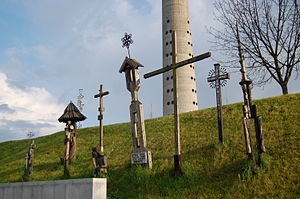
some of the crosses for the 14 dead at the Vilnius TV Tower massacre

some of the crosses for the 14 dead at the Vilnius TV Tower massacre

By Irena S., Beardstown, Ill.

When I was asked to write about the events of January 13, 1991, I enthusiastically agreed. Today, as I try to put down my thoughts on the blank screen of my computer, I understand that an easily given promise is not so easy to fulfill. Just thinking about those tragic events in Lithuania fills me with so much emotion, even after 23 years. The words I reach for to express myself seem entirely inadequate, even artificial in the face of what happened. I remember not only my own feelings, but also the way they conflicted with the feelings of my family (especially my mom): uncertainty with faith; hesitation with determination.

My son Julius was just a year and a half old, and my mom, who was helping my brother, my sister and I to raise our young children, adamantly opposed me leaving home that cold night with Soviet forces threatening the city, especially the U.S.S.R.’s elite Alpha “anti-terrorist” unit. I couldn’t allow myself to tell her where I was planning to go—back to my old apartment across from the Radio and TV Committee building on Konarskio Street, one of the likeliest targets of Soviet military action. (I wonder how many other young adults and even teenagers did not tell their parents and grandparents the truth about where they were going that night.)

The Lithuanian government had resigned on January 8th, and on January 11, the Soviet Army had invaded and taken control of the Vilnius Publishing House. People were saying that the Parliament (then called the Supreme Council) building would be next—that it was only a matter of days or maybe even hours. Lithuania’s independence, declared less than a year earlier, on March 11, 1990, had endured a long economic blockade by the U.S.S.R. against critical food and energy supplies. But that independence now truly hung by a thread.

under the gun barrel of a tank firing deafening blank rounds

under the gun barrel of a tank firing deafening blank rounds

A lot of people were upset that the Lithuanian government had increased food prices 300 percent a couple of months earlier due to the Soviet economic blockade. Inflation was enormous and common people were under tremendous pressure. That made it a good time for our enemies to believe that the population would not resist the now-imminent Soviet military takeover aimed at putting an end to Lithuanian independence. More precisely, it seemed a good time for the pro-Soviet faction of the Lithuanian Communist Party, supported by Moscow, to try to ‘prove’ to Mikhail Gorbachev, the Soviet President, that the ideal moment had arrived to take back control of the country from the Lithuanian independence movement. How wrong they were!

But my mother was not wrong to fear for my life as she pressed me not to leave her home that night. If she had known where I planned to go, it would have been even worse. As a teenager, at the very end of World War II, she had been severely injured in a grenade explosion that left her in a coma for three days. So she knew the worst can happen. But despite her fears, I was resolved to go to my old street and stand with the people there trying to defend the Radio and TV Committee building the only way they could—by forming a human barricade.

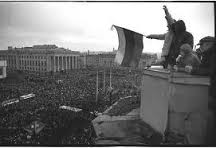
Lithuanian people power

Lithuanian people power

It was the same in front of all our major government and media buildings, including the Parliament and the TV Tower: unarmed people with nothing but their patriotism and their unity and their hope that they would somehow be able to defend their country against Soviet tanks. Nobody knew exactly how they could prevail against tanks and guns. Perhaps that was the essence of their courage—that the answer to the question was not as important as the will and the need to prevail.

Jan.flag in square

On my way to Konarskio Street, I passed a sound truck with a pre-recorded message blaring that the National Committee for Salvation, consisting of enemies of Lithuania’s independence, was now in control of the government. But that propaganda did not work—it didn’t stop people from massing around key buildings to defend them. We were praying, singing, talking, or simply standing and waiting – peacefully. I think one way we kept up our courage was by believing that Soviet soldiers would not really start shooting unarmed civilians, especially in the presence of so much foreign media.

Many of us living near the Committee building ran back and forth to our apartments with food, hot water and tea or coffee to help the rest of the people in the street keep warm. I did this myself more than a dozen times that night. The threat of violence against us was so close, but as we all stood together, supporting and helping each other, there was no fear. The spirit of that night and those people, my people, is unforgettable and almost indescribable, even after all of these years.

Around midnight, I was drawn away from the scene because I could not reach my mom by phone and I was afraid that something might have happened to them in another part of the city. And that is how I missed the attack on the Radio and TV Committee building that happened around 2 a.m. Jan 13. I was so angry at myself for leaving behind the brave people standing guard. None of us slept that night as the shocking news poured in about the tanks running right over people at another location–the Vilnius TV Tower, along with the last images from the Committee building of a solider running toward the camera before it went dead.

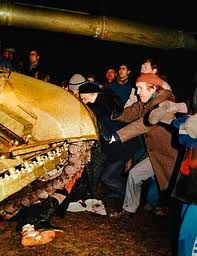
crowd tries to free Loretta, an 18-year-old girl run over by a tank

crowd tries to free Loretta, an 18-year-old girl run over by a tank

In the aftermath of all the attacks the night of January 12-13: 14 lay dead and about 700 injured, 140 of them, critically–many shot multiple times or crushed under tank treads. At my old apartment building, people had to replace all the street-facing windows shattered by tanks firing blank rounds that deafened many of the Committee building protectors permanently. But the violence against the unarmed failed. The very next morning, January 13th, 50,000 people gathered around Parliament to defend their government with their lives. People built barricades and Soviet military trucks and tanks moved into the area, but the attack never happened. Why? Too many media from around the world covering the events, and too many people ready to die.

Dedicated to all those who stood and raised their voices to save their country; especially to those who gave their lives or their health. May you live forever in a grateful nation’s memory.

Public memorial to those who gave their lives for their country on Jan. 13, 1991

Public memorial to those who gave their lives for their country on Jan. 13, 1991

statue in memory of the patriots of January 1991

statue in memory of the patriots of January 1991

For more information and photos, please see: http://en.wikipedia.org/wiki/January_Events_%28Lithuania%29
and for another personal account of related events, please see: http://www.ltuworld.com/homes/item/479-the-days-in-lithuania-after-january-13-1991

Following the Golden Thread

04 Saturday Jan 2014

Posted by sandyb52 in Sandy's Blog

≈ 4 Comments

Lithuanian linen design hand-inked by Paul Endzelis on tiny gridded paper

Lithuanian linen design hand-inked by Paul Endzelis on paper with tiny grids

A golden flaxen thread connects almost every Lithuanian-American to one of the most important folk ways of our immigrant ancestors: the “homespun” production of linen clothes, sheets, bedspreads and towels.

For most of us, the person who connects us to our “flaxen past” is a great- or even a great-great grandmother. For me, it was my paternal grandmother who spun the flax fibers the family had cultivated into the thread that she wove into warm linen clothes for her nine children. (The family also raised sheep for wool.) If my grandmother Petronele was typical, her large wooden loom probably occupied a central location in the family’s small fir log house not far from the ceramic stove.

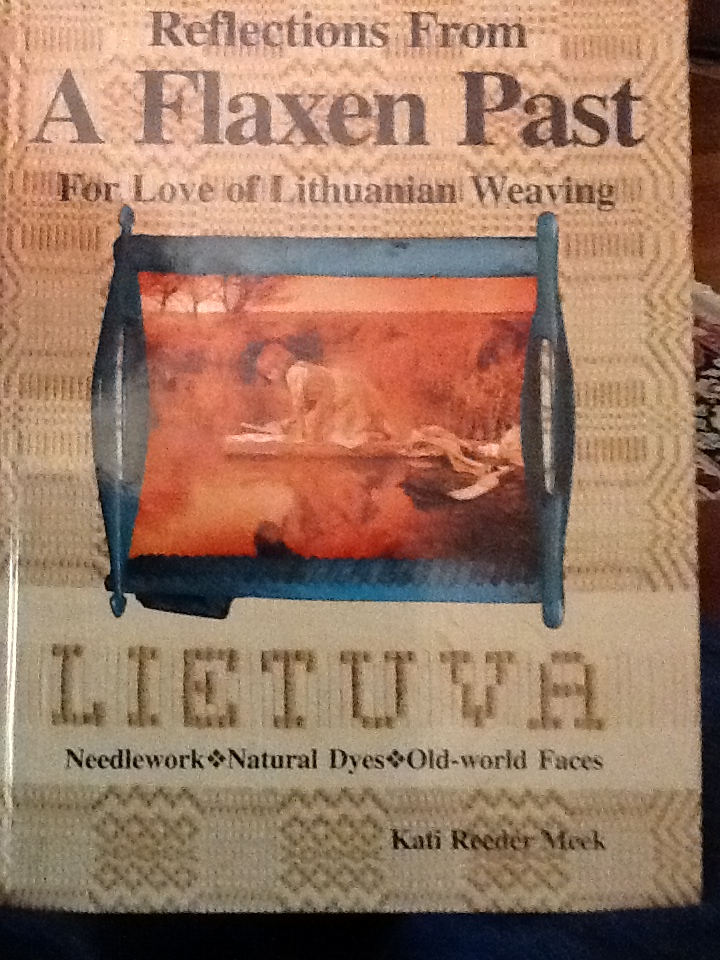
flaxenbook

I never met my Lithuanian grandmother. But Paul Endzelis, an immigrant from the Silute region of Lithuania who lived in Riverton for 14 years, and master weaver Kati Reeder Meek, played an important role in finally helping me see how my grandmother lived. Paul translated entire Lithuanian source books and inked hundreds of patterned designs for Kati’s 2000 book in English called, Reflections from a Flaxen Past: For Love of Lithuanian Weaving.

http://katimeek.blogspot.com/p/reflections-from-flaxen-past.html

Kati is an acquaintance of our Club member Barbara (Spence) Endzelis. That’s how Barbara’s father-in-law, Paul, became involved in bringing the story of Lithuanian linen (linas) to life.

Paul Endzelis as a student

Paul Endzelis as a student

But if linen has a story, so does Paul, the son of small farmers Boleslava and Vincentas Endzelis of Stempliai in the Silute region. Despite his father’s death in a POW camp during World War I, Paul’s mother was successful enough on the family’s hardscrabble farm to send Paul to secondary school. After that, Paul completed officer military training, three years of accelerated business college in Klaipeda, and advanced German language studies in Hamburg before working at the State Savings Bank in Kaunas.

Paul & Sophie (Brusokaite) Endzelis

Paul & Sophie (Brusokaite) Endzelis

World War II put an end to the promising career of this bright and hard-working young man who had risen from poverty in the countryside to become part of independent Lithuania’s first generation of educated professionals. Paul is reported to have spoken seven languages: Lithuanian, English, Russian, French, Polish, Latin & German. After five years as a refugee in Germany, Paul immigrated with his teacher-wife Sophie (Brusokaite) of Suvolkija and their three-year-old son Arvydas (Hank) to Pittsburgh, where Paul found his first job as a laborer on a highway crew.

young Sophie Endzelis

young Sophie Endzelis

Paul, Sophie and Hank eventually moved to Cicero, Ill., where Paul tried to kick-start his aborted business career by going to electronics technical school while Sophie worked in a factory. The family’s next move was to Marquette Park, where Sophie went to work in a Nabisco factory and Paul got a job at Budrik’s Furniture in the Bridgeport neighborhood. Finally, Paul found the right combination of resources–namely, a few colleagues from that store with whom he joined to open their own TV, radio, and electronics sales & service store–which operated for many years in Bridgeport.

Sophie & Paul in later years

Sophie & Paul in later years

After the couple retired and Sophie died, Paul joined son Hank (an employee of the Illinois State Police Academy), wife Barbara and their two sons John and Joe Endzelis in Riverton for 14 years. Paul’s meticulous attention to detail—and possibly, his attraction to tiny electrical circuitry—informed hundreds of pages of intricate geometric Lithuanian weaving designs that Paul inked on gridded paper as part of his research assistance to Kati Reeder Meek. Several of Paul’s drawings, along with his biography, appear in Kati’s book.

national costume, often woven from flax

national costume, often woven from flax

In 1998, despite his advanced age and health concerns, he fulfilled every émigré’s dream by actually returning to his homeland to live out his last years in a free Lithuania. Paul died and was buried in Lithuania in 2007, shortly before what would have been his 94th birthday. This blog post is dedicated to the memory of an extraordinary man who made history his footnote, instead of becoming a footnote to history.

Kati’s book is hardcover and handsomely photographed. In addition to detailed instructions and designs for budding or master weavers, the book has many photos and descriptions of Lithuanian national costumes, black-and-white photos of flax cultivation and weaving in the Lithuanian countryside prior to World War II, and the stories and profiles of master weavers in the Lithuanian style from the U.S. and Canada.

Another of Paul's intricate drawings

Another of Paul’s intricate drawings

Blogroll

  • Enos Park Neighborhood Improvement Association
  • Illinois State Historical Society

Lithuanian Websites

  • Amber Reunion
  • Lithuanian World Center
  • Lithuanian-American Club of Central Illinois
  • Lithuanian-American Community, Inc.
  • Lithuanian-American Publications
  • Lithuanians Of Arizona
  • LTnews.net
  • LTUWorld
  • The Lithuania Tribune

St. Vincent’s murals resurface

Two of the murals from St. Vincent de Paul's Catholic Church have resurfaced. Take a look!

Search

Enter your email address to follow this blog and receive notifications of new posts by email.

Join 142 other subscribers

E-mail us!

Questions or comments? Please e-mail sandybaksys@gmail.com.

Email us!

Questions or comments? Please e-mail sandybaksys@gmail.com.

Create a free website or blog at WordPress.com.

Privacy & Cookies: This site uses cookies. By continuing to use this website, you agree to their use.
To find out more, including how to control cookies, see here: Cookie Policy
  • Subscribe Subscribed
    • Lithuanians in Springfield, Illinois
    • Join 142 other subscribers
    • Already have a WordPress.com account? Log in now.
    • Lithuanians in Springfield, Illinois
    • Subscribe Subscribed
    • Sign up
    • Log in
    • Report this content
    • View site in Reader
    • Manage subscriptions
    • Collapse this bar
 

Loading Comments...