In the News: Brad Turasky and Vanesa Abad

Springfield “Celebrity Citizen”
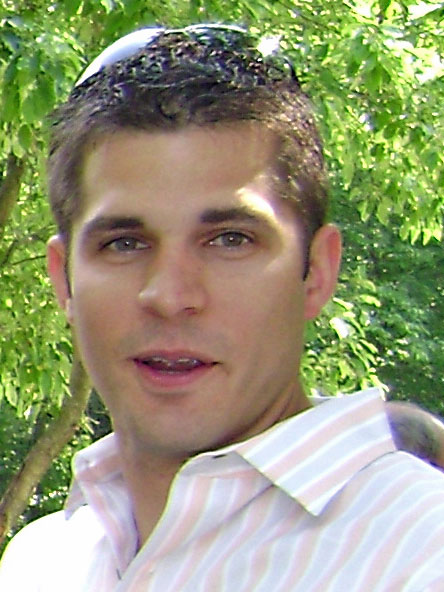
Brad Turasky

Brad Turasky

Brad Turasky, vice president of Turasky Meats, was named a “Celebrity Citizen” of Springfield Friday, Feb. 8, in a ceremony at the Governor’s Mansion.

A third-generation owner in the Turasky family meat-processing business, Brad was honored for his successful volunteer work in bringing the 2015 American Association of Meat Processors convention, with its 1,200 to 1,500 members, to the Prairie Capital Convention Center and Hilton Springfield. (According to the Feb. 9Turasky-logo, 2013 State Journal-Register.)

A fourth-generation Springfield Lithuanian-American, Brad is the son of Joe and Carolyn Ann Turasky, and the great-grandson of the late Joseph Turasky, born in Lithuania in 1881. Related post.

Newest Lady Buckeye

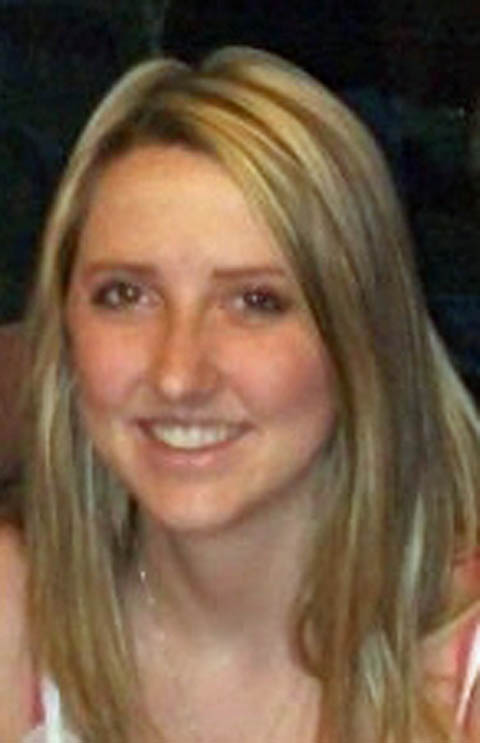
Vanesa Abad

Vanesa Abad

I also just learned from Violeta Abramikas Abad, who grew up in Springfield attending St. Vincent de Paul Lithuanian Catholic Church, that her grand-daughter Vanesa Abad has been named to the 2013 rookie class of the Ohio State University Lady Buckeyes women’s soccer team.  News story here.

Vanesa is a midfielder who hails from Barrington, Ill, though she recently visited Springfield and her great aunt, Regina Abramikas Buedel, with her grandmother, Violeta.

A senior at Lake Zurich High School, Vanesa has had three years of club experience with Sockers FC and lettered in soccer all four years at Lake Zurich. She is a four-year member of the ODP Illinois state team and Region II pool, a two-time all-sectional, all-area and all-conference pick from Lake Zurich.  Vanesa also has been captain of her Lake Zurich team for two years, and tallied 31 goals and 26 assists over her first three high school seasons.

An all-around, multi-talented athlete, Vanesa also lettered in basketball and cross country.

The daughter of Michael and Ana Sanchez Abad, Vanesa enjoys snowboarding, camping, running and spending time with family and friends. She has two sisters, Catalina and Sophia. Her great grand-parents, Walter and Stephanie Abramikas, immigrated to Springfield as displaced persons after World War II.  Walter’s brother Vincent Abramikas and his family also lived in Springfield for several years after World War II before moving to Chicago.

Meet Sam (Simonavitch) Madonia, Eleanor (Treinis) Yuskavich

Sam Madonia DJ-ing at WFMB-A.M. Photo from Springfield's Own magazine.

Sam Madonia DJ-ing at WFMB-A.M. Photo from Springfield’s Own magazine.

Sam Madonia is a long-time local radio personality on WFMB-AM, an ISU grad, Lincoln High School teacher for 31 years (including “Teacher of the Year,”)and Railsplitters’ head baseball coach from 1980-85, as well as public address voice of the Illinois State Fair since 1994 and a big Fair fan.

However, not everybody knows that Sam is also the son of a Lithuanian-American, the late Isabelle Simonavitch, who worked at City, Water Light and Power. Sam, his mother and late Sicilian-American father Sevet Madonia, an SJ-R employee and well-known Republican precinct committeeman for 20 years, lived with the Simonaviches until Sam was 10.

Both grandfathers were coal miners, and his full name, Sam Charles Madonia, is a tribute to both men. Sam is also a proud Springfield Northender, having grown up on Fifth Street across from Lincoln Park.

He is the husband of Alice and father of grown-up daughters Stacey Dillilo of Las Vegas and Anne Hubbard of Springfield–and grandfather of Shea and Sloane Hubbard.

Sam is the oldest of three children. He lost his brother, Tom, in 2002 at age 55 to cancer. His sister, Jeanne, and her husband, Rich, still own the family house on Fifth Street. This information is from Springfield’s Own magazine, and you can read more about Sam at this link:

http://www.springfieldsown.com/features/profile/407/sam-madonia-voice-your-morning-radio

I also read about Eleanor Yuskavich’s 95th birthday a few weeks ago in the SJ-R. Eleanor was born January 1918 to John and Tillie Rinkienve Treinis, and married John Yuskavich, Jr. at St. Vincent de Paul Lithuanian Catholic Church in January 1939.
Mrs. Yuskavich worked in the Treinis family grocery stores owned by her father, and later as an elevator operator at the Hotel Abraham Lincoln, and as a packer at Pillsbury Mills. She also was a full-time homemaker to her family: daughters Mary Ann (Kerry) Wycoff and Patricia Towner.
Mrs. Yuskavich has three grandchildren and three great-grandchildren.

Ben & Vita Zemaitis Meet “The Other Dream Team”

"The Other Dream Team," Lithuanian bronze medal basketball squad, Barcelona, 1992

“The Other Dream Team,” Lithuanian Olympic bronze medal basketball squad, Barcelona, 1992

Hosting a showing of the rousing documentary, The Other Dream Team, yesterday reminded me of an important Springfield connection with our 1980s-90s Lithuanian Olympic basketball heroes.  Ben and Vita Zemaitis of Chatham met Sarunas Marciulionis, Arvydas Sabonis (one of the greatest centers of all time), Rimas Kurtinaitis and Voldemaras Chomicius after a 1987 exhibition game at the PCCC.

Back then, four Lithuanians formed the core of the USSR national team (Marciulionis was “Soviet Athlete of the Year”), even though what they really wanted was to play in the NBA, and of course, for their own country, Lithuania.

Fall 1988, Lawrence, KS, fr. left - Rimas Kurtinaitis, Sarunas Marciulionis, Vita Zemaitis, Donnie Nelson.

Fall 1988, Lawrence, KS, fr. left – Rimas Kurtinaitis, Sarunas Marciulionis, Vita Zemaitis, Donnie Nelson.

When Vita and Ben met the players in 1987, it was one year after Sabonis had been drafted, in absentia, by the Portland Trailblazers. Sabonis did not actually get to play for the Trailblazers for about another decade, after he was repeatedly and carelessly injured by the Soviet system.

The players’ meeting with the Zemaitises in Springfield, which led to other introductions and meetings in other cities,  also occurred one year before our Lithuanian superstars led the U.S.S.R. team to its famous 1988 Olympic gold medal victory over the United States. In “The Other Dream Team” movie, they explain that their victory was motivated by a Soviet quid pro quo promise that they would finally be permitted to play abroad.

Lithuanian players in the movie describe being guarded by KGB agents whenever on tour. Yet they still managed to get away from their hotels and meet with Lithuanian-Americans who picked them up in parking garages and spirited them away in car trunks, returning them later the same way.

Did Ben and Vita own a Cadillac that could fit one or more huge basketball players in its trunk?  Did they have local Lithuanian-American accomplices?

Fall 1988, Lawrence, KS, fr. left - Arvydas Sabonis, Rimas Kurtinaitis, Sarunas Marciulionis, Vita Zemaitis.

Fall 1988, Lawrence, KS, fr. left – Arvydas Sabonis, Rimas Kurtinaitis, Sarunas Marciulionis, Vita Zemaitis.

The Zemaitises also met Donnie Nelson, current general manager of the Dallas Mavericks who spearheaded the exit of Marciulionis from the USSR to play for the Golden State Warriors in 1989.  In a sports-meets-rock-‘n-roll twist, Nelson also famously helped Marciulionis secure funding from The Grateful Dead for the tie-dyed 1992 Lithuanian Olympic “dream team.”

I was so involved, stateside, with the Lithuanian “Singing Revolution” (1987-91) that these young Lithuanian athlete-patriots who carried such strong hopes for their country’s re-birth became my greatest heroes.

I only wish Vita could have lived to see such stirring history documented in “The Other Dream Team” film.  But then again, she took part in it.

In memory of my dear friend Vita Zemaitis (July 12, 1936—Dec. 14, 2009)

The “DPs” and Lithuanian Independence Day, 1950

singersThe 1947-1949 arrival in Springfield of about 60 World War II refugees, displaced persons (“DPs”) from Lithuania, had a big impact on the Lithuanian Independence Day observation at St. Vincent de Paul Lithuanian Catholic Church in 1950.

St. Vincent de Paul’s was a natural first stop for the fresh immigrants. Many carried traumatic personal experiences of the German and Soviet invasions of Lithuania 1940-44, and were anxious to tell the story of their brutalized homeland.

In these crucial early years, the DPs’ ability to get their story out was severely hampered by language. So, it was natural that their first attempts to communicate were with and through the existing Lithuanian-American community.

That community was made up mostly of turn-of-the-Century immigrant coal miners and their children and grandchildren, some of whom, along with other Americans, had not yet heard details of what had happened to Lithuania during the War. For many Americans, credulity also was strained by the enormity of the horrors and the fact that the U.S.S.R. had been a war-time U.S. ally.

So in many cases, DPs who had lost everything and experienced the travails of DP camps in ravaged, post-War Germany, did not get a supportive hearing, or arouse much concern for the truth of their personal experiences, after arriving in the U.S.

The Feb. 12, 1950 issue of the Catholic diocesan newspaper “Western Catholic” describes a “one-act” play especially written and presented by local DPs for the Feb. 1950 commemoration of Lithuanian Independence Day (official date: February 16). The play dramatized the “knock on the door in the middle of the LithuaniaFlagnight” that typified the mass deportations to Siberia that occurred during the first Soviet occupation of Lithuania 1940-41 (and resumed again in 1944). Many of the DPs had narrowly escaped these deportations, and had friends and relatives who had been “disappeared” with their whole families, never to be heard from again.

The DPs’ play was part of a program at 3 p.m., Sunday, Feb. 12, 1950, in the St. Vincent de Paul Church Hall. The program also included remarks by the Rev. Casimir Toliusis and DP Vincent Abramikas, as well as music by the church choir to the organ accompaniment of Mrs. A. Foster.

Lithuanian-Inspired Chainsaw Sculpture

"Tree of LIfe," Witches Hill, Juodkrante, Lithuania

“Tree of LIfe,” Witches Hill, Juodkrante, Lithuania

Bass-relief "Tree of Life" carved from an oak trunk in my backyard

Bass-relief “Tree of Life” carved from an oak trunk in my backyard

Inspired by the monumental Lithuanian folk art wood sculptures that I saw in Krackas, Lithuania in 1995, and the “Witches Hill” Ted and I visited in 2005 in Juodkrante, Lithuania, we commissioned this bass-relief chisel and chainsaw sculpture for our Springfield backyard in 2006.
The bass-relief feature allows it to pick up a nice “architectural” dusting of snow this time of year. Isn’t it beautiful?
A word of caution: we learned it is much better to let the sculptors use their own seasoned logs or trunks than to chop down a tree to have a sculpture made. The sculptors have plenty of seasoned wood, and they work better in their own studios than outside, on site. Green wood is also a terrible challenge for longevity, and being attached to the ground, through the original trunk and roots, accelerates wicking, cracking and decay. I’d like to know their secret for outdoor wood preservation at Juodkrante!

Dancing with Martina McBride: Guess Who?

Martina McBride with young Springfield dancers at recent PCCC concert

Martina McBride with young Springfield dancers at recent PCCC concert

I was recently informed that a young Lithuanian-American boy from Springfield is pictured in this group of local children invited to dance at a recent Martina McBride concert at the Prairie Capital Convention Center. Guess who? Hint: The young man in question (at left edge in McBride photo) is a descendant of the Sleveski-Mazika and Kavirt families.

http://www.sj-r.com/photo_galleries/x65614997/Martina-McBride-at-the-PCCC

Martina McBride2

Making us Proud: Tureskis Beats His Salvation Army Bell-Ringing Record

Angela and Darrell Tureskis at Schnuck's on Montvale

Angela and Darrell Tureskis at Schnuck’s on Montvale

Every once in a while a Springfield Lithuanian-American comes out of nowhere to perform super-human feats of dedication and stamina, grab headlines–and make us proud. For the second year in a row, Darrell Tureskis, owner of Nyilas Cleaning Services, has won or tied the national record for Salvation Army continuous bell-ringing. When Darrell put aside his bell and went home tonight, he had been standing and ringing for 80 straight hours at the Schnuck’s on Montvale in Springfield.

Like last year, I happened by and exchanged a few words with our sleep- and food-deprived hero after he’d already been on his feet for two days. Just like last year, Darrell managed a tired smile and friendly conversation. (None of which I expect he’ll remember tomorrow.) Luckily, his wife Angela was there.

When I saw him this evening with Angela and other close friends and family members, who were standing by to support him through the final stretch and celebrate his accomplishment, Darrell had already been at it for almost 79 hours–already 19 hours longer than his 2011 performance. Amazing!

Like Dick Butkus and Charles Bronson, Darrell gives testament to that fact that some Lithuanian-Americans, at least, seem to be made of steel. Will his altruism, community-mindedness and pure physical endurance inaugurate a new sport–the charity triathalon? Stay tuned.

http://www.sj-r.com/breaking/x65615260/Salvation-Army-bell-ringer-breaks-records-still-ringing

Behind the Iron Curtain: Resisting Lithuanian Captivity During the Cold War

Young Lithuanian-Americans demonstrate publicly for Lithuanian freedom during downtown Springfield parade--circa 1955

Young Lithuanian-Americans demonstrate publicly for Lithuanian freedom during downtown Springfield parade–circa 1955

I recently came across this striking and significant reminder of our local community’s Cold War history resisting Lithuanian captivity within the Soviet Union. “Lithuania Behind the Iron Curtain” was a float that took part in a downtown Springfield parade, possibly on Columbus Day or Veterans’ Day, circa 1955. In this photo, Violeta Abramikas Abad, then in high school, is standing at rear, representing the captive nation of Lithuania. Violeta is wearing her mother Stephanie’s Lithuanian national costume, which Mrs. Abramikas had worn on her wedding day before the family was forced to flee Lithuania. (The costume continues to live on in the Abramikas-Abad family, worn by Violeta’s granddaughter Catalina, now a freshman at Purdue University, when she was just 12 years old for a school report on how her great grandparents Walter and Stephanie and her grandmother Violeta immigrated to the United States.)

The girls in white with Violeta on the float represent “Vaidolutes,” vestal virgins guarding the eternal flame of Lithuania’s national spirit and independence. The flame is represented by a symbolic campfire made of sticks in the center of the float.

The girl in white sitting right in front and wearing glasses is Ramualda Sidlau Capranica. Behind her is Bernadine Staken Mikels. Other girls on the float include: Pat Urbanckas Mathews, and across from her to Violeta’s right, Pat’s sister Donna Urbanckas Frost. In front of Donna is O’Tilija Uzgiris, and in front of O’Tilija is Marilyn Urbanckas.

Tree branches decorating the back of the float signified Lithuania’s many forests, and red, green and yellow crepe streamers around the sides of the float represented the colors of the Lithuanian flag. There was probably a sign on the front of the float identifying the sponsoring Lithuanian-American patriotic and religious organization, The Ateitininkai, which is still in existence today. Mrs. Stase Sidlauskas was the originator of the Springfield chapter.

Where are they now? Profile: Emily Warren

Emily Warren

Emily Warren received a $500 award from the Fr. Yunker Scholarship Fund in 2009. Although her family is originally from Springfield, Emily has lived in Pennsylvania since kindergarten. (Grandmother Sharon Darran, who still lives in Springfield, helped us locate Emily.)

Emily’s scholarship helped her study abroad in Rome, Italy for three months while a student of supply chain management in the A.J. Palumbo School of Business at Duquesne University, a Catholic university in downtown Pittsburgh, PA.

During Emily’s term in Rome, she toured many parts of Italy, as well as several other European countries. After graduating from Duquesne in 2011 with a B.S. in Supply Chain Management, she now works as a district manager for discount grocer ALDI, Inc., in the Pittsburgh area. (Many of us in Springfield are familiar with ALDI, as well.) Emily grew up and went to school in a small, northeastern PA town called Bloomsburg, where she graduated from Bloomsburg High School.


Where Are They Now? Profile: Diane Baksys

Diane Baksys

Diane D. Baksys of Springfield received a $1,000 Fr. Yunker Scholarship in 1979 for her studies at the University of Illinois, Urbana-Champaign, where she earned a B.A. in Psychology and an M.A. in Library and Information Science. Over the years, her career in library science has included positions at the Illinois Veterans Home, Quincy; Lincoln Land Community College; and the Illinois Department of Nuclear Safety.
Diane has also been a writer/editor for a local newsletter, Reiki Spirit, and for the Dr. Na Zhai Clinic in Springfield.
Many will remember her as a fellow member and officer of Springfield’s Lithuanian-American Club in its early days, during the late 1980s and the 1990s.
The fourth of six daughters, Diane is older than her identical twin sister, Pam, by only three minutes. She attended Blessed Sacrament Grade School from 1965 to 1974 and graduated from Southeast High School in 1978.
In her free time, Diane enjoys walking her pet Labrador retriever Shadow, reading works of fiction and psychology research journals, puttering in her yard, and doing creative writing. She is currently exploring academic programs in children and family therapy and bioenergetic psychoanalysis.