• Welcome!
  • An indelible role in our history
    • Historical Background, Influences
      • First Lithuanians in Springfield
      • Freedom and Assimilation
      • Divisions and Decline
      • The Mining Life
        • Honoring Central Illinois Mine Casualties
        • The Mine Wars
      • A Second Wave of Immigration: the ‘DPs’
      • Behind the Iron Curtain
      • “Singing Revolution”
        • “The Other Dream Team”
    • Lithuanian Historical Marker Dedication
      • Lithuanians in Springfield Historical Marker
      • A Time to Remember
      • Historical Marker Dedication Program
      • Photo Gallery
      • Marker ceremony noted in Shimkus newsletter
  • Elder Isolation is Elder Abuse
    • Open Letter to Ill. Gov. Pritzker, AG Raoul
    • Open Letter to Illinois Elder Abuse Task Force
  • Sandy’s Blog: News and Profiles
  • Voices of the “Third Wave”
    • Christmas Memories
    • Remembering January 1991
  • Springfield Lithuanian Families
    • Bakunas, Gestaut, Shadis, Petrokas, Chepulis
    • Local Lithuanians Prompt Newspaper Story
    • Stuches, Gillette, Cooper, Chesnut
    • Tisckos, Miller, Wisnosky
    • Treinis, Nevada, Yuskavich
    • Andruskevitch-Shoudis-Moser
      • Weddings
    • Baksys-Yamont
      • Singing Revolution Activities, U.S.
    • Banzin – Liutkus – Kellus – Gestautas
      • Memories
      • Trips to Lithuania and an appreciation of ancestry
    • Giedrys-Kudirka
    • Janners (Jankauskas), Gossrow
    • Kwedar, Olshevsky, Shupenus
    • Lelys, Lilles
      • 1970 Wedding, St. Vincent de Paul Church
    • Turasky, Yakst, Brazas, Stockus
    • Mankus-Tonila
      • Maria Fry Race & Tonilas
    • Zemaitis, Zubkus
    • Casper, Yanor, Walentukonis
    • Rackauskas immigration
    • Treinis-Banaitis
    • Bubnis, Guthrie, Walker
    • Grigsby, Dumbris
    • Missavich-Stankavich
    • Welch, Wilcauskis, Valentanovich
    • Stasukinas, Staken, Bubblis, Poskevicius
  • St. Vincent de Paul Lithuanian Catholic Church
    • St. Vincent de Paul murals resurface
    • Lithuanian Independence Day, 1950
    • People of the Church
    • People of the Church 2
    • People of the Church 3
    • People of the Church 4
    • Fr. Yunker College Scholars
      • Patricia Visnesky and Cynthia R. Baksys
      • Amanda Rackauskas Ross and Elaine (Manning) Kuhn
      • Barbara Blazis, John Dombroski, Patricia Naumovich, Mary Sitki
      • Diane D. Baksys and Emily Warren
  • Business & Professions
    • Journalist Matt Buedel
    • U.S. Senator Richard J. Durbin
    • Chernis: Midwest Demolition
    • Lobbyist “Limey” Nargelenas
      • Horace Mann CEO Marita Zuraitis
    • Nurse Joan Naumovich
    • Tony J. Yuscius, Advanced Digital Media
    • Business Writer Dan Naumovich
    • Teacher Elaine Kuhn
    • Power Co. Executive Maria Race
      • Pediatric Dentist Mary Ann Rackauskas
        • Nurse Debbie Ritter
    • Radio Host Sam Madonia
    • Turasky Meats
      • Tureskis Cleaners
  • The Lithuanian-American Club
    • Founding and Founders
    • Club Lobbies for Lithuanian Independence: Letter to President Bush
    • Recipes / Food
    • Travel

Lithuanians in Springfield, Illinois

Lithuanians in Springfield, Illinois

Monthly Archives: March 2015

Beautiful & Driven: Julia Stockus Wisnosky

20 Friday Mar 2015

Posted by sandyb52 in Sandy's Blog

≈ 4 Comments

I just received a photo of Julia Wisnosky (Vysniauskas) that made me think, “This must have been the most beautiful Lithuanian-American girl in Springfield.” Granted, that would have been some contest back in the 1920s and ‘30s, based on the photos I’ve seen.
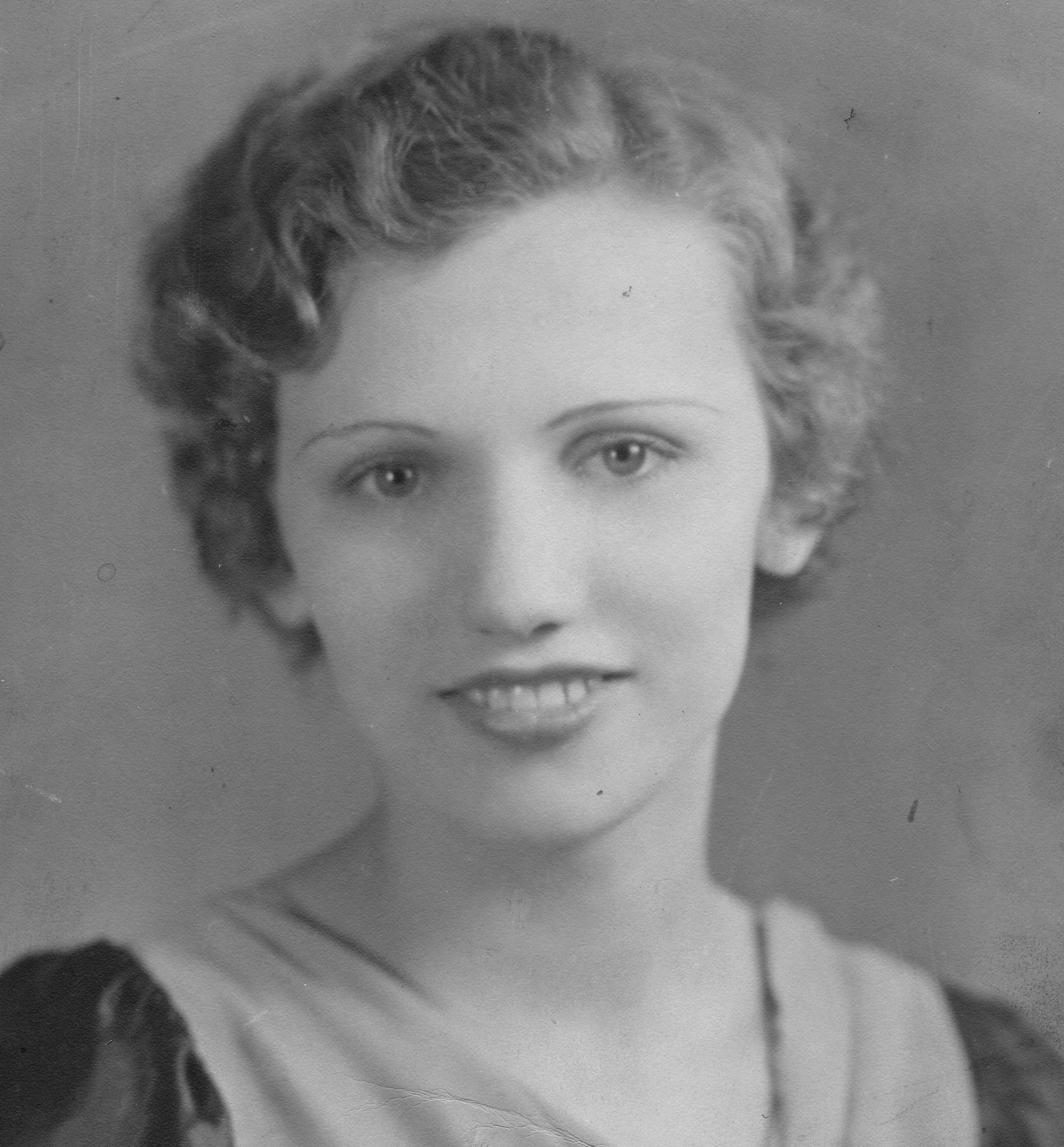
Julia Stockus (Wisnosky) at 16, 1931.

Julia Stockus (Wisnosky) at 16, 1933.

First, there’s 16-year-old Ann Tisckos (later Wisnosky) in her Kasawich-Alane wedding party photo.  And, then there’s the famous Anna (Gudausky) Frisch, whose brother owned “Butch’s” Tavern, then Butch’s Steakhouse. Renowned in her time as the most beautiful Lithuanian-American girl in Springfield, Anna only burnished her legend by marrying “up” and going off to live in The Big Apple. However, in the presence of this portrait of the young Julia Stockus, I find myself transported back to a two-room home without indoor plumbing across from the state fairgrounds on Peoria Rd. And there, behind the gilded image, stands a disappointed young girl who has had to end her education with grade school so she can help support her family by taking in laundry. How will she fulfill her dream of moving beyond the hard life of her immigrant parents?  How will she even keep up with the other girls and boys she knows from school? According to daughter Janice (Wisnosky) Kansy, it’s such a blow that, even after catching up with night classes, Julia will always keep secret the fact that she never went to high school.

Julia behind the counter at the Woolworth's soda fountain, downtown, Fifth and Monroe Strs., 1930s.

Julia behind the counter at the Woolworth’s soda fountain, downtown, Fifth and Monroe St., 1930s.

A Challenging Start Julia’s childhood was difficult in many ways: Parents who drank too much. Appendicitis. A lightning strike on her home in which she was cut (but not on the face) by flying glass. And who knows how many other dangers to the safety and self-esteem of a young girl lurked in her rough immigrant neighborhood—along with the warm embrace of grandparents, aunts, uncles and cousins right next door and across the alley. Maybe all the hardship and roughness around the edges—outhouses and chickens in the backyard, hand-made material goods, public drunkenness and fights—are precisely what explain that veritable glamour shot of a 16-year-old girl with a far from glamorous life. Image According to her daughter Janice, Julia grew up to be a talented seamstress, department manager, and founder of Springfield’s still-surviving Lithuanian-American Club. She also sponsored a Lithuanian DP family, was mother to an adopted daughter and two of her own biological children, and took in two World War II Lithuanian orphans (all while paying meticulous attention to her appearance, which is hard for me even to imagine). These details bring into focus a woman making her way down the paths of beauty and homemaking traditional for her time, while also nurturing a drive for  importance in the wider world.
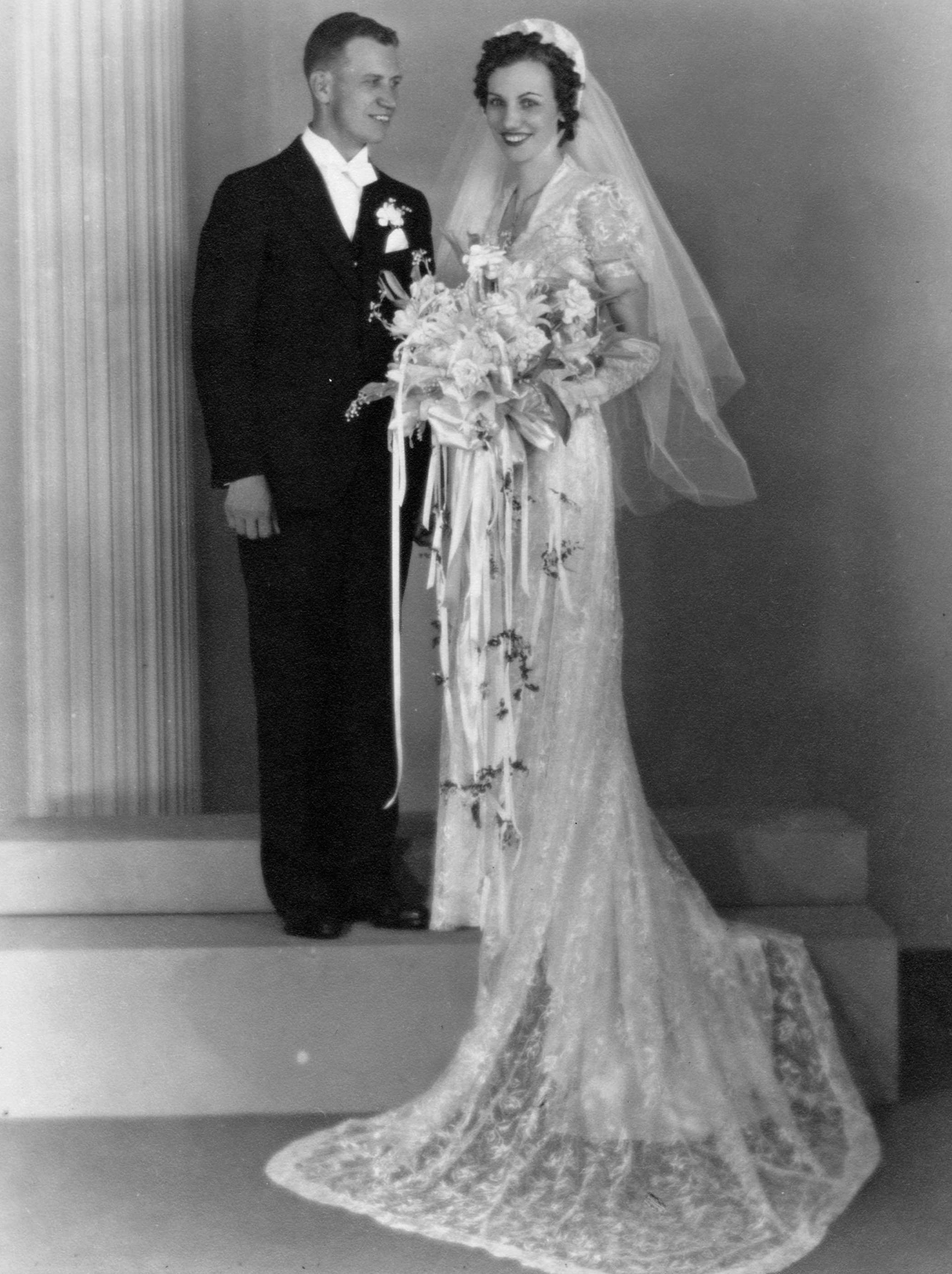
George and Julia (Stockus) Wisnosky wedding, 1930s.

George and Julia (Stockus) Wisnosky wedding, 1930s.

From Childless to Five Children Julia was born in 1917 in Springfield, the daughter of Lithuanian coal miner Anton (Antanas) Stockus and Verna Backovitch. She attended Ridgely Elementary School. Introduced by a cousin, at around age 20, she married George Wisnosky, Jr. (brother of Augie, Sr., Ann and Joe, who died of leukemia at 18). The wedding took place at St. Vincent de Paul Lithuanian Catholic Church. Julia’s father-in-law, George, Sr. was a founder of St. Vincent’s, and Lithuanian was the principal language in his home. Thus, by relating to her in-laws, especially her mother-in-law, Julia learned her life’s best Lithuanian, according to Janice. During her first 11 years of marriage, Julia did not conceive, and was told she probably could not. So she and George adopted their first daughter, three-month-old Georgeann, born in Pana. Just after World War II, they sponsored a DP family, the Sidlauskases, housing the couple with two boys in an apartment building they owned, probably on Lowell Ave.

Illinois State Journal-Register

Illinois State Journal-Register

Hearing from the Sidlauskases about two distantly-related orphan children, Romualda and Vytautas (Vito) Sidlauskas, who were still living in a DP camp in Germany, Julia and George also arranged to take Romualda and Vito in. And, as you might guess, in almost no time, Julia miraculously conceived her first child, Janice, with whom she was pregnant the day she and George took little Georgeann to the train station to meet the Sidlauskas children. Soon afterwards, Julia also had a son, in the space of a few short years, going straight from a sentence of lifelong childlessness to house full of five children. Working in Town and on the Farm For most of their married life, Julia and her postal worker husband moved often. Janice remembers the family’s longest stint in one place: nine years owning and working a farm off Route 54 in Barkley (Sherman postal address). George Wisnosky, Jr. had wanted to be a doctor, but had had to quit U of I after two years to work off family medical bills. On the farm, Janice reports that George or Julia would work in town while the other worked the farm, caring for the animals: a horse and a goat, but mostly pigs and cows that were sold for slaughter. After George got disabled by arthritis, Julia worked full-time as a secretary at Grant Middle School. (I am almost certain Julia preferred working in an office, while retaining the guts and versatility from her youth to do manual labor when necessary.) Keeping up Appearances Julia.sewingJanice recalls: “My mom was quite a seamstress. She made all our Easter clothes, even my brother’s suit. She was very into the home, re-finishing furniture and decorating, and she loved clothes. She really cared how she looked.” Here I think back to Julia’s parents’ generation, whose everyday immigrant reality of hard, physical work was redeemed by their Sunday fashions. And I get two completely opposite pictures of Julia in my mind: one in muddy farm clothes, and the other in this “Easter parade” with her children. Maybe these “down-in-the-mud” work-a-day identities were precisely what made dressing up necessary, a kind of antidote. And, ironically, Americans only stopped dressing up to be seen in public, at church, movies, shopping, etc., when their lives became cleaner, wealthier, easier, and they no longer had so much about themselves to prove.

Top from left: Vito and Romualda Sidlauskas, Julia Wisnosky. Bottom from left: Julia's son, daughters Janice and Georgeann, 1950s.

Top from left: Vito and Romualda Sidlauskas, Julia Wisnosky. Bottom from left: Julia’s son, daughters Janice and Georgeann, 1950s.

Happy Times at St. Vincent’s “My folks never had a babysitter,” Janice recalls. “They never went out, just once on New Year’s Eve, to a big party at someone’s house.” These parties were hosted in the basements of friends from St. Vincent de Paul’s, usually by Ann (Wisnosky) Urbanckas, George’s sister, or his brother Augie, Sr. and their spouses Al and Ann, respectively. Peter and Bernice Kurila and John and Adela Arnish also hosted some of the basement parties. The St. Vincent’s friends and relatives were a tight group who shared the ups and downs of life and many happy social times. “The church used to have an annual spring bazaar that they all worked at. There was also a tradition that on Easter Sunday, there would be a progressive dinner starting with coffee and rolls at Fr. Yunker’s house after Mass. Then everybody would go from house to house to eat different foods and visit for half the day.”

one of the New Year's  basement parties

one of the New Year’s basement parties

Lithuanian Club Founder Two of Julia’s proudest achievements outside the home are both mentioned in her obituary, dated August 11, 2004. The first was her rise to director of the audio/visual department at Scottsdale Community College in Arizona, where she and George initially retired. Her second achievement came after retiring from that college job in 1980. It appears that after a few years back in Springfield Julia needed a new challenge: helping to found a new Lithuanian-American Club as a social and cultural outlet for those who had once been members of St. Vincent de Paul Church. When St. Vincent’s was closed and demolished by the diocese over parishioners’ protests, those who still wanted to continue as practicing Catholics had no choice but to move on to other parishes. But they still kept their ethnic social ties from their St. Vincent’s days. That’s how enough of a core ethnic group remained, 16 years after their church’s demise, to form the new Lithuanian-American Club.
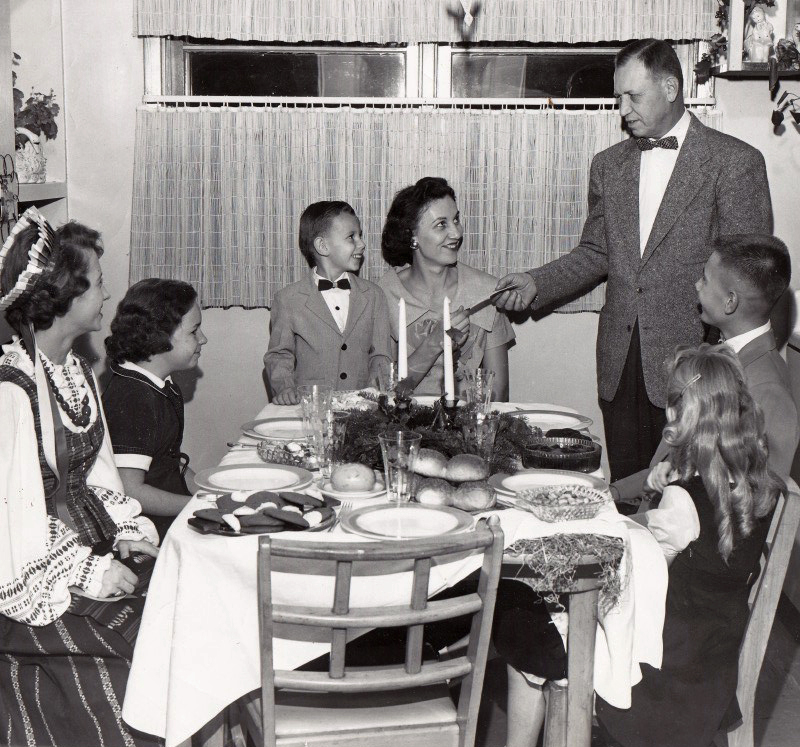
A Lithuanian dinner at the Wisnosky house, original glossy photo given to the family by the State Journal-Register.

A traditional Lithuanian Kucios dinner at the Wisnosky house, featuring evergreen branches under the tablecloth and Christmas wafers. Original glossy photo given to the family by the State Journal-Register.

Although Julia was the one who made the call to Tom Mack and suggested others for that founding meeting in Tom’s office, she deferred to him as first president of the club, taking the office of founding vice-president. Over the years, Julia served the club in many roles, along with her daughter Georgeann and foster daughter Romualda (Sidlauskas) Capranica. “I remember buying her a corsage to wear to the first Lithuanian-American Club Dinner-Dance,” says Janice, who, as a molecular biologist, held posts at various universities and research labs out of state. Now a part-time teacher of chemistry and biology at a community college north of Seattle, Janice recalls how firmly both her parents clung to their ideal of an education. For her father George, this was manifest as a desire for his kids to earn degrees from the University of Illinois, where his dream of becoming a doctor had been cut short so many years ago.
Knights of Music, Baseball, Picnics

03 Tuesday Mar 2015

Posted by sandyb52 in Sandy's Blog

≈ 1 Comment

Was it ever fun to be a Lithuanian immigrant in Springfield? Yes, thanks to a variety of social, sports and political organizations and their “musical” schedules of activities.

Back in the 1920s, music was at the core of almost every Springfield Lithuanian gathering. There were elaborate musical programs at Sunday high mass on Easter and Christmas. Operas and operettas were performed by Lithuanian voices and musicians for the general public at the Springfield High School Auditorium and the Knights of Columbus Hall. And Lithuanian folk songs were sung by 60-100 voices at summer picnics that also featured extremely competitive men’s fast-pitch baseball and women’s softball.

The Lithuanian-language operetta, “L’Tevyne” (“The Homeland”), composed and staged here in August 1923 by St. Vincent de Paul’s famous organist Alexandras J. Aleksis, dramatized the “uplifting power” of music to regenerate a badly degraded Lithuanian nation—if not in the homeland, then on U.S. soil. No one knew the poverty, ignorance, alcoholism and crime endemic among Lithuanian immigrants better than more educated Lithuanian elites and those who were the conscience of their community.

Crucially, in the late 1910s and early 1920s, these individuals decided to seize the cultural, political and artistic freedoms available to every American– even while economic progress remained elusive–to elevate themselves and their Lithuanian countrymen above the daily degradations and deprivations of the struggle to survive. The banner under which they organized belonged to the Knights of Lithuania, with local branch 48 sometimes being called the K of L of St. Vincent de Paul Church.

To multiply the impact of their cultural enrichment campaign, the talented and dedicated souls who poured their hearts into the Knights also decided to model Lithuanian cultural elevation as broadly as possible, to both the Lithuanian-American masses and the American public at large. The success of the Knights’ famous choir and their frequent exhibitions of musical virtuosity in projecting a more refined image of Lithuanian immigrants, both to themselves and others, is obvious in an August 1923 State Journal-Register article proclaiming, “An intense love for music is a national characteristic of the Lithuanian people.”

It’s true that music had remained part of the Lithuanian character even when stripped for generations to its most primitive core. Even when denied the spelling of their own names, Lithuanians never lost the music and words of their folk songs or dainos for work, birth, weddings and funerals. Maybe that’s why Professor Aleksis, the most famous Lithuanian “music man” ever to grace Springfield, so perfectly embodied the campaign for progress through cultural and spiritual enrichment. Certainly no one I’ve read of in Springfield wielded the power of music for ethnic self-help with more missionary zeal.

Aleksis and the Knights of Lithuania

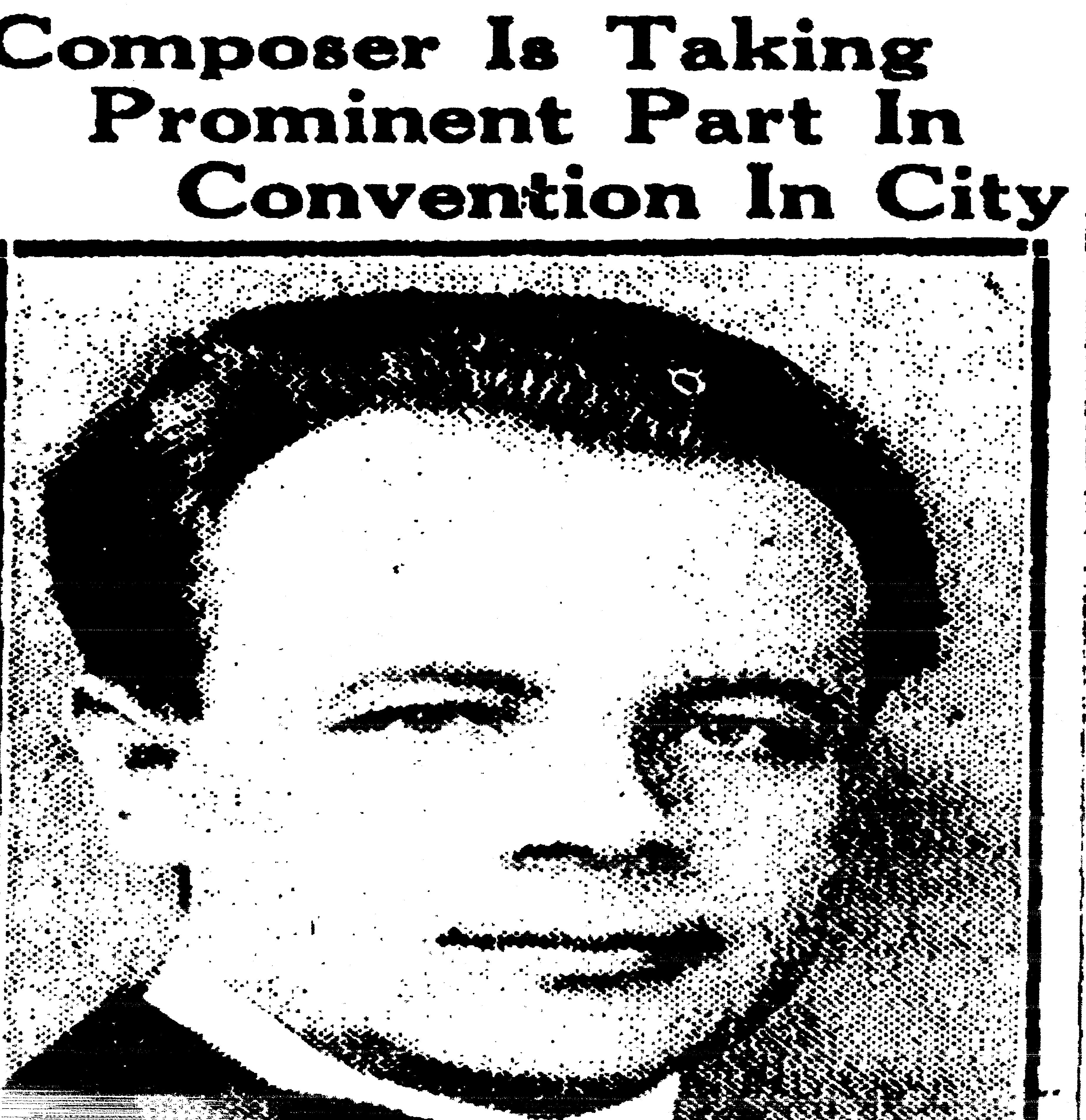
Professor Alexandras Aleksis, Illinois State Journal, August 22, 1923.

Professor Alexandras Aleksis, Illinois State Journal, August 22, 1923.

A graduate of the Warsaw Conservatory who was born in Lithuania in 1886, Aleksis appears to have arrived from Detroit on July 1, 1921 to work as organist and music director for St. Vincent de Paul Lithuanian Catholic Church. Within two weeks, he was elected president of the pre-existing (and expressly Roman Catholic) Knights of Lithuania, Branch 48 in Springfield, and became director of the Knights’ 60-voice choir that performed in national costume.

In one Illinois State Journal account, Aleksis was identified as the first president of the Knights of Lithuania national organization and composer of the Knights’ national anthem. The Knights’ current website identifies Aleksis as having been named a member of great honor (just three years after the organization’s founding) in 1916, when he was organist at Chicago’s Providence of God Parish.

No doubt he played a major role in securing a great honor for Springfield’s Lithuanian community when in August 1923, the 800,000-member K of L held its national convention here. That three-day event (Aug. 22-24) in the hall of the Illinois House of Representatives was attended by 200 delegates from 14 states. “Prominent men of the Lithuanian race in the U.S. were among the delegates participating in what is probably the most usual and unique convention ever held in Springfield,” the newspaper reported.

The ambassador to the U.S. from the newly recognized Republic of Lithuania made a point of giving a eulogy of Abraham Lincoln at Lincoln’s Tomb. Aleksis’s operetta “L’Tevyne” (book by Edward Silelio) was presented by the best local and Chicago Lithuanian-American voices at the Springfield High School Auditorium. The operetta dramatized how drinking, carousing Lithuanian men could be civilized and elevated by the uplifting influences of education, music and art. The rousing grand finale of the operetta, when singers triumphantly waving the American flag filled the stage, echoed the business side of the K of L convention, which was conducted completely in English, according to newspaper reports, and capped by a resolution that all prospective members henceforth should first attain U.S. citizenship. (The convention also again elected Aleksis its national president for the coming year.)

It Takes a Choir

So many local Lithuanian immigrants and their children lent their voices to the local Knights of Lithuania choir (renowned as one of the best in the city) to enrich and uplift their fellow immigrants—and so many great local Lithuanian-American singers and musicians served as leaders of the local chapter of the K of L.

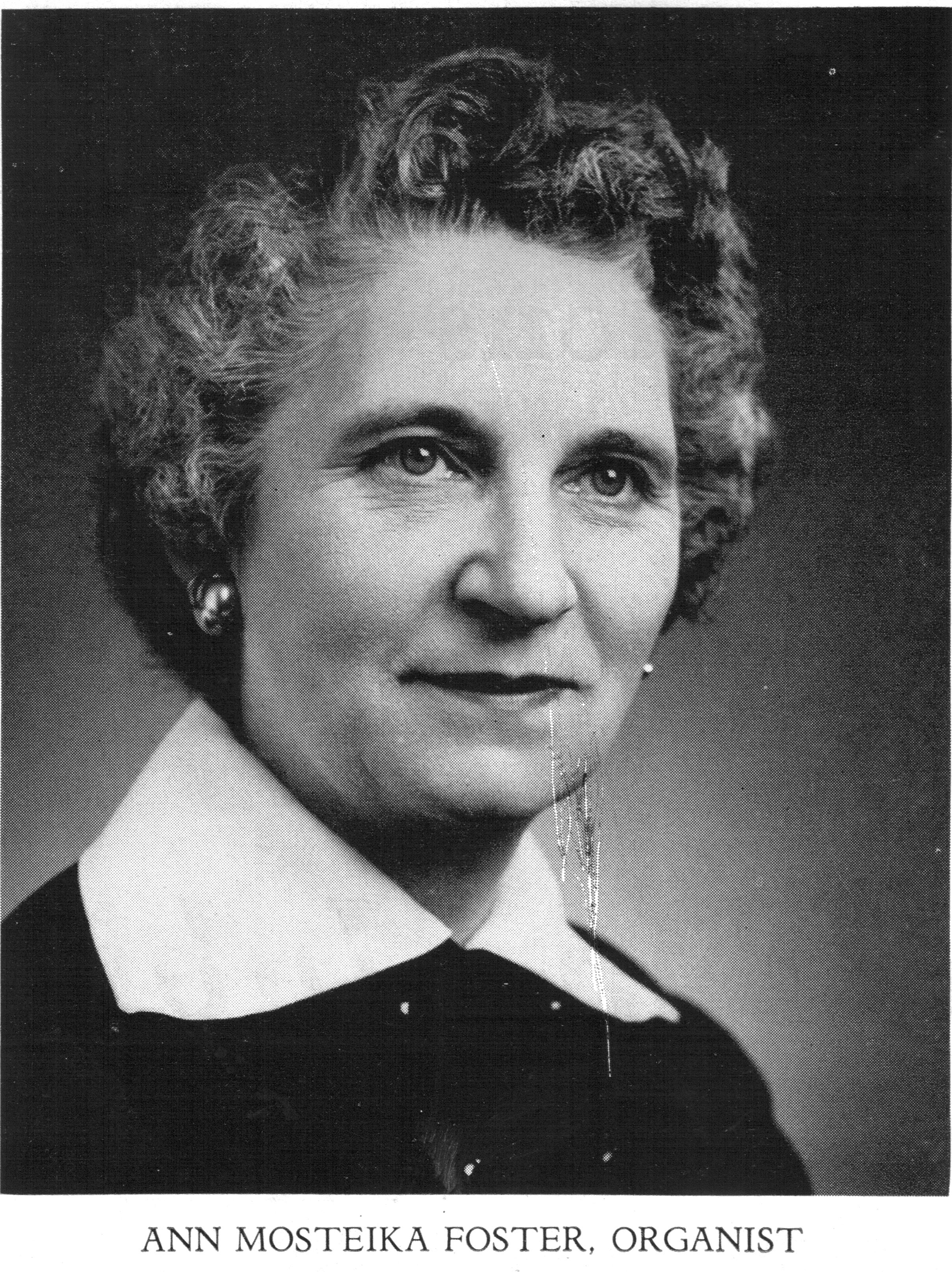
Ann (Mosteika) Foster, St. Vincent de Paul Church organist and music director, 1933-1972.  St. Vincent de Paul Jubilee Book, 1956.

Ann (Mosteika) Foster, St. Vincent de Paul Church organist and music director, 1933-1972. St. Vincent de Paul Jubilee Book, 1956.

Anthony and Catherine (Gillette) Cooper were K of L national delegates, and sang in the group’s choir and concerts, including Anthony’s turn as a memorable bad guy in “L’Tevyne” (he was also local K of C chapter president when Aleksis arrived from Detroit). Albinas Kuprevicius was elected the local Knights’ financial secretary in 1921, the same year that Aleksis was made president, Joe Miller vice-president, Helen Beveridge secretary, and Julia Gedman (Lukitis) treasurer. Catherine Cooper also was a leader of the Lithuanian Roman Catholic Women’s Alliance Chapter 56.

Julia Gedman, a talented dancer, singer and piano soloist for many of the group’s programs, was re-elected treasurer of the local Knights and a national K of L trustee in 1923. Also in 1923, Josephine Sugent, a soprano who soloed in many of the choir’s programs, was elected second vice president of the K of L’s national athletic division, which was headed by Joe Miller of Springfield. Anna Gudauskas (Gudausky), elected a local K of L trustee with Peter Stirbis in 1921, that same year became the only woman from Springfield elected a K of L national officer (second secretary).

Not only did the K of L appear to give women a chance to play very active leadership roles; in the group’s Springfield leadership, we again see an almost evangelical confluence of music with social activism. Almost all of the K of L male leaders were also members of its choir: Joe Miller, Peter and Alex Stirbis, Anthony Cooper, Charles Ruplankas, Anthony Zelvis and (later) John Adomaitis.

Other female voices were Anna, Mary, Helen and Petronella Marciulionis, Anna Mosteika (mother of Ann (Mosteika) Foster, who would serve as St. Vincent de Paul’s longest-term organist and choir director from 1933 until the church closed on Dec. 31, 1971), Helen Beveridge and Estella and Helen Brazaitis, described by the newspaper as a “well-known Springfield soprano.”

The 10-piece Grigas orchestra accompanied the Knights of Lithuania choir when it performed at St. Vincent’s and other venues. Stanley Grigas played the violin and Charles the clarinet and saxophone (they also operated the Grigas Bros. grocery on North Ninth St). “Banker to Lithuanians” Augustus (Vysniauskas) Wisnosky, Sr., his immigrant father George Wisnosky, and my father’s own first cousin Benedict Yamont, Jr., played in the violin section. Bertha and Gertrude Miller (Milleris) played piano at a 1924 benefit for the Lithuanians of Vilnius commemorating the Polish takeover of Lithuania’s historic capital in 1922. Also active in that musical observance were: John Grustas, P. Burcikas, and A. Kazlauskas, chairman of the event.

Eighty new K of L members were initiated at a meeting on April 18, 1922. Joseph Loda and Anthony Cooper were credited with bringing in the most new members. (The Knight’s local “junior” chapter was led by Adolphina Stanslovas).

Faces of the St. Vincent de Paul

Faces of the St. Vincent de Paul “Knights of Lithuania” chapter, circa 1924, from the 1956 parish Jubilee book.

Professor Aleksis, who staged/conducted many of his own compositions, like “Shed No Tears,” “Going There,” and “Love,” also put on the Russian opera “Nastute” (sung in English) only months after his arrival in Springfield. In 1922, through his connections with the Rev. Dr. F. M. Kemesis, a member of the Lithuanian Legation in Washington, D.C., Aleksis also organized a Springfield Chapter of the Lithuanian Roman Catholic Alliance of Labor, Branch 101. In January 1923, the local chapter, headed by A. Kazlauskas, organized a presentation by Rev. Kemesis in Springfield entitled, The Catholic Church and Labor.”

Baseball, Passion, and Politics

The Knights organized a formidable men’s baseball team, which played against a K of L women’s team without keeping score as the main event of the K of L’s annual picnic July 25, 1921 at the Nokes dairy farm east of Springfield. The picnic, like anything else Lithuanians did back then, also included 100 voices singing Lithuanian folk songs, according to newspaper reports.

Unless I have my dates wrong, picnics and baseball at Lincoln Park and Camp Lincoln were frequent summertime events. Another Knights’ picnic, held on July 31, 1921 as a benefit for the Lithuanian National Relief Fund Chapter 69, featured a “fast amateur baseball game” between the Knights and Chicago-Springfield Coal Co., with Joe Miller as pitcher and (probably Victor Alane) “V. Allenis” as catcher. An Aug. 21, 1921 K of L picnic was billed as featuring a “girls’ game.”

The Knights’ annual picnic must have been a standout affair to be described in a 1922 newspaper article as “one of the big events of the outdoor season in this city.”

Although men’s vs. women’s games might not have been about keeping score, competitive passions ran high during the K of L men’s regular weekly fast-pitch baseball games against teams mounted by other K of L chapters in Chicago and Waukegan, and against local business, church and municipal teams in Rochester, Chatham, Jacksonville, Loami, Pawnee, Dawson, Havana, Kincaid, and Waverly. Home games were often at Watches Field. The “Virden Slovaks” seem to have been particular challenges for the Knights, who carpooled to many “away” games.

On April 17, 1922, the Myers Brothers team claimed an official municipal league win for what K of L captain Joe Miller said was only a practice game granted by the Knights when Myers was looking for a field to play on. The dispute continued to be played out on the baseball diamond and in the newspaper when Myers’ coach subsequently moved to deny official status to his team’s defeat by the Knights in their regularly scheduled game July 22, 1922.

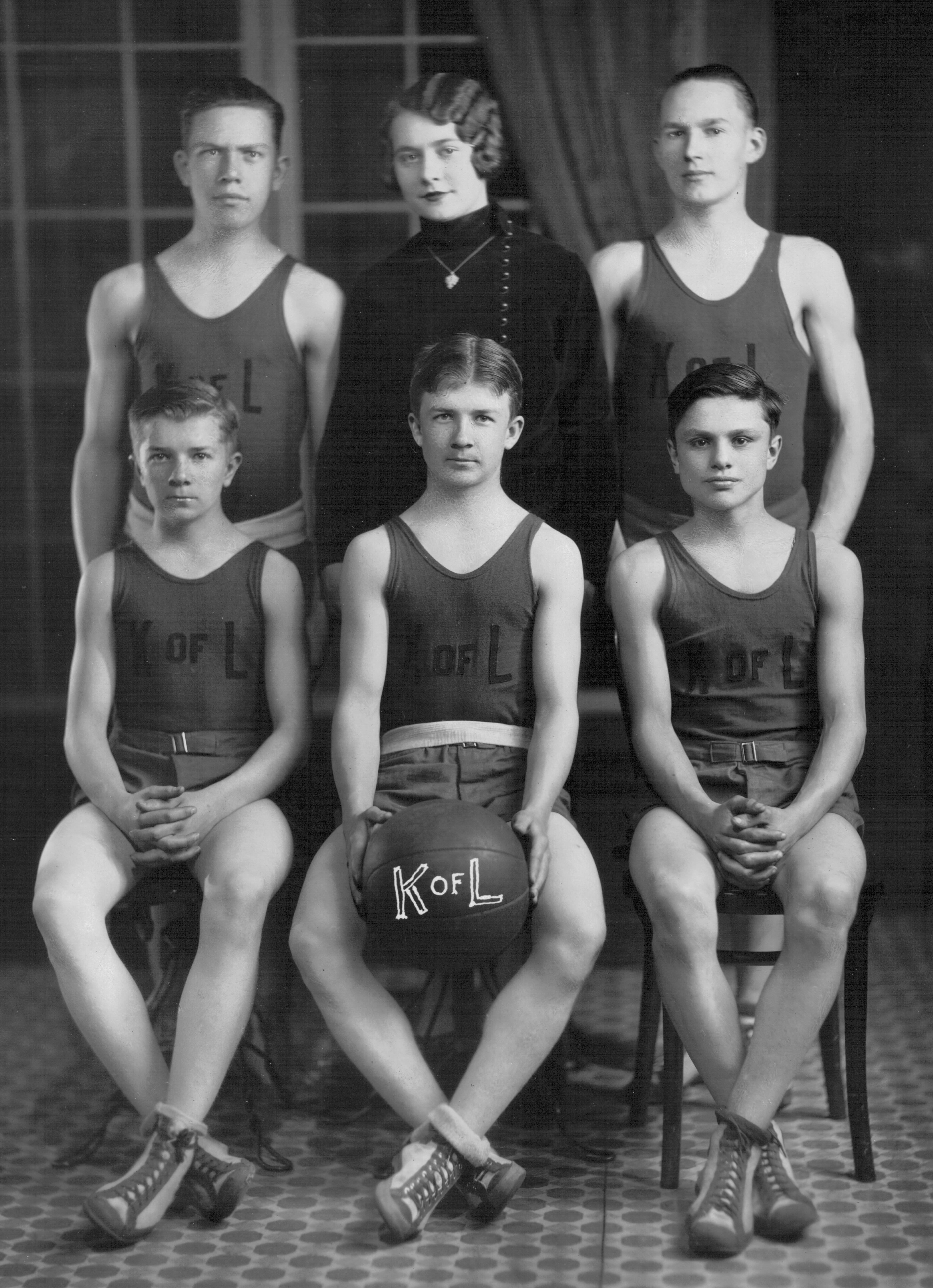
Knights of Lithuania youth basketball team with sponsor.  John Zibutis back row, left edge.

Knights of Lithuania youth basketball team with sponsor. John Zibutis back row, left edge.

Newspaper accounts also describe a much anticipated Knights’ game against a “colored” men’s team called George Neal’s Union Giants. The Giants had their own east-side ballpark, which the Knights were said to be contemplating “taking over” in August 1922. Due to the success of adult amateur baseball, a “Kidsville” league was also established with Myers Brothers, the Knights and others sponsoring their own junior teams. In 1924, the Knights junior team, managed by saloon-keeper Simon (Sam) Lapinski, Sr., won the city-wide Kidsville title.

As for the Knights, an earlier team organized by Joe Miller and noted for its dominance on the diamond seemed to have had few Lithuanian players, leading to a brouhaha that included Knights members not attending that team’s only home game in May or June 1921–followed by a directive that henceforth, the team would include only Lithuanian players. Defending the promotional value to the organization of his winning Knights’ team in newspaper reports, Miller took his team outside the Knights for a short period while he barnstormed to become the K of L’s national athletic director. Once he achieved that position, he returned to the field with a new local K of L team that featured J., W, and T. Grigiskis, and other players by the names of Koski, Laskaudis, Oleseskis, Kutskill, Ballon, Laukitis and Chestnut. Still other Knights baseball players of the 1920s were surnamed Diksonas, Lukitis, Denkevicius, Keturaki, Marcinkus, Tamoliunas, Repaitis, and Bokainis.

Passing the Baton

Perhaps the Knights were negatively impacted in their recruiting by the requirement, after Aug. 1923, of U.S. citizenship for new members, at a time when an exodus of many immigrant coal mining families from Springfield was caused by mass mine mechanization and loss of jobs. It is clear that a choir/corps of Knights musical activists held concert after carnival after party after picnic in the early- to mid-1920s to raise the group’s profile among their countrymen and in the community. Joe Miller, who seems to have been quite a promoter, did the same through baseball. But by the 1930s, the group appeared much smaller on the public stage.

And by 1926, Professor Aleksis had already moved on—perhaps because of his restless artistic spirit and the inherently small pond that Springfield represented (with St. Vincent’s accompanying small organist salary that had to be in decline with the exodus of local mining families). I would also not discount politics and growing friction in the ranks of the Knights (who were divided between St. Aloysius and St. Vincent’s parishioners) between labor unionism/socialism and conservative Roman Catholicism during the lead-up to the Central Illinois “Mine Wars” (1932-36). It is likely that growing socialist-communist sentiment among disenfranchised labor was not favored at the church, long before the U.S.S.R conquest of the Lithuanian homeland in 1940.

By 1925, newspaper reports describe an operetta, “Sylvia,” directed by St. Vincent’s new organist Anthony Kvedaras (Kwedar?) in English at the Knights of Columbus Auditorium to benefit the church. (Anna Mosteika, Anna Gudausky and Vera Lanauskas were among the singers.)

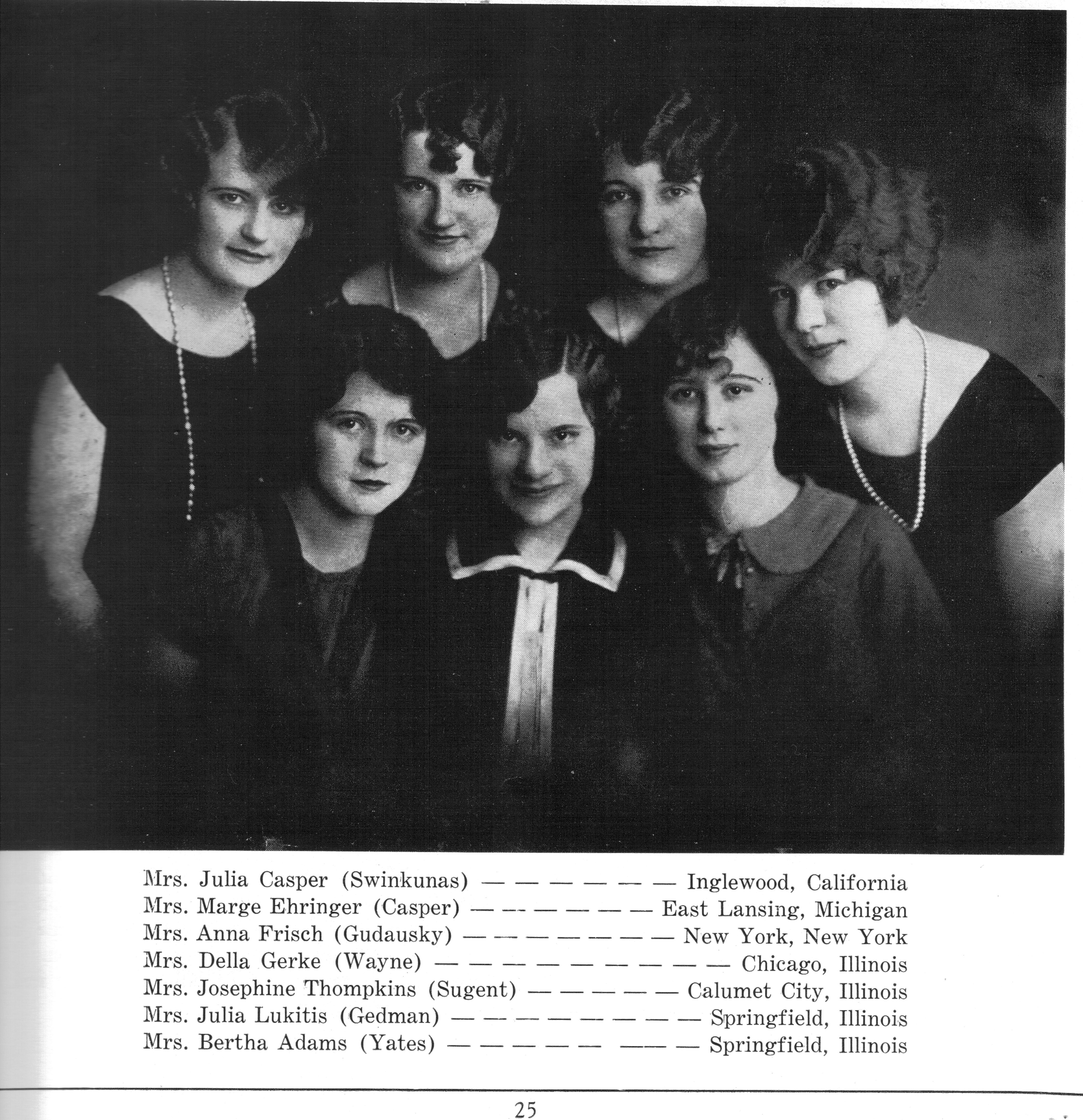
The K of L Chapter 48 officers that year were: Spiritual Advisor the Rev. Stanley O. Yunker (Junkeris), who had become St. Vincent’s pastor in 1923; President John Adomaitis, Vice-President Victor Alaunis (Alane), Financial Secretary Catherine Cooper, Secretary Anna Gudauskas; Trustees Helen Shupenas and John Thomas; and Treasurer August Visnauskas (Augie Wisnosky, Sr.), Marshals Anthony Gridzuis and A. Kuperis. Josephine Sugent, Miss Gudauskas, Mrs. Cooper and Julia Svinkonif (Swinkunas?) did the “hostess” heavy-lifting for the officers’ installation meeting that also discussed the need for an “extensive membership drive,” according to the newspaper. I should mention that a core group of female friends (Gedman-Lukitis, Gudauskas, Sugent) appears to have kept the Knights and other Lithuanian Catholic organizations, including he Lithuanian Roman Catholic Women’s Alliance, going for at least 20 years.

The female cadre that formed the backbone of  St. Vincent de Paul's  many clubs, including the K of L. Circa 1930. Church 1956 Jubilee book.

The female cadre that formed the backbone of St. Vincent de Paul’s many clubs, including the K of L. Circa 1930. Church 1956 Jubilee book.

One hundred K of L members reportedly attended the group’s 20th anniversary banquet and dance in the roof garden of the Elks Club in 1936. Fr. Yunker gave the invocation and keynoted a speech about the Knights’ history and principles, while Miss Bernice Brazaitis presided as president of the club and “toastmistress.”

Lithuanian Song Festival

Professor Aleksis, called one of the “outstanding Lithuanian musicians, composers, and teachers of music in the United States” by the Aug. 10. 1942 Illinois State Journal, went on to organize the Lithuanian League of Choirs in Chicago, and to conduct four choirs and give studio lessons in his then-home with wife Marcella in Watertown, Conn. (Marcella was named a Knights member of great honor in 1968.) The professor died at age 97 in 1983 in Connecticut.

But before that, he played another important role in the musical history of Lithuanian America. As a member of the American-Lithuanian Roman Catholic Organists Alliance, Professor Aleksis helped organize the repertoire of the first national Lithuanian Song Festival in 1955. The festival featured performances in the Chicago Coliseum by 34 choirs and about 1,200 singers and raised $22,000 for Lithuanian causes. For more about the song festival, please go to: https://www.dainusvente.org/en/more/history

According to the dainusvente website, Vladas Jakubėnas, a music critic, wrote about the first Lithuanian Song Festival in the journal “Aidas:”
“The repertoire was not just sung by the unified choir – some songs were sung only by women, some only by men, and some by select choirs. On the day of the Festival, a cool summer suddenly turned hot, with temperatures reaching 100 degrees. The Coliseum had no air conditioning, and the heat was almost unbearable in the sold-out arena. In the end, however, a moral victory had been achieved. With the success of the first Lithuanian Song Festival, American and Canadian Lithuanians achieved self-respect and encouragement for future cultural projects.”

Apparently, ethnic uplift and self-help through cultural enterprise (specifically, music) wasn’t just for Springfield in the 1920s, but rather, a major and ongoing tradition in Lithuanian-American life.

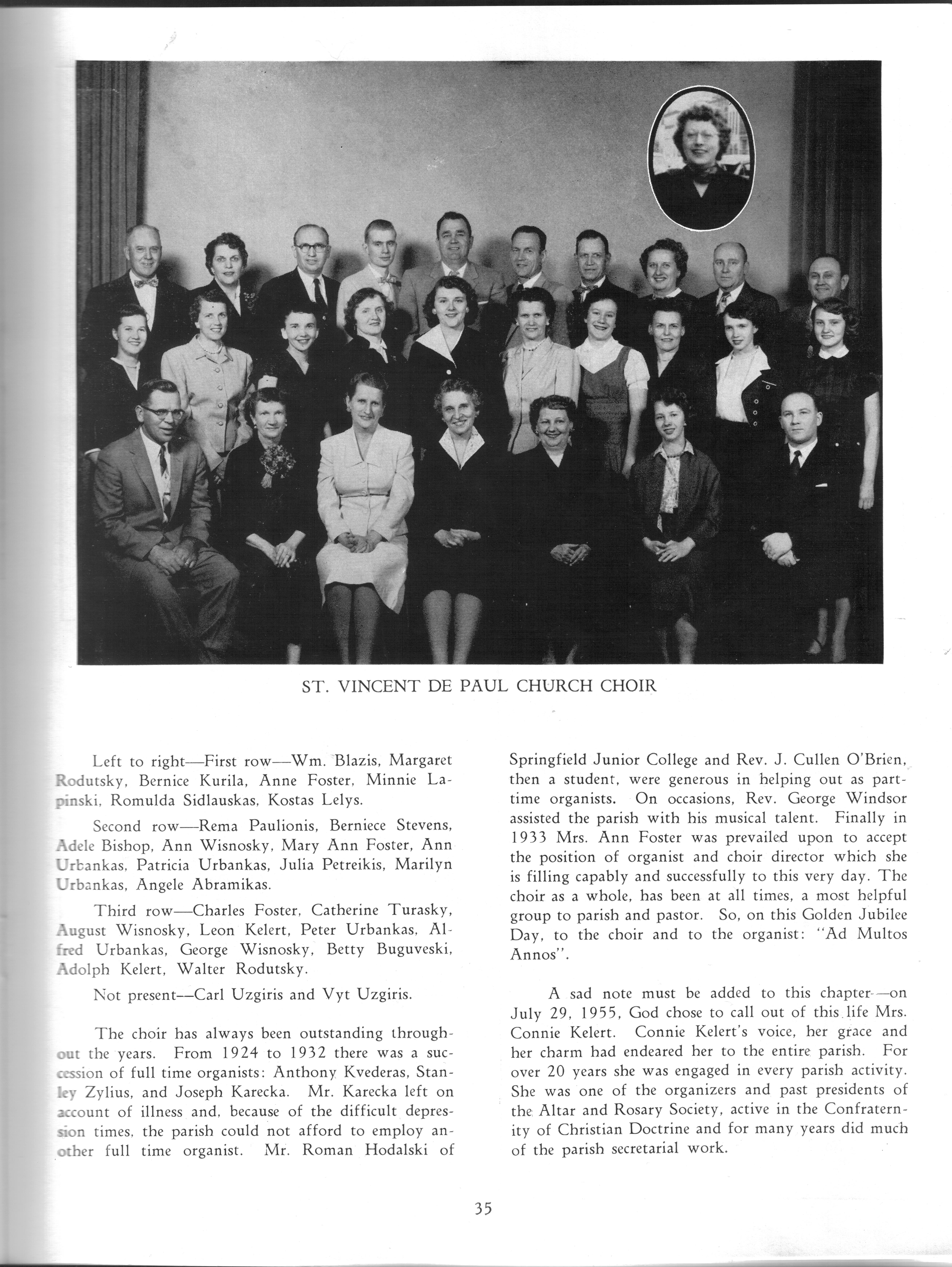
In memory of Prof. Aleksis and the other full-time St. Vincent de Paul organists/choir directors, including Ann (Mosteika) Foster, Anthony Kvedaras, Stanley Zylius, Joseph Karecka, part-time organists Roman Hodalski and the Rev. J. Cullen O’Brien–and every member of their dedicated choirs.

The church choir with names, from 1956 Jubilee book

The church choir with names, from 1956 Jubilee book

Blogroll

  • Enos Park Neighborhood Improvement Association
  • Illinois State Historical Society

Lithuanian Websites

  • Amber Reunion
  • Lithuanian World Center
  • Lithuanian-American Club of Central Illinois
  • Lithuanian-American Community, Inc.
  • Lithuanian-American Publications
  • Lithuanians Of Arizona
  • LTnews.net
  • LTUWorld
  • The Lithuania Tribune

St. Vincent’s murals resurface

Two of the murals from St. Vincent de Paul's Catholic Church have resurfaced. Take a look!

Search

Enter your email address to follow this blog and receive notifications of new posts by email.

Join 142 other subscribers

E-mail us!

Questions or comments? Please e-mail sandybaksys@gmail.com.

Email us!

Questions or comments? Please e-mail sandybaksys@gmail.com.

Create a free website or blog at WordPress.com.

Privacy & Cookies: This site uses cookies. By continuing to use this website, you agree to their use.
To find out more, including how to control cookies, see here: Cookie Policy
  • Subscribe Subscribed
    • Lithuanians in Springfield, Illinois
    • Join 142 other subscribers
    • Already have a WordPress.com account? Log in now.
    • Lithuanians in Springfield, Illinois
    • Subscribe Subscribed
    • Sign up
    • Log in
    • Report this content
    • View site in Reader
    • Manage subscriptions
    • Collapse this bar
 

Loading Comments...