• Welcome!
  • An indelible role in our history
    • Historical Background, Influences
      • First Lithuanians in Springfield
      • Freedom and Assimilation
      • Divisions and Decline
      • The Mining Life
        • Honoring Central Illinois Mine Casualties
        • The Mine Wars
      • A Second Wave of Immigration: the ‘DPs’
      • Behind the Iron Curtain
      • “Singing Revolution”
        • “The Other Dream Team”
    • Lithuanian Historical Marker Dedication
      • Lithuanians in Springfield Historical Marker
      • A Time to Remember
      • Historical Marker Dedication Program
      • Photo Gallery
      • Marker ceremony noted in Shimkus newsletter
  • Elder Isolation is Elder Abuse
    • Open Letter to Ill. Gov. Pritzker, AG Raoul
    • Open Letter to Illinois Elder Abuse Task Force
  • Sandy’s Blog: News and Profiles
  • Voices of the “Third Wave”
    • Christmas Memories
    • Remembering January 1991
  • Springfield Lithuanian Families
    • Bakunas, Gestaut, Shadis, Petrokas, Chepulis
    • Local Lithuanians Prompt Newspaper Story
    • Stuches, Gillette, Cooper, Chesnut
    • Tisckos, Miller, Wisnosky
    • Treinis, Nevada, Yuskavich
    • Andruskevitch-Shoudis-Moser
      • Weddings
    • Baksys-Yamont
      • Singing Revolution Activities, U.S.
    • Banzin – Liutkus – Kellus – Gestautas
      • Memories
      • Trips to Lithuania and an appreciation of ancestry
    • Giedrys-Kudirka
    • Janners (Jankauskas), Gossrow
    • Kwedar, Olshevsky, Shupenus
    • Lelys, Lilles
      • 1970 Wedding, St. Vincent de Paul Church
    • Turasky, Yakst, Brazas, Stockus
    • Mankus-Tonila
      • Maria Fry Race & Tonilas
    • Zemaitis, Zubkus
    • Casper, Yanor, Walentukonis
    • Rackauskas immigration
    • Treinis-Banaitis
    • Bubnis, Guthrie, Walker
    • Grigsby, Dumbris
    • Missavich-Stankavich
    • Welch, Wilcauskis, Valentanovich
    • Stasukinas, Staken, Bubblis, Poskevicius
  • St. Vincent de Paul Lithuanian Catholic Church
    • St. Vincent de Paul murals resurface
    • Lithuanian Independence Day, 1950
    • People of the Church
    • People of the Church 2
    • People of the Church 3
    • People of the Church 4
    • Fr. Yunker College Scholars
      • Patricia Visnesky and Cynthia R. Baksys
      • Amanda Rackauskas Ross and Elaine (Manning) Kuhn
      • Barbara Blazis, John Dombroski, Patricia Naumovich, Mary Sitki
      • Diane D. Baksys and Emily Warren
  • Business & Professions
    • Journalist Matt Buedel
    • U.S. Senator Richard J. Durbin
    • Chernis: Midwest Demolition
    • Lobbyist “Limey” Nargelenas
      • Horace Mann CEO Marita Zuraitis
    • Nurse Joan Naumovich
    • Tony J. Yuscius, Advanced Digital Media
    • Business Writer Dan Naumovich
    • Teacher Elaine Kuhn
    • Power Co. Executive Maria Race
      • Pediatric Dentist Mary Ann Rackauskas
        • Nurse Debbie Ritter
    • Radio Host Sam Madonia
    • Turasky Meats
      • Tureskis Cleaners
  • The Lithuanian-American Club
    • Founding and Founders
    • Club Lobbies for Lithuanian Independence: Letter to President Bush
    • Recipes / Food
    • Travel

Lithuanians in Springfield, Illinois

Lithuanians in Springfield, Illinois

Monthly Archives: November 2014

Bankers to Lithuanians

23 Sunday Nov 2014

Posted by sandyb52 in Sandy's Blog

≈ Leave a comment

For decades after their arrival in Springfield, the amount of wealth that Lithuanian immigrants could accumulate was limited by low wages, minimal credit, un- and under-employment, and the lingering effects of the Great Depression. However, after World War II, two sons of Lithuanian immigrants, August P. Wisnosky, Sr. and Walter Rodutskey, began to help put more money in their countrymen’s pockets as “bankers to Lithuanians.”
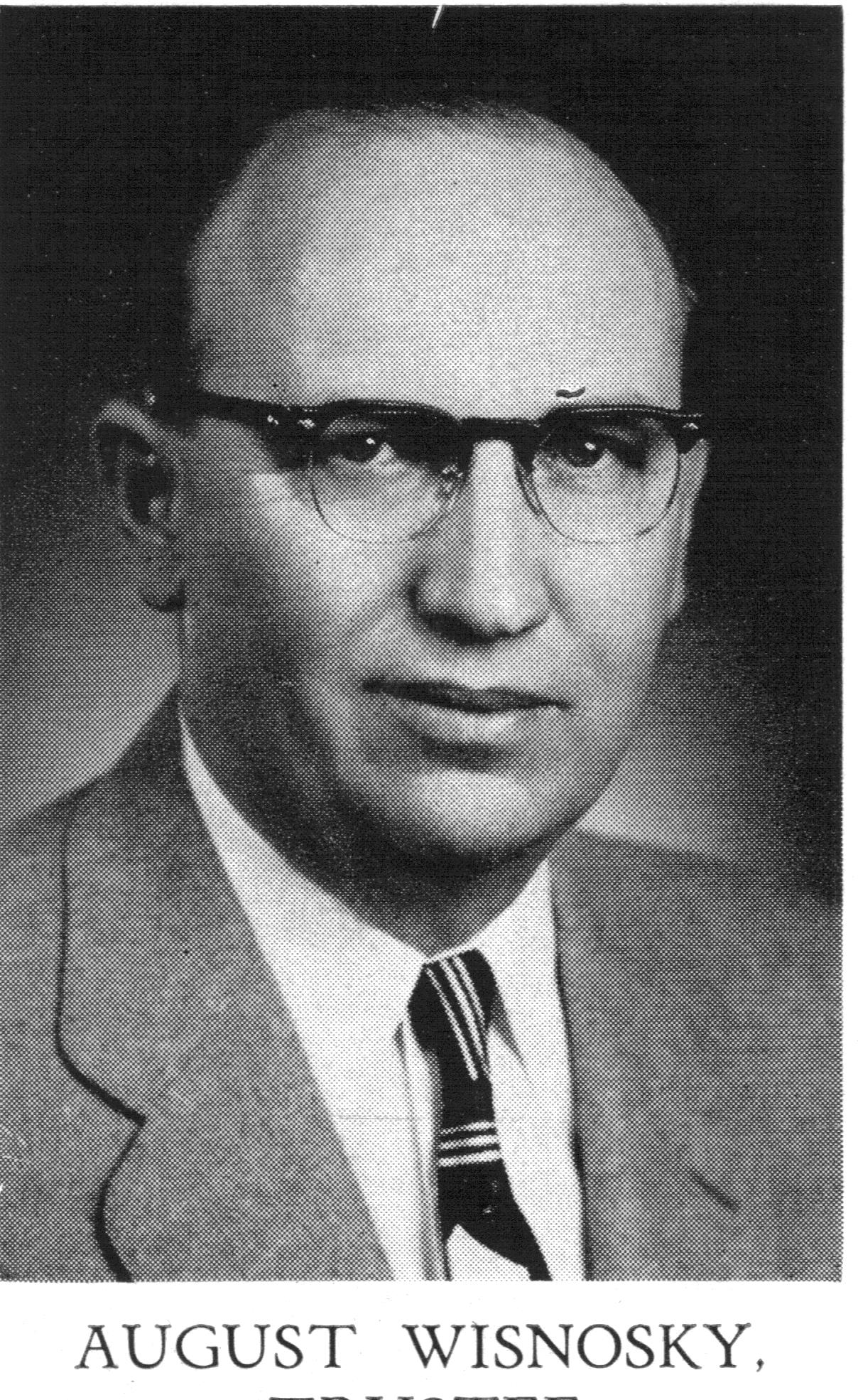
 St. Vincent de Paul Jubilee book, 1956.

St. Vincent de Paul Jubilee book, 1956.

Augie P. Wisnosky, Sr. & Illinois National Bank

August “Gus” was born in 1906, the son of Lithuanian immigrants George and Anna (Prapuolenis) Wisnosky (Visnauskas). A graduate of Ridgely Grade School and Springfield High School, where he took general business courses, including typing, Gus joined Illinois National Bank (INB) when he was 18 years old in 1924. It took 15 years, but around 1940, he was appointed assistant teller. By 1945 he was head teller, and in 1952, he became a loan officer. Gus was promoted to assistant vice president in 1957. He retired from the bank in 1970 after a career of 46 years.

It seems hardly a coincidence to me now that Gus’s bank, INB, was the only one that would take seriously the application for a $100,000 loan from uneducated Lithuanian immigrant John (Makarauskas) Mack and make the loan that in 1957 launched the Mack fast-food empire which later included all eight of Springfield’s first McDonald’s restaurants. In gratitude, the Mack McDonald’s franchise went on to do all its subsequent banking with INB.

Gus’s bank also went on to garner a large share of the Lithuanian-American community’s banking business, reportedly based on Gus’s openness to Lithuanian-American borrowers who might have been discriminated against or not treated as positively elsewhere. Don’t get me wrong–it’s likely that Gus extended the same fairness, human insight and business savvy to all his customers. Otherwise, one can’t imagine him being promoted to the C-suite. However, it’s also clear that Lithuanian-Americans in Springfield knew Gus would help them get a fair hearing and a fair deal, and so they became loyal account-holders and recommended INB to their friends and relatives.

Ann Tisckos and Gus Wisnosky wedding, 1930s.

Young Ann Tisckos and Gus Wisnosky at Kasawich-Alane wedding, 1927.

Along the way, just like Lithuanian immigrant attorney Isidor Yacktis, Gus became a shining representative of his ethnic community within much larger, city-wide organizations, such as the Community Chest, Elks Club, Knights of Columbus (K of C), and ultimately, the Sangamon County Board of Supervisors (1957-65). He participated in many civic organizations as well, such as the Springfield Art Association, Illinois State Museum Society, and Abraham Lincoln Association.

Gus seems to have been active in these multi-ethnic organizations (for instance, the K of C’s Major League Bowlers and its annual Lake Springfield Festival at Villa Maria, featuring sail and motorboat races) while also remaining a pillar of his own ethnic community.

Following in the footsteps of his father George, who was grand marshal in 1911 of the pageant/parade celebrating the opening of the St. Vincent de Paul Lithuanian Catholic Church, Gus worked mightily in 1971 as head of a committee of parishioners striving to save the church from closure and demolition by the Catholic Diocese of Springfield. Gus had been a lifelong parishioner, violinist, choir member, and 22-year trustee of the church until its last days. Tragically, his death in February 1972 at age 66 followed by only one month his beloved church’s closing, so that his funeral mass had to be held elsewhere.
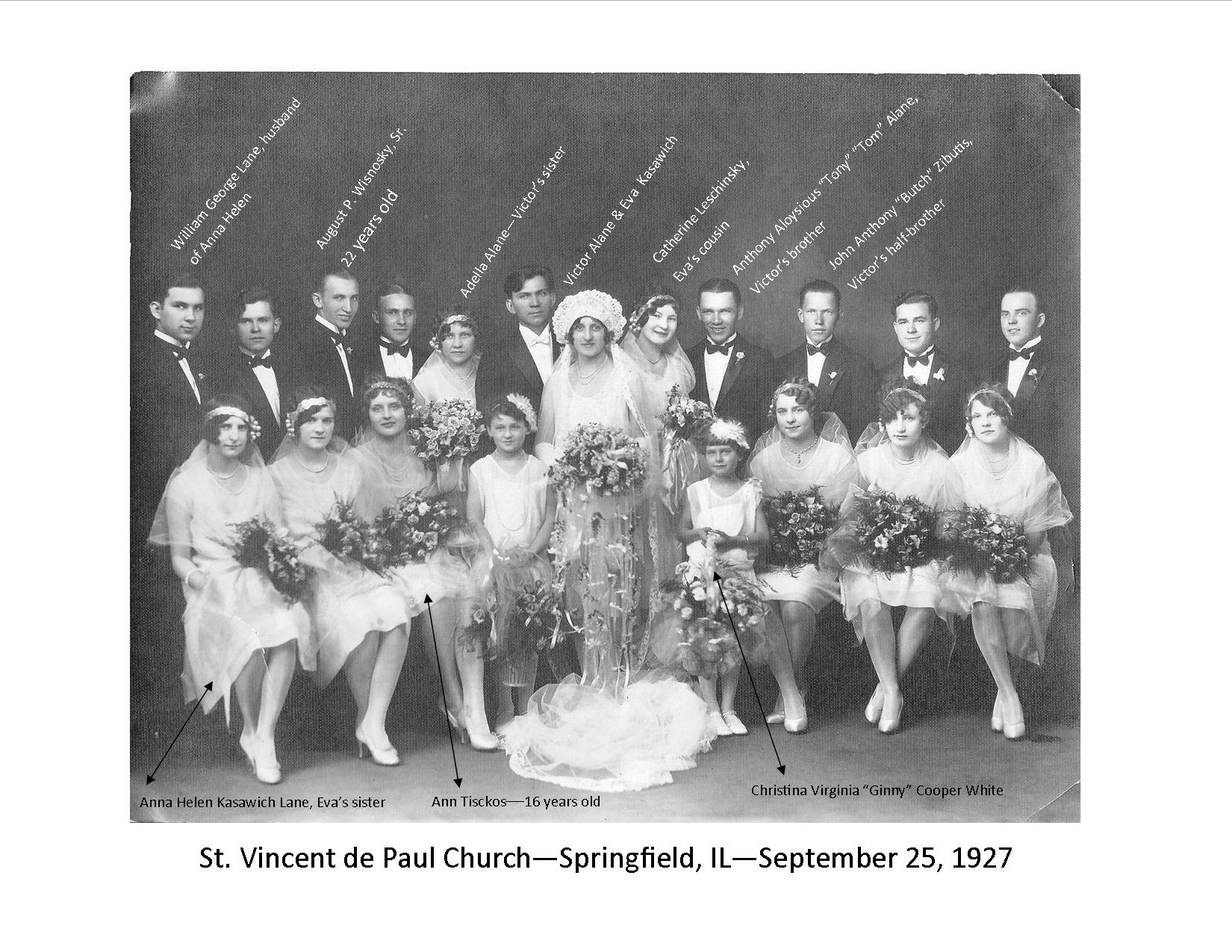
 Click to see young Augie and his wife-to-be Ann Tisckos in this photo of the Alane-Kasawich wedding party, 1927.

Click to see young Gus and his wife-to-be Ann Tisckos in this photo of the Alane-Kasawich wedding party, 1927.

Augie Wisnosky at the 40- year tribute to the Old State Capitol project, March 25, 2008.

Augie Wisnosky at the 40- year tribute to the Old State Capitol project, March 25, 2008.

Gus and wife Ann’s son John went on to become an art professor at the University of Hawaii. Son August, Jr. “Augie” was a distinguished local architect with Graham, O’Shea & Wisnosky. He was resident architect for two years at the site of the most ambitious historical renovation ever undertaken in Springfield (1966-68): the stone-by-stone deconstruction and rebuilding of the Old State Capitol downtown (where Abraham Lincoln delivered his “House Divided” speech.) You can also read here about the immigrant childhood of Gus’s incomparable wife Ann (Tisckos) Wisnosky: https://lithspringfield.com/2014/06/07/an-immigrant-childhood-ann-tisckos-wisnosky/

Walter Rodutskey & Sacred Heart (Heartland) Credit Union

By coincidence, both Gus Wisnosky and Walter Rodutskey got into their positions to loan money to Lithuanians just as the end of World War II and the baby boom ignited the long and steady economic expansion that finally made real prosperity possible—if not for the immigrants who had come to Springfield 50 years earlier, at least for their children and grandchildren.

The Shenendoah, Pennsylvania-born son of immigrants Kazimieras and Frances (Matulaitis) Rodutskey, Walter was a bonafide working man: a machinist at construction machinery maker Allis Chalmers for 25 years. In 1946 he joined with famous “labor priest” Fr. John Brockmeier of Sacred Heart Church to become an organizing director of what was first known as Sacred Heart Parish Credit Union.

In Fr. Brockmeier’s words: “There is a tie-in between labor unions and credit unions. Both tend to improve the standard of living for the working class.” Fr. Brockmeier’s life combined labor organizing and arbitrating labor disputes with founding banks, credit unions and chambers of commerce in a civic, Christian spirit that encouraged people to work together and rely on each other through a variety of organizations in addition to their parish church.

At the same time, when Fr. Brockmeier, Rodutskey and others founded their new credit union by pooling initial deposits into the modest sum of just $102.74, they put Sacred Heart parish at the center of this new effort at collective financial self-help by locating the credit union inside the parish office. In the beginning, the credit union cost 25 cents to join, was open to any family with one Catholic spouse, and made loans ranging from just $10-$300. By 1950, it had assets of $53,518.48 and 276 members. Office hours were Monday evenings at Sacred Heart, “7 p.m. to close,” according to historical documents graciously provided by today’s Heartland Credit Union (Sacred Heart’s successor).

By 1996, the credit union had main offices on South Grand and Glenwood Ave. and an administrative branch on West White Oaks Dr. Membership had climbed to 7,700, deposits to $13.2 million, and loan amounts accordingly. Walter Rodutskey, who retired from the credit union in 1984 after 30 straight years of board service, played an important role in this non-profit banking institution, often as the board’s secretary. He was so committed to the credit union movement that he also served as an officer of the Springfield Chapter of Credit Unions, which included representatives of most of the city’s largest employee groups, including Pillsbury Mills, Sangamo Electric, Bell Telephone, and public unions for teachers and firefighters.

Walter died at age 88 just three days after the death of Margaret, his wife of 40 years, in January 1991. The credit union that he helped found was led into the new millennium by Springfield Lithuanian-American Ed Gvazdinskas.

Thanks to Tom Mann for more great newspaper archives research, without which this post would not have been possible.
Immigrant Soldier to U.S. Citizen

11 Tuesday Nov 2014

Posted by sandyb52 in Sandy's Blog

≈ 2 Comments

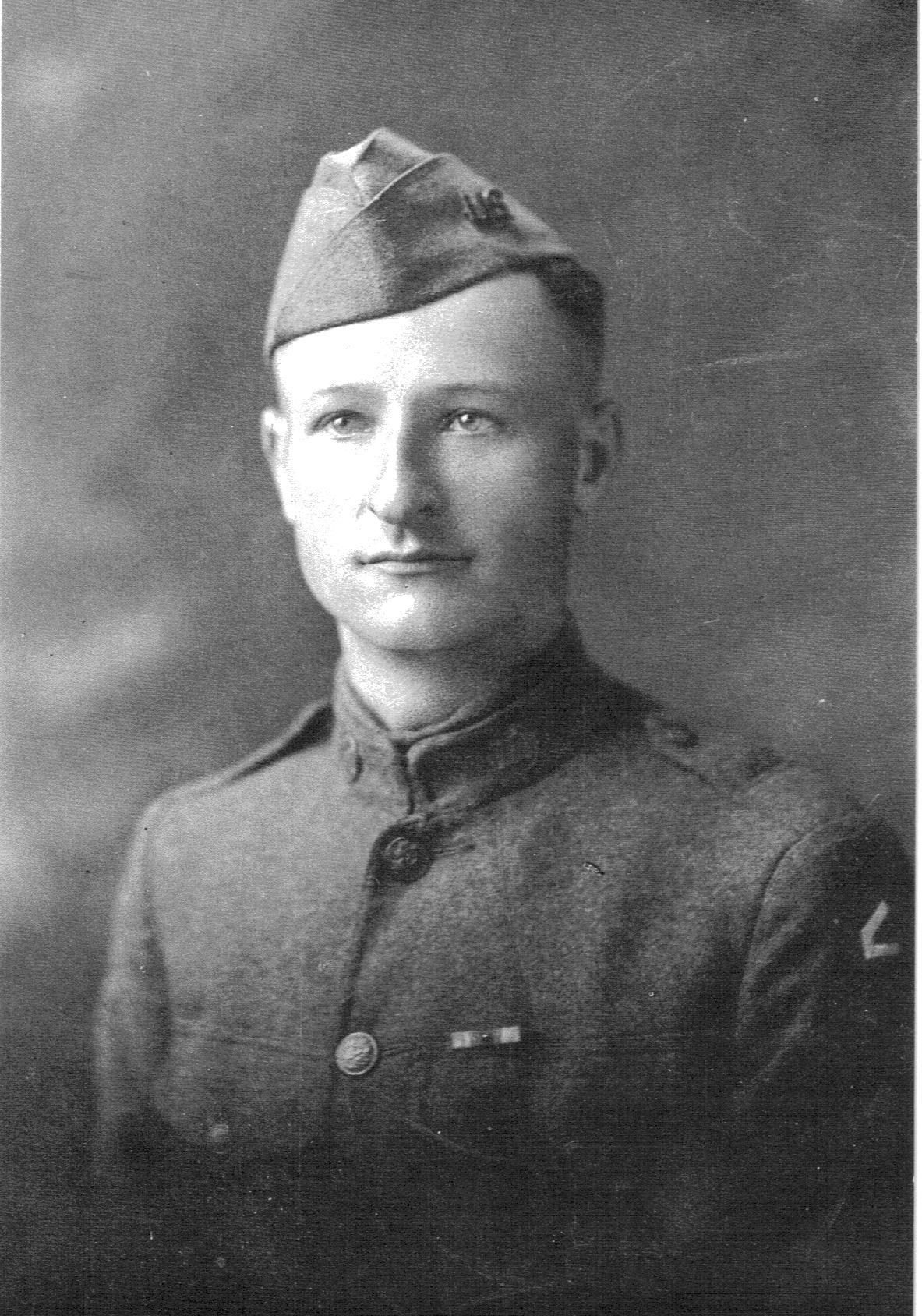
Lithuanian immigrant John Joseph Straukas, age 28, of Riverton, American Expeditionary Force, 1918.  He received expedited U.S. citizenship as a result of his service to our country in World War I.

Lithuanian immigrant John Joseph Straukas, age 28, of Riverton, American Expeditionary Force, 1918. He received expedited U.S. citizenship as a result of his service to our country in World War I.

Editor’s note: An estimated 50,000 Lithuanian immigrants wore the U.S. uniform in World War I. William Cellini, Jr. writes today to commemorate all the immigrants who served and to explain how war could unlock the door to U.S. citizenship.

Immigrants in War, Citizens in Victory
By William Cellini, Jr.

Foreign-born citizens had served in the U.S. military for over 100 years prior to our country entering World War I. However, the “War to End All Wars” was unique in terms of the number of non-U.S. born men drafted into the military.

On April 6, 1917, Congress declared war on Germany and immediately passed the Selective Service Act requiring all men in the U.S. between the ages of 21 and 31 to register at their community draft boards. Within a few months of initial registration, about 10 million men across the country responded. By the summer of 1918, eligibility was expanded to include men 18 to 45 years old. Included in this wide net were native, naturalized, and alien men.

Kansteon Staikunas (Kanstantas Steikūnas), 28, born in Balninkai, Lithuania. Illinois National Guard (later the 33rd Division, U.S. Army 129th Infantry, Company C). Killed in action during the battle of Meuse-Argonne, Oct. 11, 1918., 28, Illinois National Guard, killed in the battle of Meuse-Argonne, Oct. 11, 1918.

Kansteon Staikunas (Kanstantas Steikūnas), 28, born in Balninkai, Lithuania. Illinois National Guard (later the 33rd Division, U.S. Army) 129th Infantry, Company C. Killed in action during the battle of Meuse-Argonne, Oct. 11, 1918.

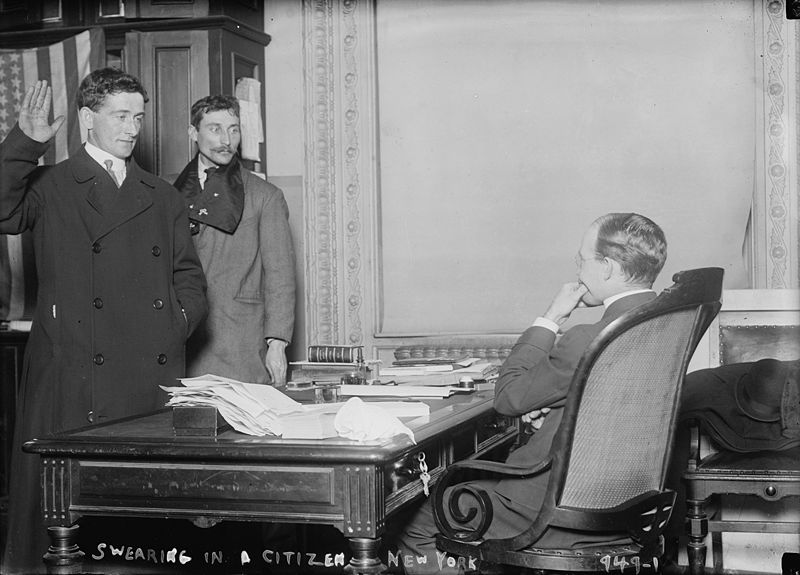
As the numbers of immigrant men called-up for military service increased, alien draftees were offered an expedited route to full U.S. citizenship regardless of their immigration status. Modifications for soldiers were made to all three key parts of the naturalization process: the Declaration of Intent, the Petition for Citizenship and the issuance of the Certificate.

Under the modified process, the residency requirement of five years before submitting a Declaration of Intent to become a U.S. citizen was eliminated. In addition, an expedited Petition for Citizenship was granted. Typically, the Petition required an oath of allegiance to be taken at the immigrant’s local courthouse. As an alternative, immigrant soldiers signed a pledge to the United States called a “written oath” and had two U.S. citizens verify their petition in writing, supplanting the need to go to a court. One can imagine written verification quite willingly being given by alien soldiers’ U.S.-born commanding officers and comrades-in-arms.

Courthouse oath. Naturalization image from the Library of Congress.

Courthouse oath. Naturalization image from the Library of Congress.

Finally, as an alternative to enduring the waiting period of several years to receive a Naturalization Certificate, once a soldier’s Petition was filed under the new war-time rules, the Certificate was granted immediately upon processing and approval. Conversely, immigrants asking for draft exemption or discharge from service would automatically have their citizenship process cancelled and would be forever disqualified from becoming citizens of the United States.

From May 8 to November 30, 1918, the government counted 155,246 immigrant soldiers among the newest citizens of the United States, not including an undetermined number of alien soldiers granted citizenship while stationed overseas.

Training and Commanding the Non-English Speaker

The unprecedented number of immigrants culled from a huge and diverse population of non-native English-speakers presented a challenge to their training and consolidation into an integrated fighting force. Seeing the need to address this, the U.S. War Department created a Foreign-Speaking Soldier Subsection (FSS) to assist in the training of immigrants who could not speak English.

Camp Gordon, Georgia during World War I. Courtesy of flickriver.com

Camp Gordon, Georgia during World War I. Courtesy of flickriver.com

Lt. Stanislaw A. Gutowski, a naturalized citizen born in Russian-occupied Poland, led the first step in the training process. Gutowski investigated FSS military camps of Slavic-speaking soldiers because he could speak Russian and Polish and witnessed the use of interpreters alongside commanders to instruct non-English speaking inductees.

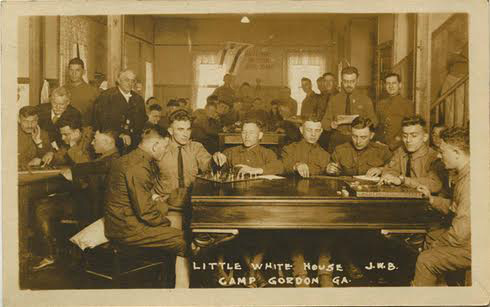
Auburn, Ill. Lithuanian-American who trained at Camp Gordon.

Auburn, Ill. Lithuanian-American who trained at Camp Gordon.

This method proved ineffective, as inductees were often moved out of combat instruction and placed on kitchen duty. Consequently, Gutowski and his staff developed a plan allowing foreign-born officers to lead ethnic-specific companies, “without encouragement of immigrant ‘clannishness.’” These ethnic companies were formed as a contingency so that if called into combat, non-English-speaking soldiers would have an officer to communicate with them in the field.

Due in part to the numerous dialects spoken by inductees, the FSS favored using officers who spoke another language at home with family members over those who had learned a second language through study or travel. (This would have qualified the bilingual sons of immigrants.)

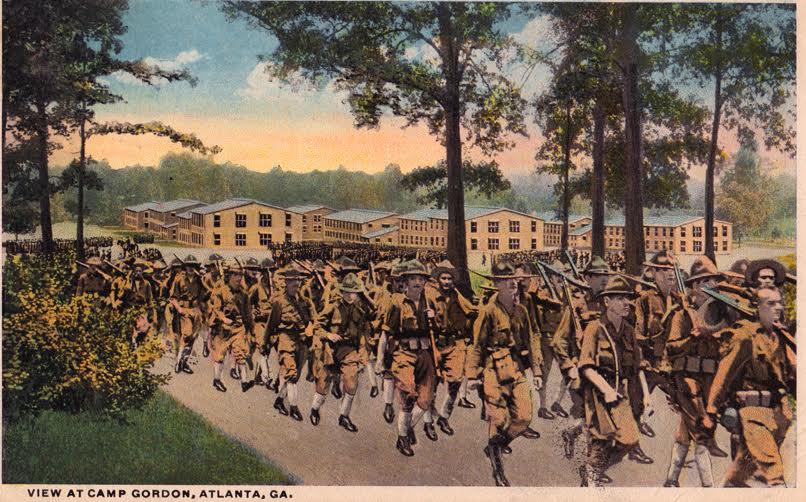
Postcard of Camp Gordon, near Atlanta.  Courtesy of foundpostcard.com.

Postcard of Camp Gordon, near Atlanta. Courtesy of foundpostcard.com.

The influx of foreign-born inductees grew so numerous by the spring of 1918 that the U.S. Infantry created “development battalions” of non-English speaking soldiers. At Camp Gordon near Atlanta, an experiment was conducted in the training of several thousand non-English speaking draftees, who were divided into three groups: 1.) a Development Battalion of physically fit men; 2.) a Labor Battalion of disloyal and enemy aliens and 3.) a Non-combatant Service group of physically unfit men with a proficiency in a trade. At Camp Gordon, the two most populous ethnic companies were Polish-born and Italian-born soldiers. Training in the soldiers’ native tongues was supplemented by instruction in English grammar.

By the war’s end, one in five inductees in the U.S. military were foreign born.

Sources:
Abbott, G. (1921). The immigrant and the community. New York: Century.
Gentile, F. N. (2001). Americans all!: Foreign-born soldiers in World War I. College Station: Texas A&M University Press.
Infantry Association. (1919). Infantry Journal, Vol. 15. Washington D.C.: United States Infantry Association

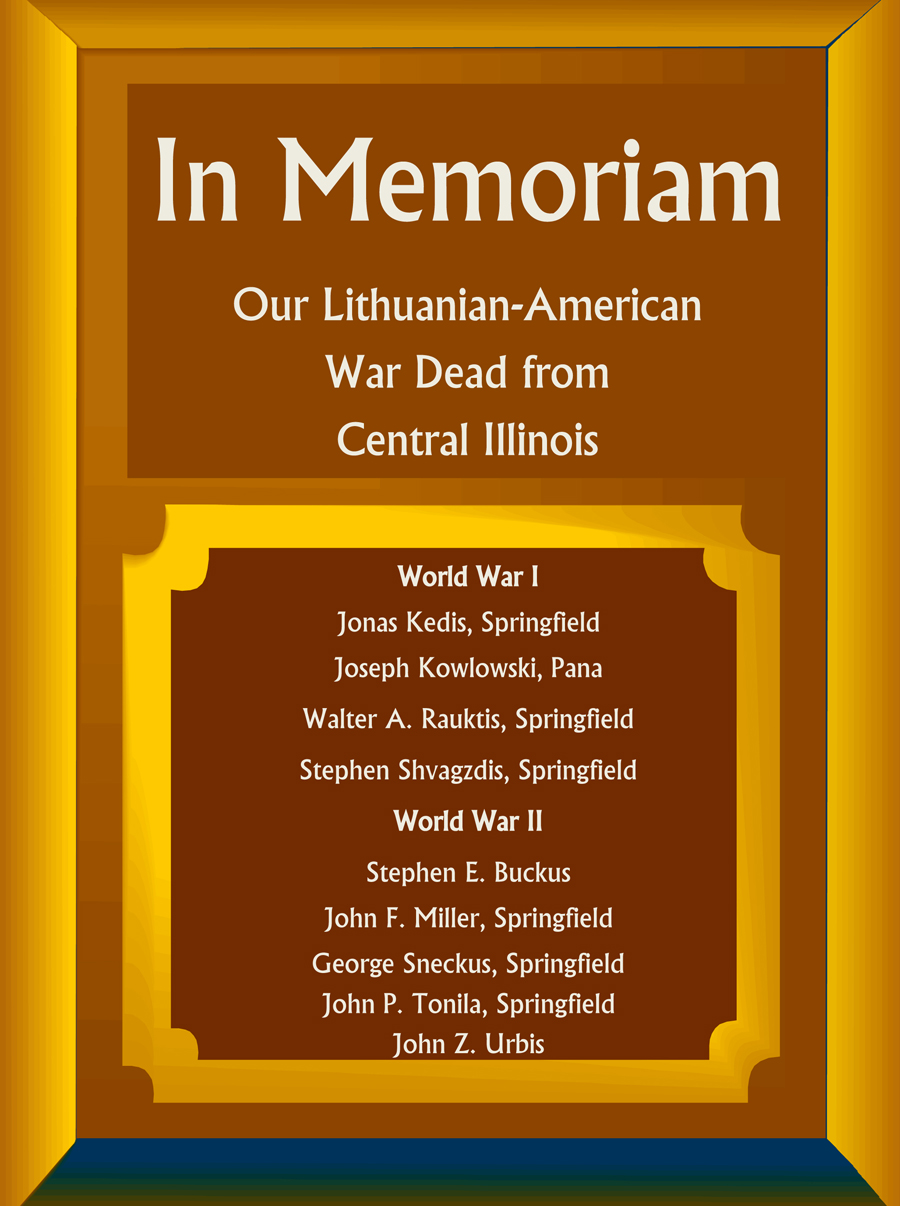
Designed by Melinda McDonald of Rochester, Ill.

Designed by Melinda McDonald of Rochester, Ill.

Lithuanian Ladies Night Out: When Wine and Rivers Flowed

05 Wednesday Nov 2014

Posted by sandyb52 in Sandy's Blog

≈ 4 Comments

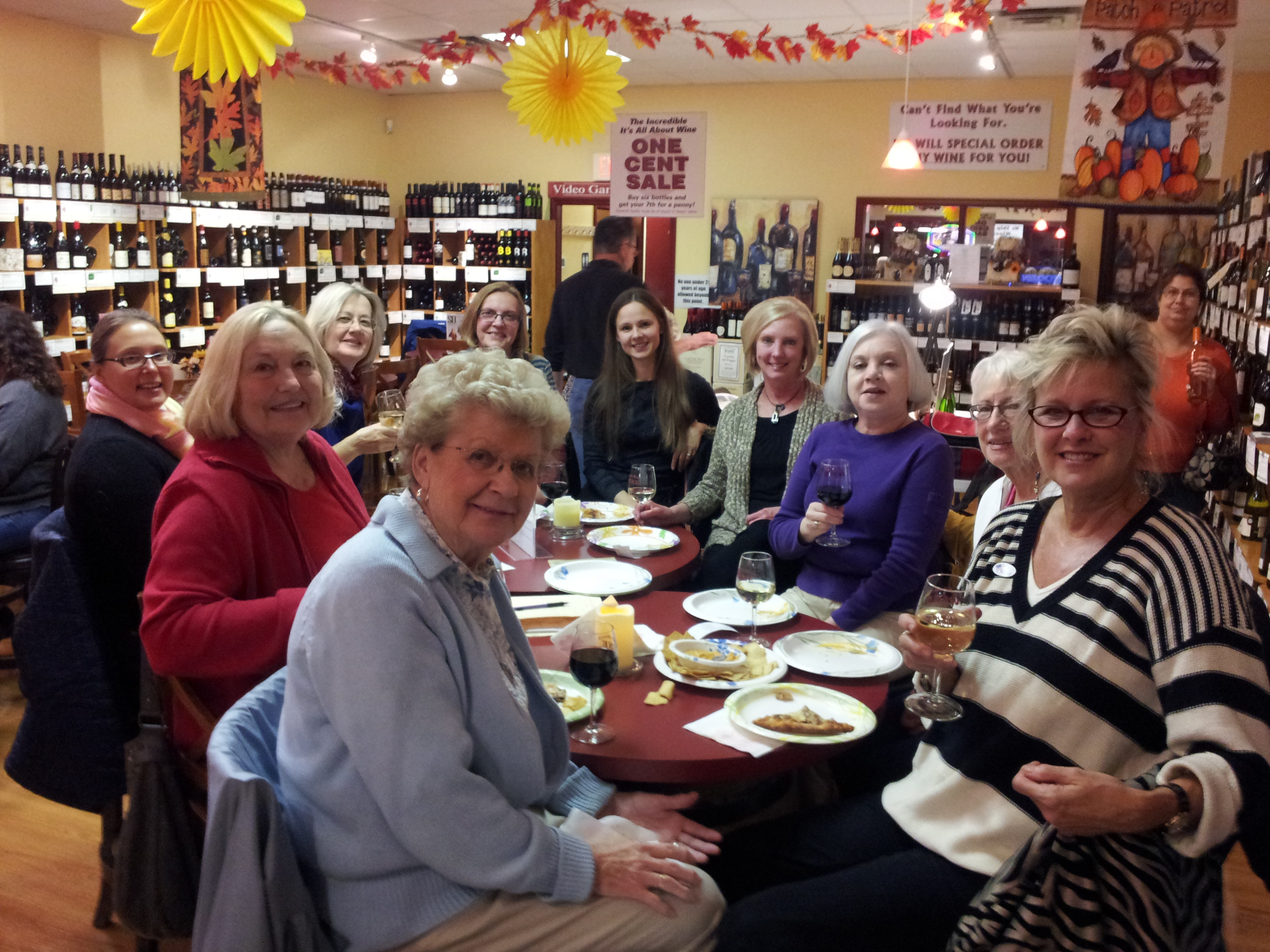
Counter-clockwise around the circle, from bottom left: Josephine, Sandy, Kristina, Sandy, Irena, Asta, Joanie, Mary, Sharon and Teresa.

Clockwise around the circle, from bottom left: Josephine, Sandy P., Kristina, Sandy B., Irena, Asta, Joanie, Mary, Sharon and Teresa.

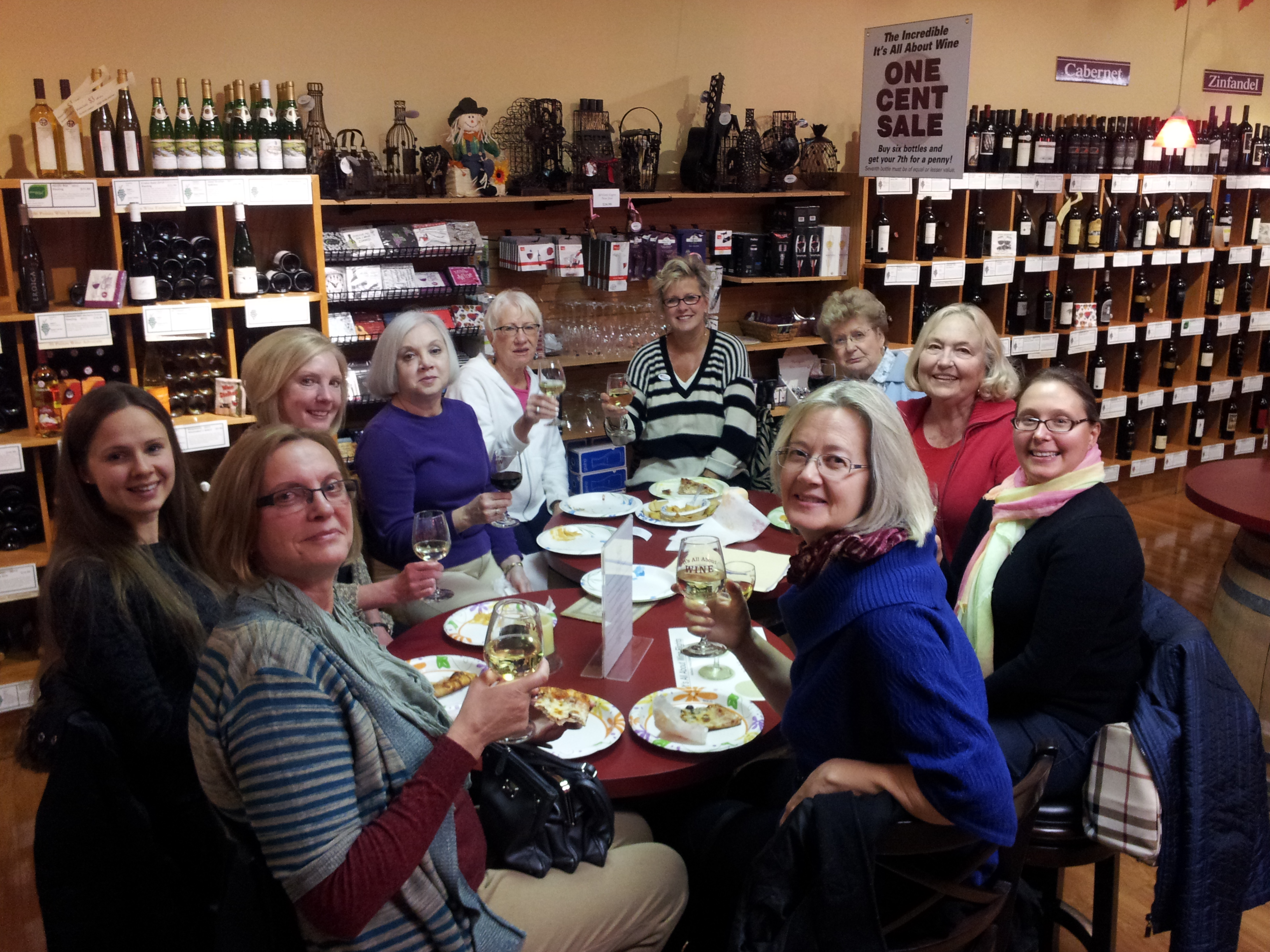
Nov. 4 election night in Springfield was also “Lithuanian Ladies Night Out.” Ten of us gathered to share wine, memories, smiles and questions at a shop called “It’s All About Wine.”

I couldn’t help feeling that our immigrant ancestors were smiling down on us, and maybe also tipping a glass in heaven, if that’s allowed. (It would be hard to imagine a Lithuanian heaven without some kind of alcoholic spirits.)

The store’s proprietor obliged with a few smartphone photos of our group, to which I remarked that no flash would be required due to such an excess of blonde hair.

Clockwise from bottom left: Irena, Asta, Joanie, Mary, Sharon, Teresa, Josephine, Sandy P, Kristina, and Sandy B.

Clockwise from bottom left: Irena, Asta, Joanie, Mary, Sharon, Teresa, Josephine, Sandy P., Kristina, and Sandy B.

Mary M. brought a hummus dip to go with our wine, and also the plates and napkins necessary to divvy up and devour a pizza.

Our upcoming Lithuanian-American Club Christmas Party on Dec. 6 was mentioned, as well as a possible Nov. 22 caravan to Grand Duke’s Restaurant and Racine Bakery in Chicago.

Coal Miner with a Poet’s Heart

My favorite part of the evening, other than introducing my long-lost Orback cousin, revolved around a hand-written music book belonging to coal-mining immigrant Leonard Naumovich, Sr., whose granddaughters Joanie and Mary were present.  Grandfather and great-grandfather to the city’s large Naumovich clan, Len, Sr. died in 1934.

When two of our “Third Wave” Lithuanian immigrants, Asta and Irena, graciously did an on-demand translation of some of Len, Sr.’s handwriting, we made an exciting discovery.

We learned that Len was not only literate and educated, but that he was also a fan of Maironis (1862-1932), the leading poet of Lithuania’s national revival after hundreds of years under the Polish or Russian heel.  This daring late-19th Century renaissance of the Lithuanian language and national consciousness, while Lithuania was still under the rule of the Russian Czar, coincided with Len’s own life and times.  And he apparently remained a part of it even after immigrating to the U.S.

Len’s fragile 100-year-old music book is also an inspiring testament to the spirit of music and poetry that lived on in the heart of a poor coal miner with no opportunity for the life he would have chosen to live, if he had had a choice other than mining coal.

the cover of Leonard, Sr.'s hand-inked music book. See words "Kur Bega Sesupe" at bottom.

The cover of Leonard, Sr.’s hand-inked music book. See words at the very bottom.

The mysterious words “Kur bėga Šešupė” that Len, Sr. wrote on the bottom front cover of his book turn out to be the opening of the most famous Maironis poem, ever: “Where the Sesupe River Flows:”

 Lithuanian Lyrics  and Approximate English Translation

Kur bėga Šešupė, kur Nemunas teka:  Where the Šešupė River runs, where the Nemunas River flows

Tai mūsų tėvynė, graži Lietuva:  That’s our fatherland, beautiful Lithuania.

According to Wikipedia, “Almost every Lithuanian can recite these words by heart. The poem is so well-known that it is treated as an unofficial national anthem.”

Inside Len, Sr.’s book are the words and music to another Maironis poem: “Riding Day:” The poem in translation begins: “Although I rode all day and I rode all night, I arrived at nothing; Then suddenly, I came upon a beautiful lake…”

"Tojau Diena" -- "Riding Day."  The poetry of Maironis united lyrical visions of the Lithuanian countryside with folk songs.

“Jojau Diena” — “Riding Day.” The poetry of Maironis united lyrical visions of the Lithuanian countryside with folk music.

You can read more about Maironis here: http://www.lituanus.org/2002/02_3_02.htm   And here:   http://www.lituanus.org/1963/63_1_03.htm

And, since several of us remarked that we couldn’t remember hearing spoken Lithuanian, check out an audio reading of the poem, “Kur bėga Šešupė” at this link (you will need Windows Media Player):

http://titus.fkidg1.uni-frankfurt.de/texte/baltica/maironis.wav

Blogroll

  • Enos Park Neighborhood Improvement Association
  • Illinois State Historical Society

Lithuanian Websites

  • Amber Reunion
  • Lithuanian World Center
  • Lithuanian-American Club of Central Illinois
  • Lithuanian-American Community, Inc.
  • Lithuanian-American Publications
  • Lithuanians Of Arizona
  • LTnews.net
  • LTUWorld
  • The Lithuania Tribune

St. Vincent’s murals resurface

Two of the murals from St. Vincent de Paul's Catholic Church have resurfaced. Take a look!

Search

Enter your email address to follow this blog and receive notifications of new posts by email.

Join 142 other subscribers

E-mail us!

Questions or comments? Please e-mail sandybaksys@gmail.com.

Email us!

Questions or comments? Please e-mail sandybaksys@gmail.com.

Blog at WordPress.com.

Privacy & Cookies: This site uses cookies. By continuing to use this website, you agree to their use.
To find out more, including how to control cookies, see here: Cookie Policy
  • Subscribe Subscribed
    • Lithuanians in Springfield, Illinois
    • Join 142 other subscribers
    • Already have a WordPress.com account? Log in now.
    • Lithuanians in Springfield, Illinois
    • Subscribe Subscribed
    • Sign up
    • Log in
    • Report this content
    • View site in Reader
    • Manage subscriptions
    • Collapse this bar
 

Loading Comments...