• Welcome!
  • An indelible role in our history
    • Historical Background, Influences
      • First Lithuanians in Springfield
      • Freedom and Assimilation
      • Divisions and Decline
      • The Mining Life
        • Honoring Central Illinois Mine Casualties
        • The Mine Wars
      • A Second Wave of Immigration: the ‘DPs’
      • Behind the Iron Curtain
      • “Singing Revolution”
        • “The Other Dream Team”
    • Lithuanian Historical Marker Dedication
      • Lithuanians in Springfield Historical Marker
      • A Time to Remember
      • Historical Marker Dedication Program
      • Photo Gallery
      • Marker ceremony noted in Shimkus newsletter
  • Elder Isolation is Elder Abuse
    • Open Letter to Ill. Gov. Pritzker, AG Raoul
    • Open Letter to Illinois Elder Abuse Task Force
  • Sandy’s Blog: News and Profiles
  • Voices of the “Third Wave”
    • Christmas Memories
    • Remembering January 1991
  • Springfield Lithuanian Families
    • Bakunas, Gestaut, Shadis, Petrokas, Chepulis
    • Local Lithuanians Prompt Newspaper Story
    • Stuches, Gillette, Cooper, Chesnut
    • Tisckos, Miller, Wisnosky
    • Treinis, Nevada, Yuskavich
    • Andruskevitch-Shoudis-Moser
      • Weddings
    • Baksys-Yamont
      • Singing Revolution Activities, U.S.
    • Banzin – Liutkus – Kellus – Gestautas
      • Memories
      • Trips to Lithuania and an appreciation of ancestry
    • Giedrys-Kudirka
    • Janners (Jankauskas), Gossrow
    • Kwedar, Olshevsky, Shupenus
    • Lelys, Lilles
      • 1970 Wedding, St. Vincent de Paul Church
    • Turasky, Yakst, Brazas, Stockus
    • Mankus-Tonila
      • Maria Fry Race & Tonilas
    • Zemaitis, Zubkus
    • Casper, Yanor, Walentukonis
    • Rackauskas immigration
    • Treinis-Banaitis
    • Bubnis, Guthrie, Walker
    • Grigsby, Dumbris
    • Missavich-Stankavich
    • Welch, Wilcauskis, Valentanovich
    • Stasukinas, Staken, Bubblis, Poskevicius
  • St. Vincent de Paul Lithuanian Catholic Church
    • St. Vincent de Paul murals resurface
    • Lithuanian Independence Day, 1950
    • People of the Church
    • People of the Church 2
    • People of the Church 3
    • People of the Church 4
    • Fr. Yunker College Scholars
      • Patricia Visnesky and Cynthia R. Baksys
      • Amanda Rackauskas Ross and Elaine (Manning) Kuhn
      • Barbara Blazis, John Dombroski, Patricia Naumovich, Mary Sitki
      • Diane D. Baksys and Emily Warren
  • Business & Professions
    • Journalist Matt Buedel
    • U.S. Senator Richard J. Durbin
    • Chernis: Midwest Demolition
    • Lobbyist “Limey” Nargelenas
      • Horace Mann CEO Marita Zuraitis
    • Nurse Joan Naumovich
    • Tony J. Yuscius, Advanced Digital Media
    • Business Writer Dan Naumovich
    • Teacher Elaine Kuhn
    • Power Co. Executive Maria Race
      • Pediatric Dentist Mary Ann Rackauskas
        • Nurse Debbie Ritter
    • Radio Host Sam Madonia
    • Turasky Meats
      • Tureskis Cleaners
  • The Lithuanian-American Club
    • Founding and Founders
    • Club Lobbies for Lithuanian Independence: Letter to President Bush
    • Recipes / Food
    • Travel

Lithuanians in Springfield, Illinois

Lithuanians in Springfield, Illinois

Monthly Archives: November 2013

The Baby in the Cigar Box

29 Friday Nov 2013

Posted by sandyb52 in Sandy's Blog

≈ 6 Comments

Nancy (Benikas) and Adam Pazemetsky (Lith. Pazimtsius) with baby Helen

Nancy (Benikas) and Adam Pazemetsky (Lith. Pazimtsius) with baby Helen

While chronicling coal-mining immigrants to Springfield in the early 1900s, I haven’t written much about the Lithuanian immigrant women they married, whose lives were equally, if not more difficult. Last week I heard the remarkable story of Lithuanian immigrant and super-mother Nancy (Anastazija Benikas) Pazemetsky, who did the impossible: keep alive, at home, a premature twin baby girl who weighed only 1.5 pounds at birth. That baby, Ann Pazemetsky Traeger of Springfield, is now more than 87 years old.

Ann tells me when her mother first arrived as an unmarried young woman, she worked at the downtown Leland Hotel, where she received room and board and $8 a month for labor that included scrubbing the sidewalk outside on her hands and knees.

Once a woman was fortunate enough to marry, it was her job to keep the home and garden and children, often with little money and a husband who was idled by the mines a good part of year. Many had to board single male miners and clean homes to supplement the family’s income. Some had to compete with the corner tavern for their husband’s wages. And almost all, it seems, faced the heartbreaking loss of newborns, infants, or children.

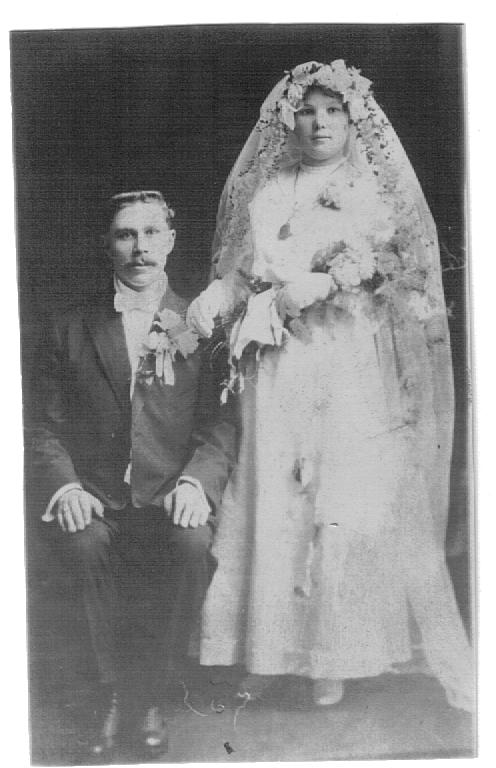
Adam and Nancy (Benikas) Pazemetsky wedding.

Adam and Nancy (Benikas) Pazemetsky wedding.

Ann tells me that by the time she was born, mother Nancy had already lost an infant son. Then, when Nancy went into labor two months prematurely with fraternal twins, her boy-twin was killed by a puncture wound to his skull during an attempted instrument delivery. When girl-twin Ann was born, the doctor, possibly to minimize his heartbreaking error, predicted that she would also die soon. Nancy reportedly replied in broken English, but with great anguish and determination, “ No, this baby is going to live!”

Baby Ann was placed in a cloth-lined wooden cigar box warmed day and night with hot water bottles. Ann says she was so small that she might have been fed with a dropper and diapered with handkerchiefs. But to mother Nancy’s tremendous credit, baby Ann did live and grow up with her older sister Helen.

Ann went on to graduate from Feitshan’s High School, marry Al, a federal highway engineer, work at Pillsbury Mills for many years and sing in the renowned choir at St. Vincent de Paul Lithuanian Catholic Church. Ann is a devoted former St. Vincent’s parishioner who served the church in many leadership roles, and was a founder of our local Lithuanian-American Club.

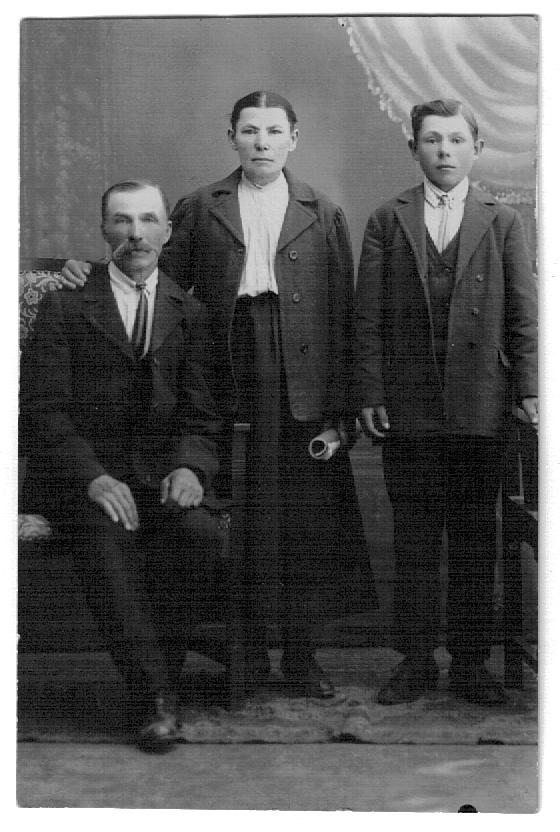
Nancy Benikas' father, mother, and brother Juozas

Nancy Benikas’ father, mother, and brother Juozas

For Ann’s immigrant mother Nancy Benikas, life demanded extreme bravery more than once. Ann often thinks now of the courage it took for her mother to sail all alone to America when she was just 18. Nancy’s Lithuanian family intended to send one of their daughters to live near Ann Mazrim, their maternal aunt in Springfield. Nancy was chosen when her sister became ill at the last moment. Then the first ship she was supposed to take sank before the passengers boarded. Fate smiled on her, however, when she was the only passenger not to get seasick during her subsequent transatlantic voyage.

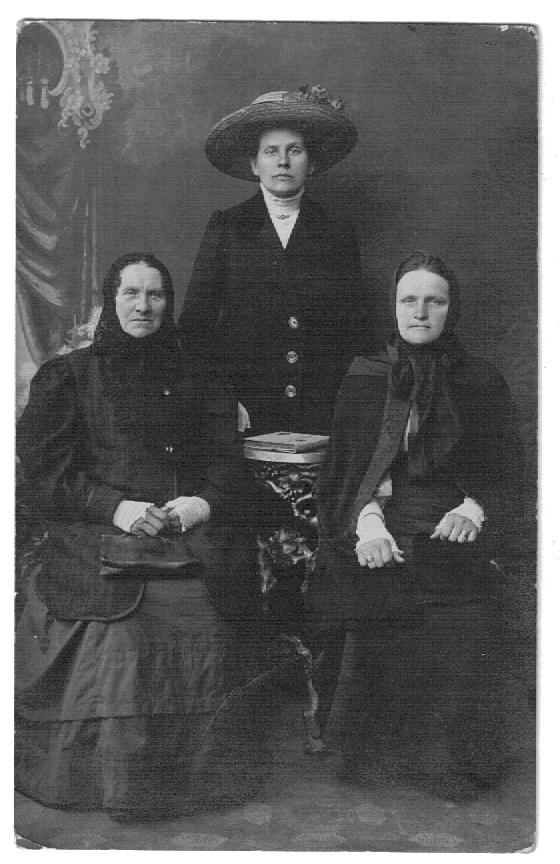
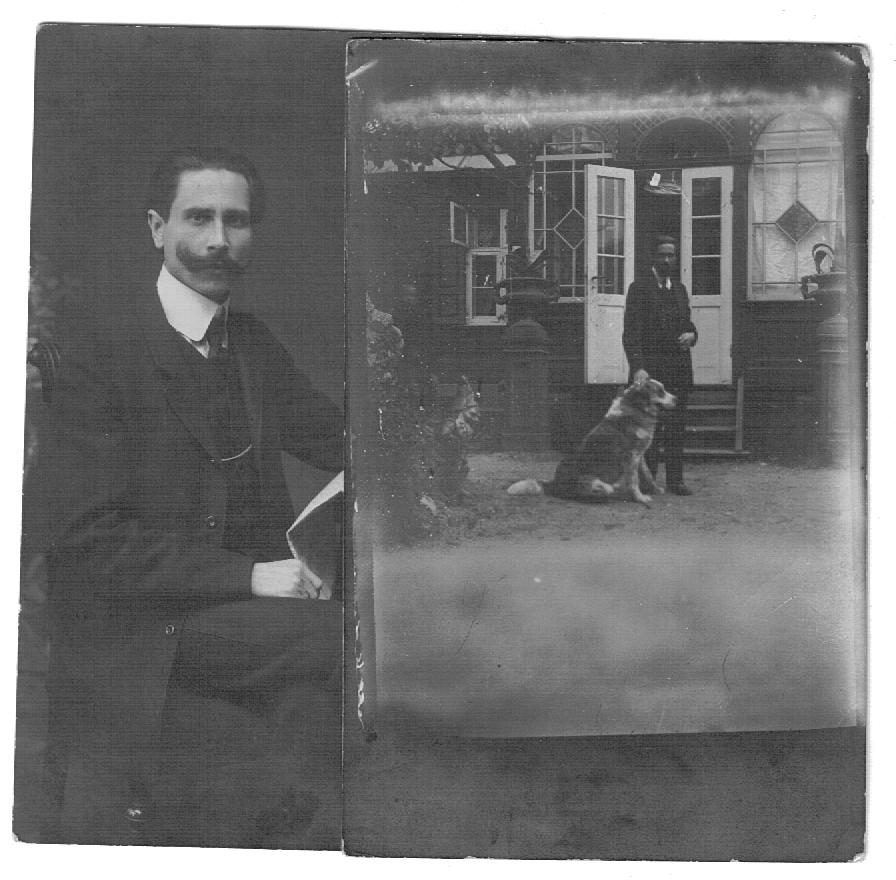
Adam Pazemetsky's mother and sister with unknown relative, in Lithuania

Adam Pazemetsky’s mother and sister with unknown relative, in Lithuania

After arriving in Springfield, Nancy married Panevezys, Lithuanin-born coal miner Adomas Pazimtsius (Adam Pazemetsky) 1884-1946. Both struggled to make the family’s living when the mines closed for the summer. Adam dug basements for $1 a day and scythed cemetery grass. Nancy cleaned homes for $1 a day. Later, possibly as a result of the “Mine Wars,” Adam worked at Pillsbury Mills.

Left photo: Adam Pazemetsky with clarinet, Mr. Karalitis with fiddle, and Mr. Petrovitch seated, with concertina.  Right photo: Pazemetsky with concertina.

Left photo: Adam Pazemetsky with clarinet, Mr. Karalitis with fiddle, and Mr. Petrovitch seated, with concertina. Right photo: Pazemetsky with concertina.

Ann remembers that even though the family lived at 17th and East Adams, almost two miles from St. Vincent de Paul Lithuanian Catholic Church, her father Adam, so devout that he always carried a pocket-size Lithuanian-language prayer book printed in 1863, insisted that she and Helen walk to and from church every Sunday. That may not sound so tough, except when you consider that on Christmas and Easter, when the high mass was at 5 a.m., this meant the children being up and out of the house around 4:30 in the morning.

While Adam carried his prayer book with him even into the darkness of the coal mines, his brother was able to express his religious devotion in the new republic of Lithuania (1918-1940) by becoming a priest, which is probably the course Adam would have liked to take, had he the opportunity. Adam found his life as a coal miner so difficult and limiting that mother Nancy later told Ann that her father often went outside in the evenings to cry so his children wouldn’t see him.

Adam's brother Siminojas (Simon), who went on to become a priest (at the family's home near Panevezys, Lithuania.)

Adam’s brother Siminojas (Simon), who went on to become a priest (at the family’s home near Panevezys, Lithuania.)

Ann also remembers with particular fondness her father’s musical talents with the clarinet and the concertina, which he frequently played at Lithuanian weddings. She reports that he often played a special wedding song he had written as the newlyweds arrived at the bride’s home for their reception and a sweet, hot swig of whiskey-based krupnikas.

As for brave mother Nancy, who saved the life of her 1.5 pound infant girl-twin after her boy-twin was killed at birth, Nancy was cared for in her old age in the home of that devoted daughter, the “baby in the cigar box.”

L to r:  Nancy Pazemetsky, friend Bernice Kurila, Ann Pazemetsky Traeger, circa 1985.

L to r: Nancy Pazemetsky, friend Bernice Kurila, Ann Pazemetsky Traeger, circa 1985.

Dedicated to the memory of Ann Pazemetsky Traeger, a dedicated, beautiful lady and my friend.

Image

Tisckos Furniture Story

23 Saturday Nov 2013

Posted by sandyb52 in Sandy's Blog

≈ 4 Comments

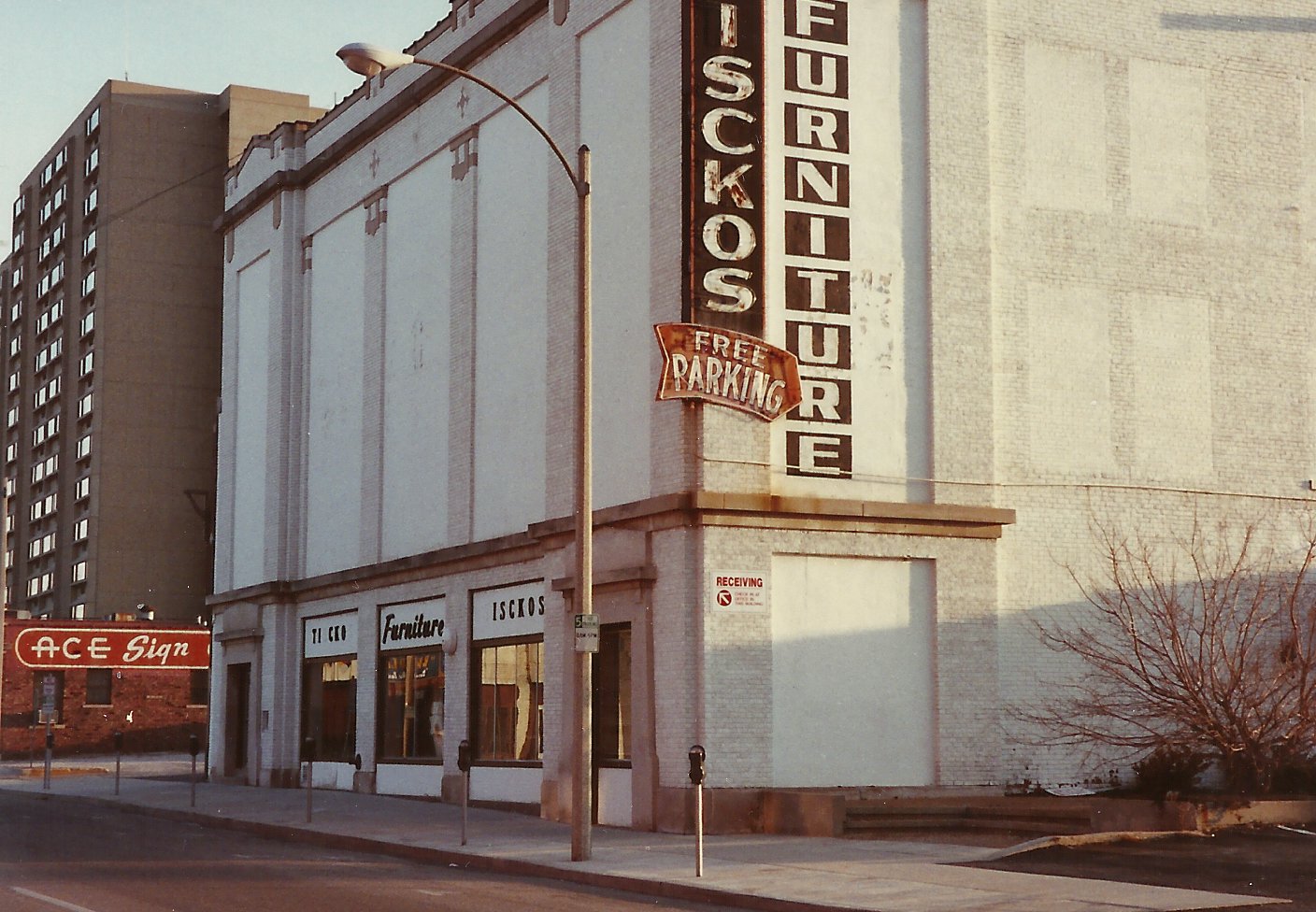
Tisckos Furniture, 322 N. 4th St., circa 1991

Tisckos Furniture, 322 N. 4th St., circa 1991

As we prepare for Thanksgiving, let’s remember a local Lithuanian-American-owned business that touched many of our homes and lives: Tisckos Furniture Barn, which operated on N. 4th St. from the 1940s to the early 1990s. I recently found out that the Tisckos store was where my mom and dad bought our family’s first couch and living room rug.

Coal miner’s sons who made good, Martin and Charles Tisckos (pronounced TISH-kus) opened their store at 522 N. 4th just after World War II–right in time for the post-War Baby Boom. Brother Charlie, a lawyer, was a silent partner. In the late 1950s, Martin purchased the old McCoy Laundry building at 322 N. 4th and moved the store to this much larger four-story building.

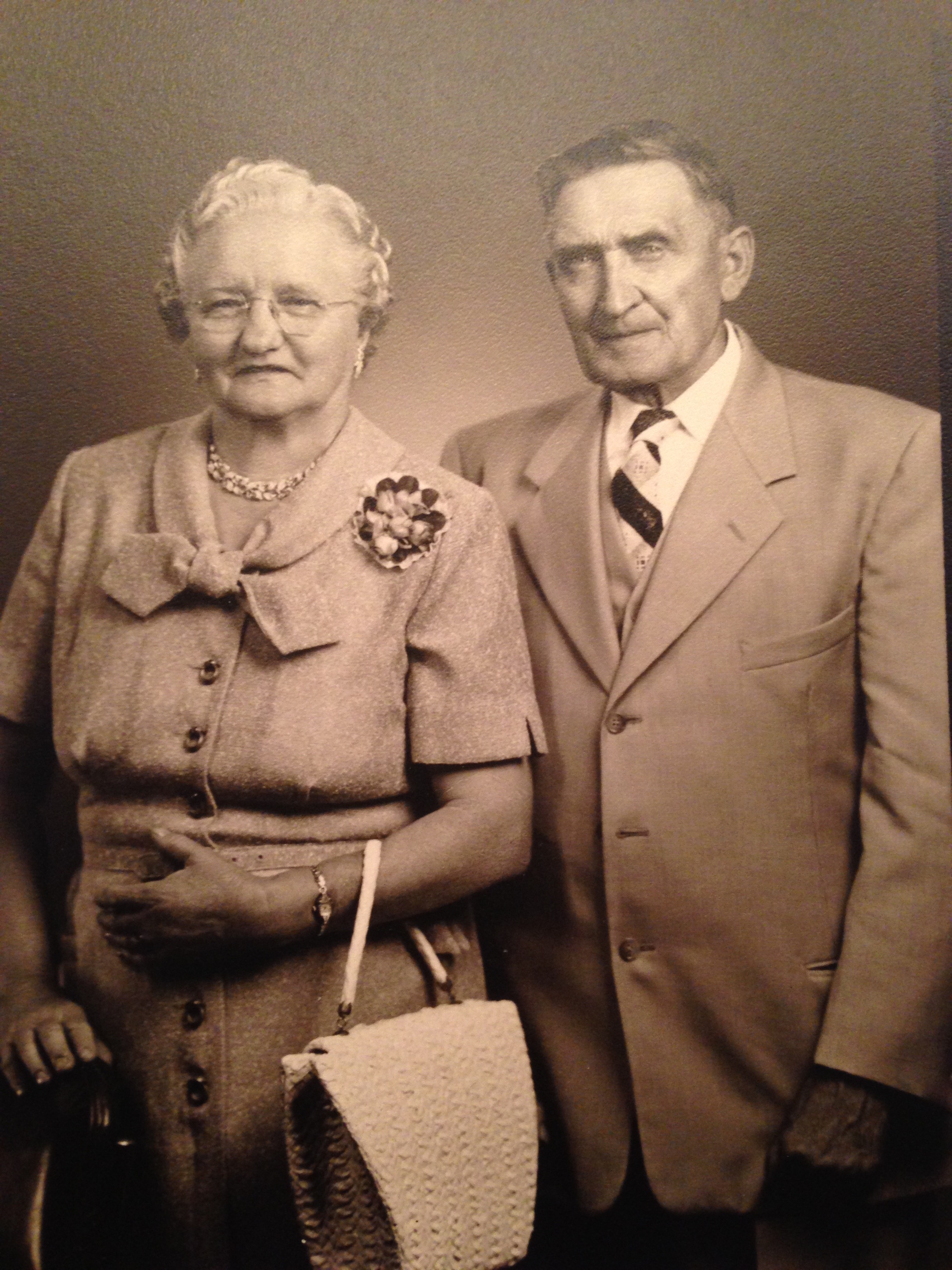
Jonas and Alexandra (Alice) Urbas Tisckos.

Jonas and Alexandra (Alice) Urbas Tisckos.

Chuck Tisckos, Charlie’s son, recalls that Tisckos Furniture carried quality home furnishings, bedding, appliances and carpeting: brands like Heywood-Wakefield, Flexsteel and Hotpoint appliances. The store was also an exclusive Broyhill distributor. I recently learned I have another personal connection with the store: My father-in-law Ray Gietl laid carpet that customers purchased there.

Martin and Charlie’s father was Lithuanian immigrant John Tisckos, born in 1888, who came to Springfield via Scotland, where he was an apprentice tailor. In Springfield, John Tisckos was a career coal miner, retiring from the New North Mine in 1952, around the same time the mine closed. Martin and Charlie’s mother was Lithuanian immigrant Alice Urbas. John and Alice (Urbas) Tisckos belonged to St. Vincent de Paul Church, which John probably helped excavate and build. Martin and Charles had siblings Adolph, Ann (Wisnosky), and William (Vance).

Della and Charlie Tisckos wedding day, in front of St. Vincent de Paul Church.

Della and Charlie Tisckos wedding day, in front of St. Vincent de Paul Church.

Tisckos son Charlie graduated from the now-defunct University of Illinois and Lincoln College of Law. He married Della, the daughter of Lithuanian immigrant John Grenowage (pronounced GREN-a-vitch), born in 1888, and German immigrant Mina Schiller, born in 1891. John Grenowage, later Green, was a coal miner who came to Springfield via Pennsylvania and worked the mines here until the 1930s, when mass layoffs prompted strikes and the local “Mine Wars.” While their dad John was mining, Della and her siblings John, William, and Edward, lived next to the Springfield circus grounds at 11th St. and Black Ave. Later, the family farmed southwest of Taylorville, on Scrapeford Road.

The beautiful Della Tisckos, my mother's best friend, with husband Charlie and daughter Nancy, circa 1942.

The beautiful Della Tisckos, my mother’s best friend, with husband Charlie and daughter Nancy, circa 1942.

Tisckos son Martin and wife Marinella (Marni) had three children, Leslie Candace, Marty and Scott. Martin died in 1996; Charlie in 1998. Their descendants did not carry on the store. Thinking about it, I’m amazed that it stayed open until just a few years before the Tisckos brothers died.

Marni & Martin Tisckos

Marni & Martin Tisckos

Tisckos son Charlie’s son Chuck married Beryl Jean (Parish) and has one son, Ben. Ben and wife Kathy have a daughter, Chelsea, who is a senior at Missouri State Univeristy. Charlie and Della’s daughter Nancy married Richard Vicars and has a daughter, Lisa, and sons Richard, Jr. and Patrick. Many thanks to Chuck Tisckos for the photos and information in this post.

Third from left, middle row: Martin Tisckos.  Second from right, middle row: Charlie Tisckos.

Third from left, middle row: Martin Tisckos. Second from right, middle row: Charlie Tisckos.

My First Blog “Social”

15 Friday Nov 2013

Posted by sandyb52 in Sandy's Blog

≈ 5 Comments

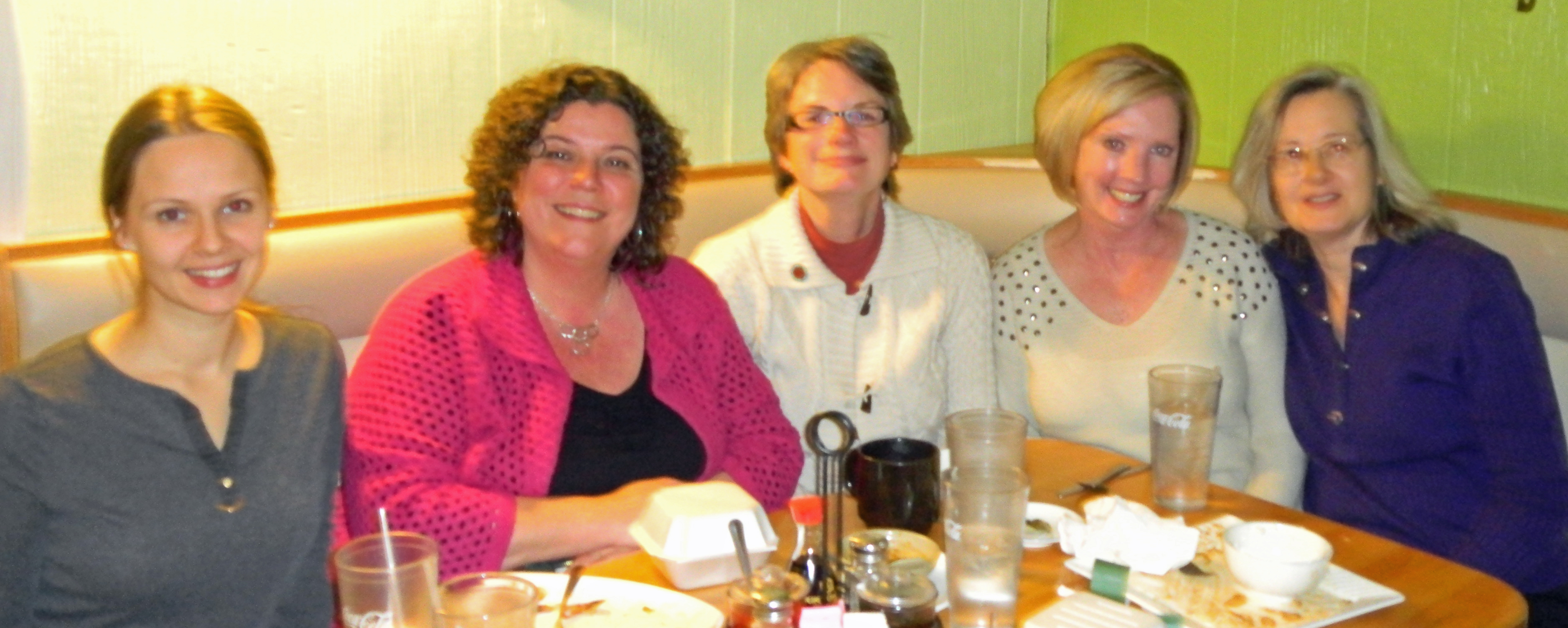
Lithuanians in Springfield: l to r: Asta, Judy, Maria, Joan, Sandy

Lithuanians in Springfield

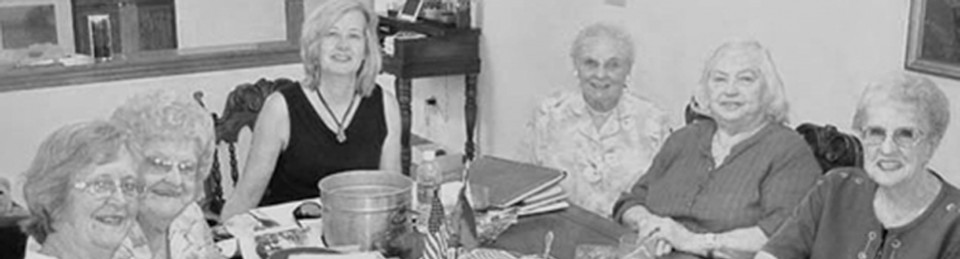
One from Lithuania, two from Chicago and two from Springfield, but all “Lithuanians in Springfield” for the moment, met this past Wednesday, November 13, for a lively dinner at Little Saigon.

By pure coincidence, the company and the conversation spanned all three major waves of Lithuanian immigration to Springfield (and the U.S.): two of us were descendants of the First Wave of Lithuanian immigration around 1900, two of us were descendants of the Second Wave just after World War II, and one was from the post-1991 Third Wave that has come ashore mostly in Chicago and the British Isles.

We talked about everything from the constant evolution of the Lithuanian language in the old country while immigrant communities preserve the language frozen in time, to the possibility that the missing St. Vincent de Paul’s “war dead” plaque might have been placed in another local church.

Two of us actually spoke Lithuanian–working out possible translations of Grandmother Marcella Yuscius’s saying, “butt like a stove.” (You had to be there).

Can you guess who the Lithuanian speakers in this photo are?

Young Asta talked about making a special Lithuanian Christmas pastry for the Lithuanian-American Club’s upcoming Christmas Party.

If any of my other readers has an idea for a get-together, please let me know–it could be fun!

Many thanks to Asta, Judy, Maria and Joan for helping to bring my online blogging experience, for a few magic hours, into the real world.

Our World War II Veterans

11 Monday Nov 2013

Posted by sandyb52 in Sandy's Blog

≈ 6 Comments

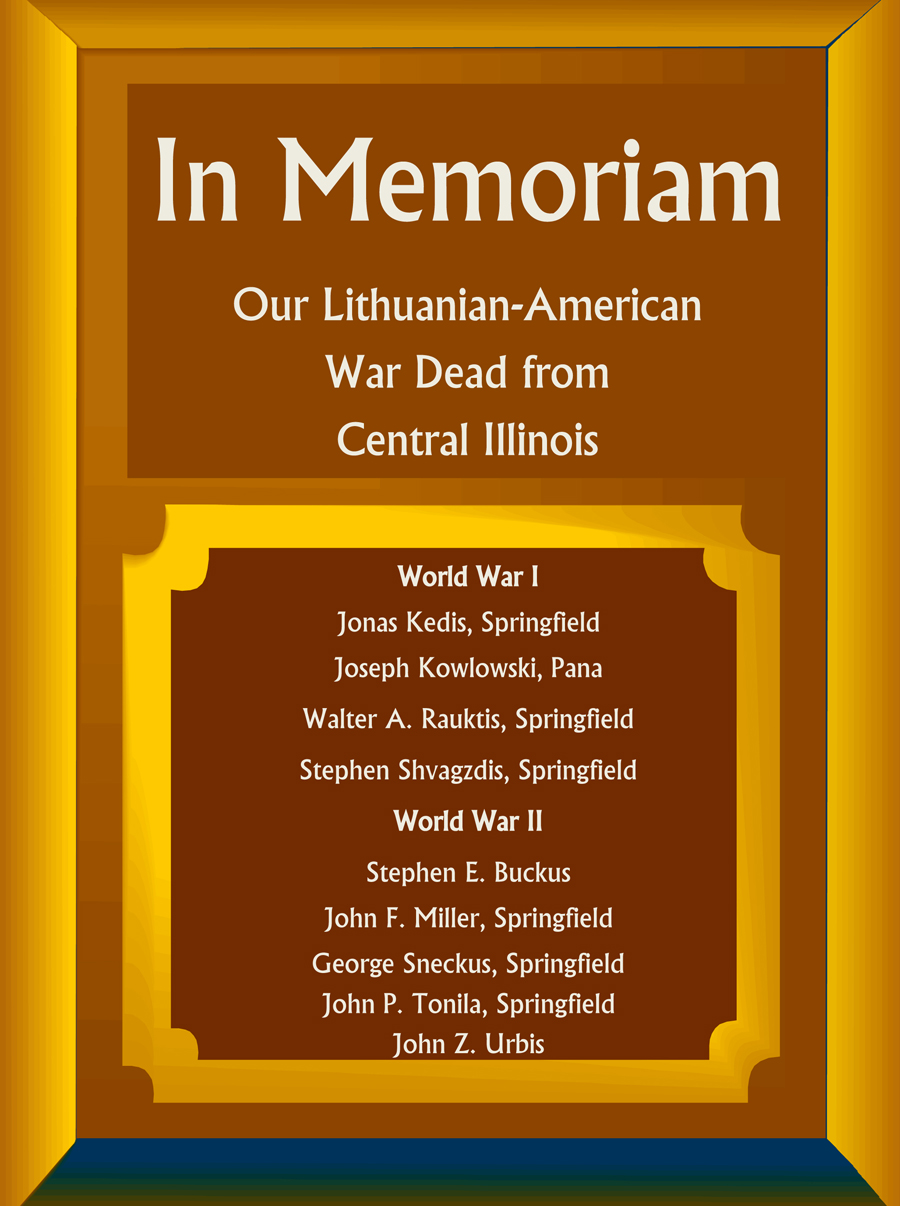
Today and yesterday’s posts are part of a quest to digitally re-create the lost memorial plaque honoring the war dead from Springfield’s former St. Vincent de Paul Lithuanian Catholic Church. Although we have done our best research, finding the actual plaque would allow us to be sure of the names of the men who should never be forgotten. We could also then ask another Catholic Church in Springfield, perhaps the Cathedral of the Immaculate Conception, where the first Lithuanian Catholic immigrants organized more than 100 years ago, to re-mount the plaque in a sacred place of honor.
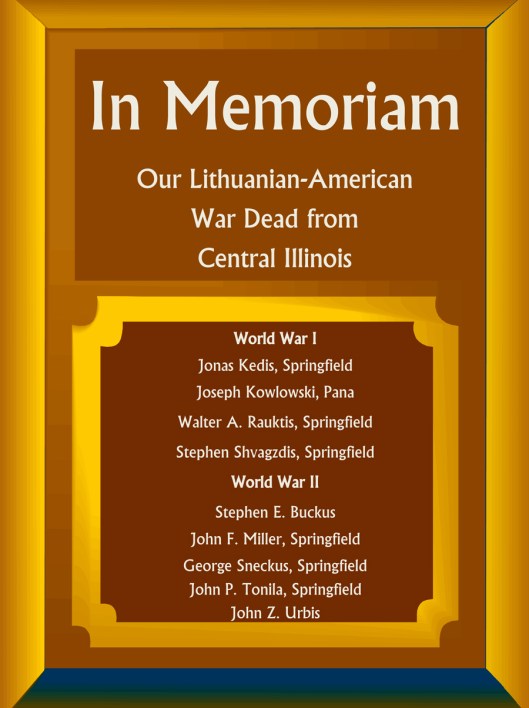
Designed by Melinda McDonald of Rochester, Ill.

Designed by Melinda McDonald of Rochester, Ill.

I owe my knowledge of the missing memorial plaque to the devoted memory of Maria Fry Race, granddaughter of Agnes Tonila Gooch, who often spoke of her brother Johnny, Maria’s great uncle, who was honored on it. The State Journal-Register newspaper just carried two brief items about our quest for the plaque. See http://www.sj-r.com/breaking/x825429360/Springfield-woman-searches-for-missing-war-plaque and
http://www.sj-r.com/letters/x825429862/Letters-Views-on-Veterans-Day
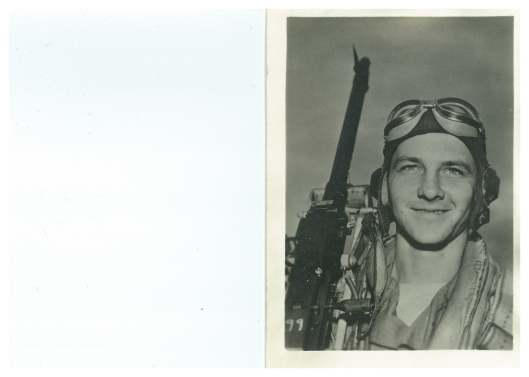
George Sneckus of Springfield after completing training to be a waist gunner. Courtesy of Teresa (Sneckus) Gregoire.

George Sneckus of Springfield after completing training to be a waist gunner. Courtesy of Teresa (Sneckus) Gregoire.

Tony Stockus WWII infantry sergeant.Mary Stockus Roach

Tony Stockus, WWII infantry sergeant, courtesy of Mary (Stockus) Roach.

Blazis.Army

William Blazis, Jr., in World War II army uniform. Courtesy of Irene Blazis.


Springfield Lithuanian-American World War II Deaths

Whereas the Lithuanians who fought for the U.S. in World War I were very recent immigrants, World War II was fought by the U.S.-born sons of our local immigrants. Sixty-eight members of St. Vincent de Paul Lithuanian Catholic Church served their country in World War II, according to the Illinois State Journal-Register.

Veterans.horizontal rose

John Milleris

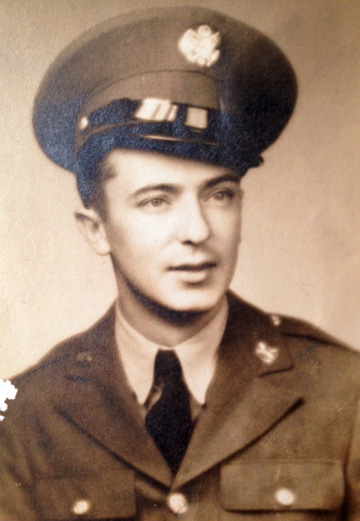
Corp. John F. Miller (Milleris), 26, of Springfield died in military service in 1944. He was killed in an automobile accident in Savannah Beach, Ga., the Eighth Army Air Force camp where he had been stationed since 1942, when he enlisted and underwent basic training at Seymour Johnson Field, Tenn. Corp. Miller was the brother of Jeanette, Florence, Louise, and twin Peter S. Miller (who was serving as a sergeant with the U.S. Army in Corsica, France when John was killed.) All were children of Sylvester and Mary (Moskers) Miller. Sylvester was born in Lithuania and the family operated Miller’s Market at 121 W. Jefferson St. for many years. John had been employed there before working at the Wright Aeronautical Co. in Dayton, Ohio at the time of his enlistment.
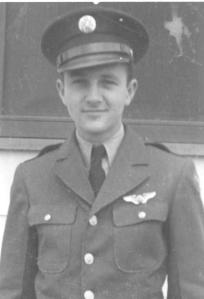
Veterans.Sneckus

Another of those who died too young was George Sneckus of Springfield, the son of immigrants George and Nelly Sneckus. After graduating from Lanphier High School, he earned the rank of staff sergeant in the US Army Air Force, 100th Bomb Group, and was a 21-year-old “waist gunner” on one of his first missions, on a B-17 Bomber, when he was shot down and killed over Germany only a few weeks before the Normandy invasion. George’s body initially was recovered by the Germans from a farmer’s field and buried in a mass grave.

Many years later, George’s niece Teresa (Sneckus) Gregoire, daughter of George’s older brother Julius, learned of her uncle’s brave sacrifice while fighting to save England from invasion, and of the retrieval and re-burial of his remains in Belgium with many other U.S. aviators. In June 2001, Teresa took her mother, aunt, and two cousins to visit and decorate George’s grave in the Neuville-En-Condroz Permanent Cemetery near Liege, Belgium. Teresa says it was a very moving experience because no one from George’s family had ever visited his grave. Before traveling overseas to honor her uncle, Teresa had located the daughters of the two other men killed on George’s plane so she could also visit and decorate their graves.
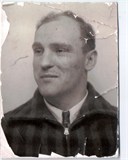
John Tonila

John P. (Johnny) Tonila was one of nine children of Lithuanian-born coal miner John George Tonila and Agatha (Mankus) Tonila, who immigrated separately around 1900. A local Golden Gloves boxing champ, Johnny drove a delivery truck for a living. He was not quite 32 and engaged to be married when he gave his life in the Battle of Monte Cassino near Rome, Italy in May 1944, while serving as a cook in a mess tent with the U.S Army 338th Field Artillery Battalion.
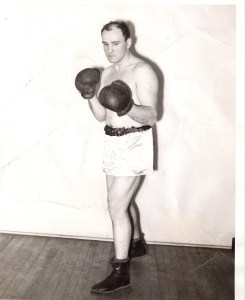
Johnny Tonila, amateur boxer

Johnny Tonila, amateur boxer

A technician fifth grade, Johnny was not drafted—he enlisted in 1939 and served in the Philippines before the U.S. entered World War II in Dec. 1941. Beloved and never forgotten by his many sisters and brothers, Johnny is also remembered in absentia by great-niece Maria Fry Race, whom he never met. Maria believes he is honored on St. Vincent de Paul’s missing “war dead” plaque.

veterans.vertical rose

Steven E. Buckus, 22, of 1403 Osbourne, Springfield, a private first class in the U.S. Army who had fought in North Africa, Italy, France and Germany, was reported MIA in Germany on April 8, 1945, in the closing days of the war in Europe. His remains were not recovered and returned to his mother, Mildred Veronica (Peleckis) Buckus, for burial in Calvary Cemetery, until January 1949.

Six months prior to enlisting in the fall of 1942, Stephen spent two weeks in the hospital as the result of an auto accident in which he was a passenger. He had been employed by the Cudahy Packing Co. and had five sisters. His sister Helen Sullivan was informed her husband Henry had been killed in Belgium just a few months before the family was informed about Stephen.

veterans.vertical rose

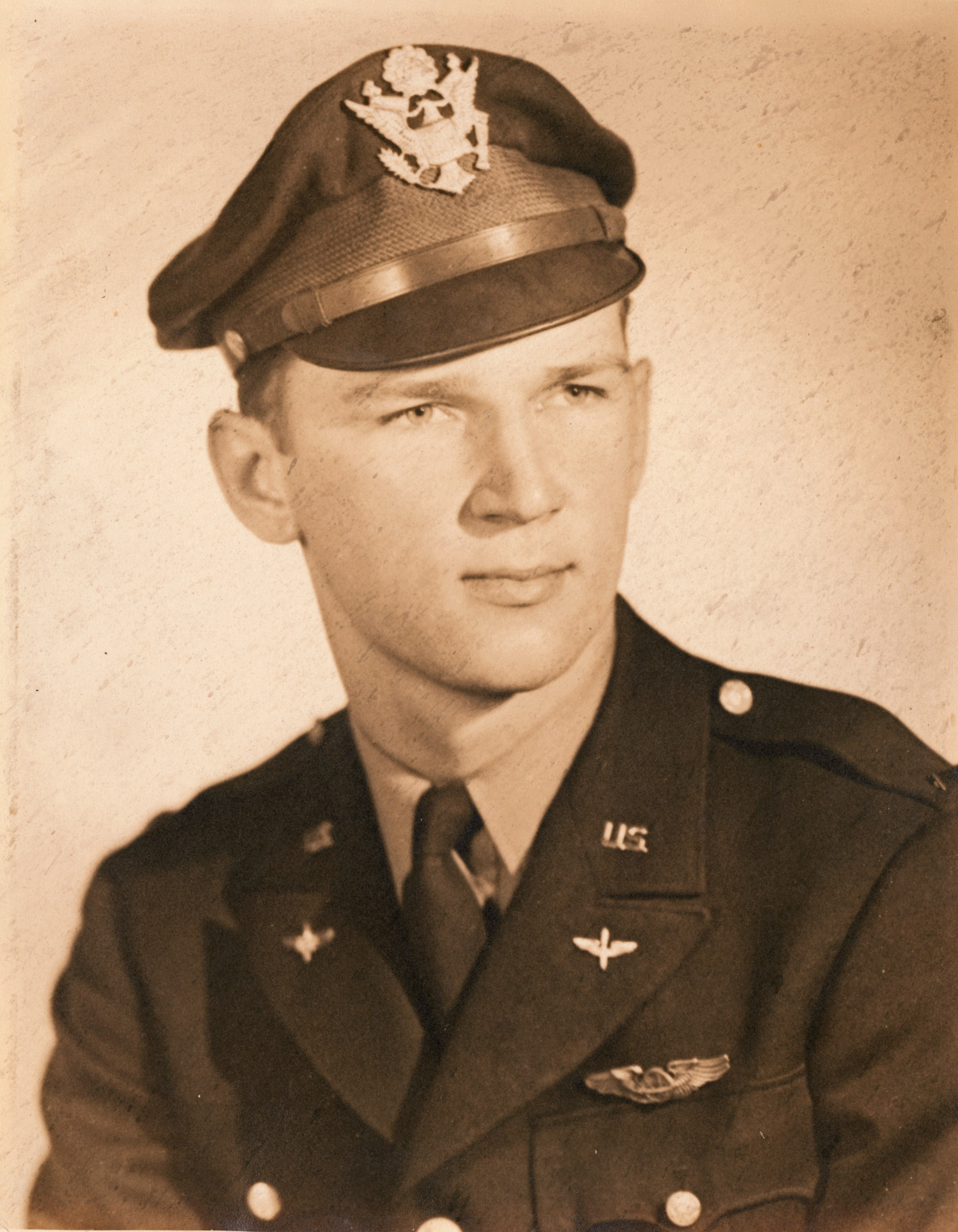
John Z. Urbis of Riverton, a technical sergeant with the U.S. Army, is buried in the Cambridge Permanent Cemetery in Cambridge, England. An aerial engineer on a “Flying Fortress,” John was shot down over Hamburg, Germany in 1943. His parents, John and Anna Zebrawskie Urbis of Riverton, received notice of his death on August 20, 1943, according to accounts in the Illinois State Journal.

John, Jr. had been a bookkeeper for eight years at Yelton-Weaver Supply Co. when he enlisted in December 1941. Posthumously, he was awarded the Distinguished Flying Cross and the American Legion Gold Star. Prior to his death, he had been cited for “extraordinary achievement in bagging three enemy planes” and received the air medal with three oak leaf clusters. He was Riverton’s first casualty of the war. He was an only son, with one sister: Helen Shattuck Callan.

Veterans.horizontal rose

Veterans Not Killed in Action

Frank I. Makarauskas

Frank I. Makarauskas

Frank I. Makarauskas of Springfield was the U.S.-born son of immigrants Stanley and Agnes Makarauskas and the much younger brother of Lithuanian-born Michael and John (Makarauskas) Mack, Springfield’s self-made McDonald’s restaurant mogul. Frank’s widow Dorothy (Roth) Makarauskas, formerly of Springfield, reports that Frank was drafted into the U.S. Air Force right after he graduated from Feitshans High School in 1943 at age 18. Due to his lengthy training to learn to navigate a B-24 bomber, World War II was over before Frank saw combat. But that training changed his life. After the war, Frank earned an electrical engineering degree at Michigan State University on the G.I. Bill, becoming the first in his family to attend college. He later worked as an engineer for Central Illinois Power Co. in Mattoon and Marion, and for the Michigan Department of Commerce in Lansing.

William J. Urban

William J. Urban

William J. Urban of Springfield served in the U.S. Navy. (Photo courtesy of granddaughter Debbie Davis Ritter.)

John P. Yuskavich, Jr.  served in the U.S. Army during World War II

John P. Yuskavich, Jr. served in the U.S. Army during World War II

Stanley J. Yanor of Springfield was the son of a Lithuanian immigrant who worked at the coal mine at the corner of Chatham Road and W. Washington St. After attending Du Buois Grade School and Springfield High School, Stanley enlisted in the U.S. Army and served as a sergeant in the famous Battle of the Bulge. Later, Stanley’s Lithuanian language skills gave him a role as a translator after the Allies invaded Germany, where tens of thousands of Lithuanian refugees had fled as the Red Army reached their country in the summer of 1944. After the war, Stanley owned an insurance adjusting business briefly in Springfield, then in Champaign. (Information from Donald Casper.)

Tony Yezdauski

Tony Yezdauski

Tony Yezdauski of Springfield served as a sergeant with the U.S. Army HQ BTRY 229 AAA in New Guinea, specifically the island of Morotai, beginning in March 1942. Daughter Marilynn Doherty reports that she was born in September 1942, so did not meet her dad until she was almost four years old. Tony participated in the Asiatic Pacific Theatre Campaign, and made the most of his time off, according to Marilynn, who says Tony fished and shared his catch with other soldiers, and came home with many beautiful shells.

article picturing Broneslaw Dedinas of Springfield

article picturing Broneslaw Dedinas

Anton P. Casper of Sangamon County, born in 1910, was a bus or truck driver when he enlisted in August 1941. He was a private with the Army’s Field Artillery.

William J. Casper of Sangamon County was born in 1921. He enlisted as a private in the Army Air Corps in July 1941.

Thomas J. Kasper of Sangamon County was born in 1909. He was married and a meat-cutter by trade when he enlisted as a U.S. Army warrant officer (private) in December 1942.
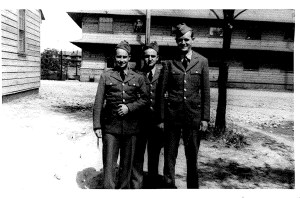
Charles Galman, son of Jonas Galminas (John Galman) Sr.  on far right

Charles Galman, son of Jonas Galminas (John Galman) Sr., center


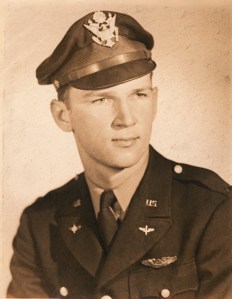
John Nevada (Nevardoskus) served as a U.S. Army ski trooper in Italy during WWII.
veterans.vertical rose

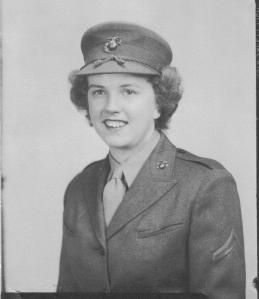
Bernice Bernotas, World War II

Bernice Bernotas, World War II U.S. Marine Corps Women’s Reserve.

veterans.vertical rose

Veterans.horizontal rose

Following is a list of many Sangamon County Lithuanian-Americans who served in World War II, based on painstaking research of public records by Tim Race of Elmhurst, Ill., as well as submissions from descendants and other sources. Those who lost their lives are in bold.

Leo Ambrose, Frank L. Arnish, William J. Augustitis (Army, Bronze Star), Edward J. Babeckis, Joseph J Babeckis, Clement J. Banaitis, Veto (Vytautas) F. Banaitis (Army), Adam Bender, Anthony P. Bernotas (Army), Bernice Bernotas Stephens, Vetout (Vytautas) C. Bernotas, William V. Blazis, John F. Brazitis, Walter Brazitis, Stephen E. Buckus, Anton P. Casper, William J. Casper, John Chenski, Edward C. Chernis, Joseph J. Chernis, Alfred F. Cizauskas, Broneslaw Dedinas, Domenick Detrubis, John G. Dombroski, Charles Dumbris, Florie J. Evinsky, Joseph J. Evinsky, Charles J. Galman, Peter Gregalunas, John Grigiski, Frank W. Grinn (Army–Asiatic-Pacific Medal with two bronze stars), Frank Gudausky (Navy), Charles Gurgens (Marines), Thomas J. Kasper, William Kavirts, Joseph P. Kellus, Stanley Klickna, William Klutnick, John Klutnick, Al Klutnick, Barney J. Kurlytis, John Kutselas, Albert T. Kwedar (flight surgeon, Army Air Force), Thaddeus Lamsargis, Joseph J. Lauduskie, William J. Laukaitis, Frank I. Makarauskas, Edward J. Masus, Victor Matula, Joseph Martinkus, John W. (Guoga) McCaskey, Thomas L. Micklus, William J. Micklus, Walter J. Mikelonis, Corp. John Miller (Milleris), Peter S. Miller (Army), William D. L. Morris, Joseph R. Morris, John T. Nevada (Nevardoskus–Nevidauski)–Army 10th Mountain Division, Purple Heart; Frank Pakutinsky (Pakutinskas), George A. Patkus (Army), Ralph M. Patkus (Navy), Frank W. Pupkis (leader of the UMW local), Tony Rachkus, George A. Rackauskas, Jack R. Relzda, Joseph J. Repske, George E. Rudis, Stanley O. Senalik (Army, two bronze starts), George Rudis, John F. Rumsas, John Edward Schmidt (Navy–his mother was a Blaskie-Novick), Alban C. Shadis, Frank Shadis, William J. Shaudis, Felix Shimkus (four battle stars, WW II and Korea), Frank S. Shimkus, John D. Shimkus, Joseph J Shimkus, Stanley Shimkus (U.S. Marine, owner of Stanley Supply and Stanley’s Plumbing and Heating for 26 years) William C. Shimkus, Anthony G Sirtout, George Sneckus, Julius Sneckus, Anthony Sockol, Edward J. Stanks, Dominick J. Stankus (Army), Anthony P. Stockus, Charles J. Stockus, Martin Stockus, Frank J. Surgis, Albert J. Swinkunas, William J. Tater, Adolph W. Tisckos (Navy), Charles G. Tisckos (Navy), Martin Tisckos (Army), John P. Tonila, William J. Urban, John Z. Urbis, Anthony F. Usalus, Joseph J. Usalis, Joseph P. Welch (Wilcauskas)–Navy, George J. Wisnosky (Army), Joseph Yacubasky (Yates), Walter Yakus, Joseph Yamont (Jomantas), Joseph W. Yanor, Stanley Yanor, Stanley Yuscius (Army), Tony Yuscius (b. 1923, served with the Army in the Middle Eastern theater and earned three bronze service stars), Anthony J. Yuskavich, John P. Yuskavich.

Note: Records discovered by Genealogics show that 62-year-old coal miner Frank Meszeikis, who lived on South Walnut St., registered for the World War II draft. A resident of Springfield for 45 years and member of Progressive Mine Workers of America Local 63, Frank was crushed by a roof fall in Panther Creek No. 5, Dec. 23, 1947.
Honoring Our World War I Veterans

10 Sunday Nov 2013

Posted by sandyb52 in Sandy's Blog

≈ 5 Comments

Designed by Melinda McDonald of Rochester, Ill.

Designed by Melinda McDonald of Rochester, Ill.

More than 50,000 Lithuanian-Americans fought for the United States in World War I. This remarkable number was later leveraged to lobby U.S. President Woodrow Wilson to recognize the newly independent Lithuanian state that emerged from the War’s aftermath.

J. J. Straukas, WW I

J. J. Straukas, WW I “doughboy” portrait, 1918

Ironically, the vast majority of the young Lithuanian men who served America in World War I were fighting for a country they barely knew. Most were very recent, impoverished immigrants—not yet citizens–who barely spoke or read English and who, even more ironically, had fled Lithuania to escape 25-year conscription by the Russian Czar. When we think of Jonas (John) Kedis, Joseph Kowlowski, Walter Rauktis, and Stephen Shvagzdis, four young immigrants to Central Illinois who died in the War to End All Wars, we must face the fact that they died violently, far too young, and so very far from family and home. This is the tragic reality of war even for non-immigrants. But the fact that these young Lithuanian-born men were shipped back across the Atlantic to die violently so soon after they had crossed the Atlantic with so much courage and hope strikes me with a special poignancy. Veterans.horizontal rose Thanks to exhaustive research of U.S. Census, draft and service record databases by our Lithuanian-American friend Tim Race of Elmhurst, Ill., we have the partial stories of Jonas, Joseph, Stephen, and Walter, whom we now honor in memory. veterans.vertical rose Jonas (John) Kedis, born about 1890 in Kaltinenai, Lithuania, arrived in the U.S. in April 1910 from the Dutch port of Rotterdam on the ship Rijndam. Although he lived in the 700 block of E. Washington St. in Springfield in 1916, Jonas was living and working in Chicago as an iceman for Commonwealth Ice Co. by the time he registered for the draft on June 5, 1917. About 27 years old of medium build with light brown hair and blue eyes, Jonas was an “alien” who had sworn an oath of loyalty to the U.S., and declared no dependents on his papers. He was killed on Oct. 9, 1918 while serving as a private with the U.S. Army’s 1st Engineer Regiment, 1st Infantry Division, and is buried in the Meuse-Argonne American Cemetery in Romagne-sous-Montfaucon, Lorraine, France. Ironically, if Jonas had survived another five weeks, he would have made it to armistice. kedis According to the New York Times, 26,277 Americans died during the 47 days of the Meuse-Argonne Offensive as they threw themselves against the most dense, sophisticated and deadly fortifications in history, turning the tide of the Great War. “It remains, to this day, the deadliest battle in American history.” The reason? “The Germans had had four years to set up their defenses in the area, and they didn’t waste a single day of it: Everywhere you go in the Argonne, you’ll find (evidence of) German trenchworks, pillboxes, blockhouses, artillery pits,” once complete with officers’ villas, rest camps, waterworks, and electrification. The Times also notes that the American Cemetery at Romagne-sous-Montfaucon, Lorraine, France, where Pvt. Kedis is buried, is the largest American cemetery in Europe from either World War I or II, holding 14,246 dead. To read more about how dug-in the Germans were, and how Americans turned the tide at Meuse-Argonne, see http://www.nytimes.com/2014/12/28/travel/in-france-vestiges-of-the-great-wars-bloody-end.html?action=click&contentCollection=Opinion&module=MostEmailed&version=Full&region=Marginalia&src=me&pgtype=article veterans.vertical rose Walter A. Rauktis, born in Veikanus? (possibly Viekšniai), Lithuania in 1891, was mining for the Jones & Adams Coal Co. on RR #8 and living at 2518 Peoria Road in Springfield when he registered for the draft on June 6, 1917. He described himself as single, but with a mother and father who depended on him for support. Walter had blue eyes and light brown hair, and was not yet a citizen, either, when he was killed in service to our country as a private with the U.S. Army 47th Infantry Regiment, 4th Infantry Division on July 29, 1918. Walter is buried in the Oise-Aisne American Cemetery in Fere-en-Tardenois, France.
Pvt. Rauktis is in the back row, right edge, in this photo from the  Illinois State Journal-Register.

Pvt. Rauktis is in the back row, right edge, in this photo from the Illinois State Journal-Register.

veterans.vertical rose Young coal miner Joseph Kowlowski, born in Marijampole, Lithuania in 1893, migrated from the Pennsylvania coal fields to Pana, Ill. sometime after 1910. He would have been in Christian County for 7 years or less when he was drafted in 1917. (We hope to get a few more details about Joseph’s life, death and burial place soon.) veterans.vertical rose Stephen Shvagzdis was born in 1890, the son of Mrs. and Mrs. Michael Shvagzdis. He was living at 1413 E. Adams in Springfield when he entered the service in April 1918. He trained at Fort Dix, NJ, was shipped overseas in June 1918, and served as a private with Company K of the 148th Division of the U.S. Army in the famous Meuse-Argonne Offensive. He was killed in action Nov. 11, 1918, Armistice day of the War to End All Wars. He could have missed only by hours or minutes being honored as the very last soldier in the entire War to be killed: American Pvt. Henry Nicholas Gunther of Baltimore, 23, shot through the head at 10:59 a.m. on Nov. 11, 1918. A small monument still stands on the spot where Pvt. Gunther was killed, probably not far from where Pvt. Shvagzdis fell, near the tiny village of Chaumont-devant-Damvillers.

From the Sangamon County Honor Roll

From the Sangamon County Honor Roll

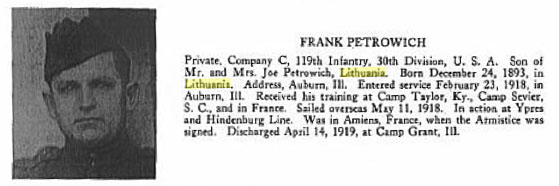
The following World War I veterans entries from the Springfield City Directory were located by genealogy company, Genealogics. Veterans.horizontal rose Kristute Charles.SDirectory Patrilla Stanley.SDirectory Paulauskas Joseph.SDirectory Petrowich Frank.SDirectory Raczaitis Charles M. SDirectory Straukas John Joseph.SDirectory Below is a larger list of Lithuanians from Central Illinois who registered for the draft and possibly served our country in World War I. Their names and counties are from a database developed by Genealogics in much-appreciated voluntary assistance to this project. Each is from Springfield unless otherwise noted. Many other Lithuanian-Americans from our area were drafted or enlisted and served in World War I, but their service could not be verified because they listed their country of origin as Russia. (Lithuania was part of the Russian Empire until after World War I). Names in italics definitely served and were submitted by their descendants or research sources. Two survived the War only to die in our local coal mines. Veterans.horizontal rose William Blaskie, Joseph Damkus (came to Springfield in 1898, worked as a policeman after 1906 and lived with his wife Isabel Adomaitis at 1809 N. 10th St.), Mike Bubnis, Frank Embrolitus (Macoupin, killed in coal mining rock fall, Gillespie, 1941), Andrew Fraier, Joseph Gedman, Anthony Glemza, Charles J. Grigas, John F. Gurgens (Army, Camp Wadsworth, limited duty), John Kalvatis (Montgomery County), Mike Kavaloski (Macoupin County), Franciscus J. Krasauskis, Charles Kristute (Pawnee), John Kukowich, John Kunski (Montgomery County), Jurgis Lanauskas, Stanley Norbut, Stanley Patrilla (Auburn—also lived on Jefferson St. in Springfield with the Papir family), Charles Paulanski (Logan County), Joseph Paulauskas (moved to Detroit after the war), John Petkus, William Petraits (Christian County), Joseph Petrushunas, Stanley Petrokas, Anton J. Petrouch (Divernon), Frank Petrowich (Auburn), Joseph Plaskas, Joseph J. Poder, Alex Potsus, Charles Raczaitis (Divernon–gassed in action), George Ragoznice, Charles Rumsas (Sangamon County), Sylvester Senkus, John Joseph Straukas (lived in Riverton as a nephew of the Grigiski family), George Stravinski, Frank Tonelis, John Treinis, Mike Trumbit (Macoupin County), Frank B. Vinson (Christian County), Ignatz Wecksnis, Paul Widowski (killed in a Madison Coal Co. mine explosion, Divernon, 1923), John Joseph Yacubasky (Yates), Stanley (Junkeris) Yunker (went on to become the long-time pastor of St. Vincent de Paul Lithuanian Catholic Church), Andrew Zelowski (Christian County), Joseph Zvingilas. Veterans.horizontal rose

Blogroll

  • Enos Park Neighborhood Improvement Association
  • Illinois State Historical Society

Lithuanian Websites

  • Amber Reunion
  • Lithuanian World Center
  • Lithuanian-American Club of Central Illinois
  • Lithuanian-American Community, Inc.
  • Lithuanian-American Publications
  • Lithuanians Of Arizona
  • LTnews.net
  • LTUWorld
  • The Lithuania Tribune

St. Vincent’s murals resurface

Two of the murals from St. Vincent de Paul's Catholic Church have resurfaced. Take a look!

Search

Enter your email address to follow this blog and receive notifications of new posts by email.

Join 142 other subscribers

E-mail us!

Questions or comments? Please e-mail sandybaksys@gmail.com.

Email us!

Questions or comments? Please e-mail sandybaksys@gmail.com.

Blog at WordPress.com.

Privacy & Cookies: This site uses cookies. By continuing to use this website, you agree to their use.
To find out more, including how to control cookies, see here: Cookie Policy
  • Subscribe Subscribed
    • Lithuanians in Springfield, Illinois
    • Join 142 other subscribers
    • Already have a WordPress.com account? Log in now.
    • Lithuanians in Springfield, Illinois
    • Subscribe Subscribed
    • Sign up
    • Log in
    • Report this content
    • View site in Reader
    • Manage subscriptions
    • Collapse this bar
 

Loading Comments...